




By Anurag Srivastava
Solar-powered water supply systems under the Jal Jeevan Mission in Uttar Pradesh are reducing operational costs while avoiding nearly 1.3 million tonnes of CO₂ emissions annually, demonstrating the potential of renewable energy integration in rural infrastructure.
Uttar Pradesh has stepped up efforts to integrate solar energy into its rural water supply systems, producing measurable economic and environmental benefits. It has been deploying unique solar installations under the Jal Jeevan Mission (JJM) supporting sustainable water supply systems across 67,013 UP villages, serving nearly 2.07 crore households and around 13.3 crore people in the state. It aligns renewable energy deployment with public service delivery, and has also earned national recognition from Prime Minister Narendra Modi for innovation in governance and public administration.
Scale of Solar Deployment
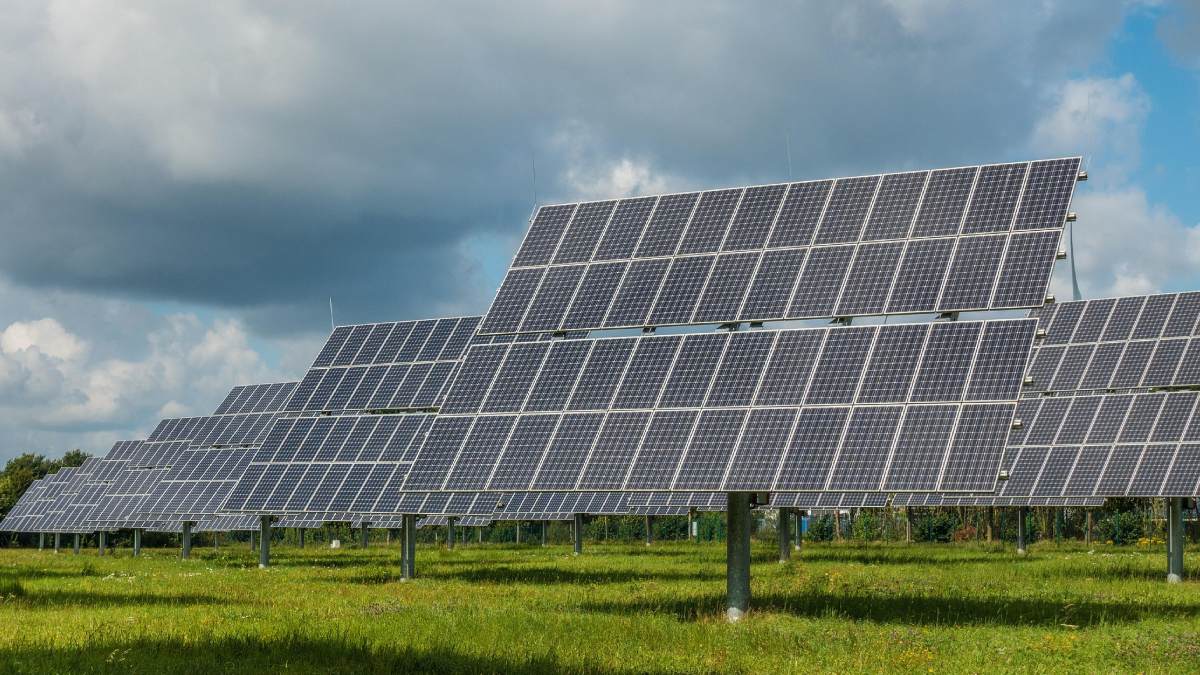
The state has installed 33,157 unique and decentralized solar power systems to operate rural drinking water schemes, collectively generating nearly 900 MWp of solar capacity. These systems support a vast network of villages, households, and populations, covering thousands of settlements and millions of residents. Each decentralized installation is unique and tailored to local engineering and operational requirements, with solar capacity or panel volume and sizes varying depending on factors such as population served, pumping head, water demand, and the distance to elevated storage reservoirs. This decentralized approach ensures that each system efficiently meets the unique needs of its community.
Capital Investment and Long-Term Financial Implications
The government has invested approximately ₹7,812 crore capital expenditure (CAPEX) to deploy these solar plants for these rural water supply systems. If conventional grid electricity were used instead, the annual electricity expenditure would be around ₹1,115 crore, based on typical consumption, operating hours, and electricity tariffs, calculated at ₹8.60 per unit — assuming 4.5 pumping hours per day for 320 days annually (considering a 45-day lean period). In addition, connecting each solar operating unit to the electricity grid would involve a one-time cost of roughly ₹7.5 lakh per installation, resulting in substantial upfront expenses when scaled across the state. Over a 30-year horizon, including expected increases in tariffs (assuming a modest 2% tariff escalation per year), the total operational and connection costs for conventional electricity-based systems would be close to ₹47,693 crore.
Financial Advantages of Solar Systems
Solar-powered systems largely eliminate recurring electricity expenses, creating a projected saving of approximately ₹39,881 crore over three decades. By mitigating long-term operational costs, these systems enhance the cost-effectiveness of rural water supply programs while reducing the fiscal burden on public infrastructure projects.
Environmental Benefits and Carbon Footprint Reduction
In addition to financial advantages, these decentralized solar installations provide significant environmental benefits. By reducing reliance on fossil-fuel-generated electricity, they help avoid roughly 13 lakh metric tonnes of carbon dioxide emissions annually. This reduction is equivalent to generating 13 lakh carbon credits annually, supporting India’s long-term climate objective of achieving net-zero emissions by 2070. Valued conservatively at USD 2, these carbon credits could potentially generate USD 78 million (approximately ₹710.42 crore) in climate finance (at an exchange rate of USD 1 = ₹91.08), over three decades, further reinforcing the sustainability of rural water programs.
Potential Revenue from Surplus Power
Although Uttar Pradesh currently does not have a mechanism for selling surplus solar electricity, future policy developments could enable grid connectivity, net metering, or feed-in tariffs. Such measures would allow Gram Panchayats to generate additional revenue from excess solar power. The potential benefits would depend on the installed capacity, local water demand, and applicable electricity tariffs.
Reliability and Efficiency in Rural Water Supply
Electricity is primarily required to pump water into elevated storage reservoirs, after which distribution relies on gravity-based systems. Solar-powered pumping enhances operational reliability, particularly in remote areas with limited or inconsistent grid access. By reducing dependence on diesel generators and minimizing maintenance costs, these systems improve the overall resilience and sustainability of rural water infrastructure, while ensuring more consistent service delivery to communities.
Conclusion
The deployment of decentralized solar energy in Uttar Pradesh’s rural water supply infrastructure illustrates how renewable energy can be effectively incorporated into essential public services. With nearly 900 MWp of installed capacity, significant long-term cost savings, and measurable reductions in carbon emissions, the programme provides a model for sustainable, efficient, and climate-conscious rural infrastructure. As policies evolve to enable surplus power sales and participation in carbon markets, the economic and environmental benefits of these systems are expected to increase, strengthening both local governance and national climate objectives.
The author is a senior IAS officer serving as Additional Chief Secretary of the Namami Gange and Rural Water Supply Department in Uttar Pradesh.
Disclaimer: The views expressed are the author’s own and do not reflect the official policy or position of Financial Express.


