




By M Muneer & Tony Augustine, Respectively Fortune-500 advisor, start-up investor, and co-founder, Medici Institute for Innovation, & VP-partnerships, Nunam Technologies
Our streets have always been crowded with combustion engine vehicles with visible fumes, many of them long past expiry dates. Of late, what has been debated in boardrooms and policymakers’ chambers is finally finding solid traction on Indian roads and a revolution is underway with the early adopters of electric vehicles (EVs). But will this hype, as promoted by top bureaucrats and leaders, last? Beyond the grandiose commitments to sustainability and self-sufficiency, the question lingers: is India truly prepared for this tectonic shift?
Indeed, the shift has been long overdue. Most major cities have been increasingly under the pollution cloud, with toxic levels beyond safety norms. The data is staggering. Delhi gives non-smokers the equivalent of smoking as many as 20 cigarettes a day. A comprehensive study by IQAir over five years has found the top 10 most polluted cities across the world in India — a shocking report on the state of affairs, including unchecked emissions. The impact on economy is worse — over 75% of India’s crude oil is imported with precious foreign reserves. Why the policymakers have decided to drive electric mobility aggressively is based on the reality that the future has to be powered by clean energy, COP agreement or not.
The government has crafted its policy instruments with precision and designed the framework to accelerate the adaption of electric vehicles (EVs). Goods and services tax (GST) exemptions, reduced registration charges, ambitious production-linked incentive schemes — the list of incentives is long. The expansive solar energy potential has dovetailed seamlessly with this transition and offers an energy ecosystem that is green and locally produced. But, incentives alone haven’t built transformation ever. The electric mobility dream requires total alignment of the government’s vision with the industry, the public, and infrastructure.
Many Indian and global auto companies have aggressively pursued EV policies. Now, even Tesla is betting big on India, notwithstanding that some of the European and US markets are cutting down on EVs. In 2024, over 1.4 million EVs were sold in India, representing a penetration of 5.6%. The three-wheeler segment has seen a remarkable 50% adoption rate, which is a clear sign of EVs’ viability for urban mobility.
Sustaining momentum is a challenge in any transformation. After the initial surge of adoption, things slowed down towards late 2023. The diffusion of innovation follows a well-documented curve. As of now, India stands at the chasm that divides early adopters from the early majority. The pragmatic consumers, the everyday drivers, and the families looking for reliability over novelty are all demanding more than discounts and promises — they demand certitude.
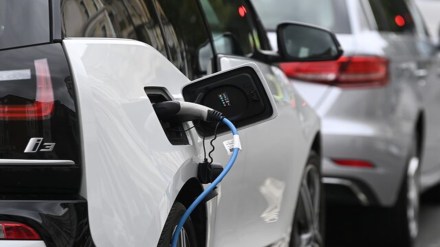
And certitude remains elusive. Most buyers are sceptical about the range per charge, and are anxious about the vehicle stalling during a trip, far from a charging station. It is apparent that infrastructure is the Achilles’ heel in the electric mobility journey. Both government and private players like Tata Power, Reliance, and Ather Energy are trying to build charging stations rapidly across highways and cities. Yet, the network is still sparse at 22,000 or so stations. Most EVs today offer a range of 250-300 km/charge, with some premium models pushing the boundary to 650 km. But these numbers mean little if charging stations remain a few.
India cannot afford to continue building roads after airports are built — charging stations cannot be an afterthought. This should be approached like telecom expansion in the 2000s, when the fear was signal loss and an absence of tower network. The solution must be as sweeping and decisive as the expansion of cell towers once was.
And it must be clean. If EVs are charged using fossil fuel-generated electricity, then it is double standard, a mere shifting of emissions from tailpipes to smokestacks. A greener solution lies in incentivising solar-powered charging stations, a differentiation that could be encouraged through lower GST rates on clean electricity. But the government’s reluctance might prove to be costly.
The second great frontier is cost. For all their long-term savings, EVs demand a higher initial investment, a deterrent for the price-sensitive consumer. But change is on the horizon. Battery technology, the single largest cost component of an EV, is advancing and is on a steep decline. In 2010, battery prices stood at an astronomical $1000/kilowatt-hour (kWh). Today, they hover around $100/kWh, and industry forecasts predict a further drop. Once that happens, EVs will reach price parity with traditional internal combustion engine vehicles, removing one of the final barriers to adoption. However, according to one oligarch, a secret government document says India cannot be cost-competitive in battery manufacturing — that leaves more question marks.
Another concern that persists for buyers is resale value. Unlike conventional cars, an EV’s fate is linked to its battery health. Currently, used EV batteries almost get treated as scrap. This devaluation casts a long shadow over potential purchases. But a nascent revolution is unfolding in battery repurposing. A few start-ups are pioneering ways to assess and extend battery life, repurposing them for energy storage systems. The battery should be made to “sweat” for an extended time with repurposing before it goes as scrap. In the US and Europe, there are specialists who repurpose and enhance the residual value of EVs. The industry should create a structured market for second-life batteries to improve the lifetime value of EVs.
The signs are promising. The gears are turning. But the road ahead remains long and winding. Tesla’s renewed interest in India is no mere coincidence; it is a calculated move, a nod to the inevitability of the electric revolution in the world’s largest democracy. The pieces are in place — the policy push, the industry’s awakening, and the technological advancements. What remains is the test of execution, which, of course, is India’s bane.
The EV transition is about economic resilience, energy independence, and public health. It’s also about reclaiming the air, the roads, and the future. How swiftly and seamlessly can India make the transformation?
Disclaimer: Views expressed are personal and do not reflect the official position or policy of FinancialExpress.com. Reproducing this content without permission is prohibited.


