




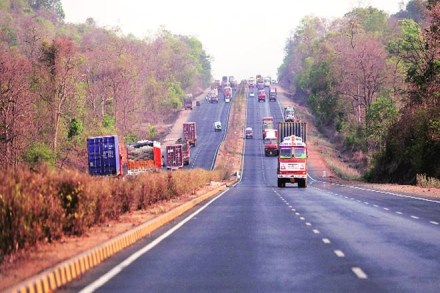
The government’s decision to suspend collection of toll for 23 days in the aftermath of demonetisation last year (November 8) came as a relief to the users of highways, but for the stakeholders of the 400-odd toll plazas around the country, a majority of which are public-private partnership (PPP) projects, things have turned out to be a mixed bag. While the National Highways Authority of India (NHAI) had promptly issued office orders to provide immediate relief to the concessionaires, their implementation hasn’t been up to expectations. Among the NHAI’s decisions, in the cases where payments had to be made to concessionaires, regional offices were authorised to immediately pay 50% of the interest on debt. It was decided that 90% of the total payments would be made on submission of the mandated undertakings/documents, with only 10% kept as a reconciliation margin.
However, issues related to interpretation have cropped up and there are claims awaiting resolution, affecting industry and investor confidence. In this context, an appropriate redressal mechanism such as an independent regulator would help expedite the process. The stand taken was that the loss on account of non-collection of user fee would be addressed as per the provisions of the respective agreements. Since the concession agreements for different projects are not the same, the resultant rights and obligations are agreement-specific. For example, newer agreements prescribe the compensatory mechanism as an extension of the concession period and cash payments, while some older agreements are understood to prescribe either extension of the concession period or cash payments.
Given that the financial health of developers is not yet positive, there were expectations in some quarters that a policy decision would be made to provide higher and equitable compensation to all concessionaires. That said, the stand taken cannot be termed as entirely wrong as the government and NHAI have over the last few years provided numerous policy dispensations to industry, such as premium deferment, 100% equity divestment, and one-time fund infusion. On the positive side, demonetisation gave a fillip to electronic toll collection (ETC), with more than 100,000 FASTags issued in December 2016 alone. The government has identified issues such as lanes not working at some toll plazas, besides delays in settlement of transactions and crediting amount to concessionaires and is in the process of addressing them. Needless to say, ETC has the potential to benefit all stakeholders if implemented efficiently.
Another positive is that fears of demonetisation affecting financing in the NH sector have been belied. A majority of PPP projects in the recent past have been bid out under the hybrid annuity model and data on financial closures does not support such fears. Demonetisation has also revived interest in including provisions for contract renegotiation in infrastructure projects. With concession periods spanning long periods, the industry has been seeking a contract renegotiation clause in concession agreements. The Department of Economic Affairs is also evaluating a renegotiation framework.
Contract renegotiation is not uncommon and renegotiation frameworks exist in the European Union and countries such as Brazil, Chile and South Africa. However, there are debates on whether this is a practical solution or a moral hazard. A popular view is that renegotiation should be an exception and only take place in the case of well-defined triggers.
The writer is Director-Transport & Logistics, CRISIL Infrastructure Advisory


