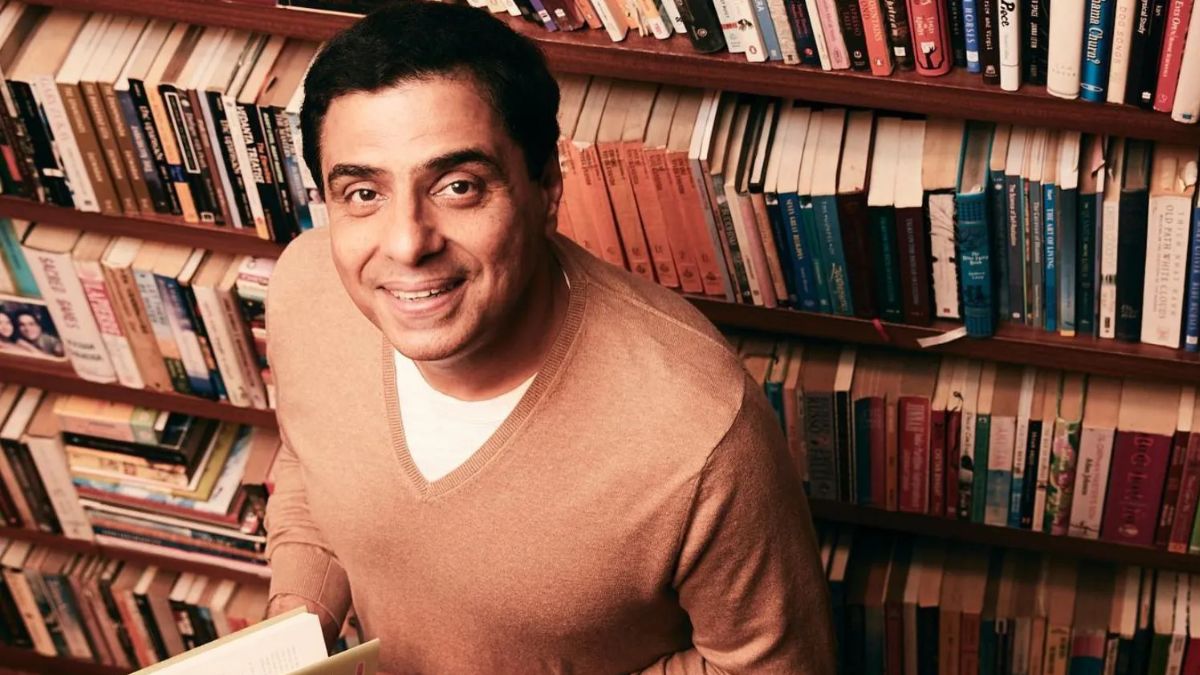
Long before Bombay had cable television, before Bollywood had organised financing, before India had a serious edtech company, there was a teenager negotiating with his own parents for the right to fail on his own terms. Ronnie Screwvala has spent the better part of five decades proving that a bargain is a win-win for all.
In the mid-1970s, a nineteen-year-old in Mumbai was told that his future had already been decided: Chartered Accountancy, a stable and respectable, well-worn path. Ronnie Screwvala did not refuse outright; he negotiated instead. He asked for a chance to try something on his own before he committed to anyone else’s plan for his life. Almost everything that followed – from the toothbrushes, the cable wires running into the basements of Cuffe Parade high-rises, the television empire, the Disney deal, and the classrooms of upGrad, traces back to that one conversation.
How his early years shaped an entrepreneurial mindset
Screwvala was born on 8 September 1956 in Bombay, into a Parsi family that valued discipline more than comfort. Home was a corridor apartment in the roughly century-old, five-storey Arsiwalla building on Grant Road, next to Novelty Cinema. It was a lower-middle-class household shared, without much room to spare, by his parents, his brother, two aunts and his grandparents. He lived there until he was sixteen. His father worked as an executive at the British firm J.L. Morrison.
Throughout school and college, Screwvala has one thing in common: Theatre. As a student, Screwvala found his way onto professional Bombay stages alongside Pearl Padamsee and Alyque Padamsee, playing the roles of Tin Man in The Wizard of Oz and Petruchio in The Taming of the Shrew. It was meant to be a hobby, but it gave him something more lasting than a hobby usually does. It was here, during those theatre years, that he met Zarina Mehta, the woman who would become his second wife and, later, his partner in almost every venture that mattered.

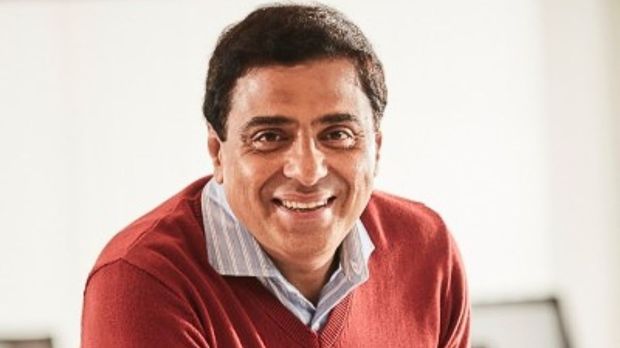
In an interview with the with 2019 Harvard Business School oral history interview, Screwvala described that his mother and both aunts taught piano at home, and by his own admission, the real draw for a teenage boy wasn’t the instrument; the students who came for lessons were all girls, and that was his best social outlet growing up. College went worse. He flunked out in his second year, his first real brush with failure, and it was that crisis, not a business plan, that convinced him formal education wasn’t going to be his path.
From Lazer Brushes to Network: Mapping Early Structural Failures
Screwvala’s first venture wasn’t UTV. Before that, there was a toothbrush factory. Lazer Brushes, sometimes written simply as “Laser”, grew, almost improbably, into one of the largest toothbrush manufacturers in the country, turning out something in the region of four million brushes a month for major brands.
The toothbrush business began with a chance discovery, he recalled in the HBS interview. On a trip to London with his father, who worked with a company that made Nivea products and toothbrushes, Screwvala noticed a factory scrapping two toothbrush-manufacturing machines after just two years of use, practically new, by Indian standards, where equipment ran for twenty years. He talked his father into holding onto them while he worked out how to buy them. Six months later, he’d struck an outsourced-manufacturing deal with Colgate.
But that’s only one of the many experiments. Not everything he tried succeeded. Screwvala also attempted an early tele-shopping venture – TV Home Shopping. He would later describe it as an idea that arrived years before India was ready for it, a significant early failure, by his own account.
Then, in 1981, came Network. At a time when Indian television meant exactly one channel, Doordarshan, government-run and take-it-or-leave-it, Screwvala began wiring cable systems into the basements of Mumbai high-rises. For roughly Rs 200 a month, residents got about three hours of movies. For close to two years, it found almost no takers, and larger, better-funded rivals moved in to make sure it stayed that way. The advice he got was to cut your losses, call it a failed start-up, and move on.
As per the HBS interview, scaling the network meant solving a legal problem first. Screwvala couldn’t string cable across roads between buildings, so growth stalled at the edge of every complex until he turned to hotels instead. Hotels wouldn’t pay upfront, so he gave them two free in-house channels to advertise their own restaurants in return.
The bigger bottleneck was television sets: India didn’t have enough of them, so he went directly to manufacturers and asked them to build a million sets over two years, right as the country geared up for the Asian Games and eased its restrictions on colour TV. Guests went home, asked why they didn’t have cable, and word did the rest.
The venture eventually spread to multiple cities and into most of India’s major hotel chains, and today Screwvala is widely credited as one of the pioneers of cable television in the country, a title that, in 1981, wired into a handful of sceptical basements, would have sounded like a joke. From cable, the path bent naturally toward advertising: producing ad films, selling airtime on Doordarshan, and eventually producing television serials.
How UTV survived near-bankruptcy to become a media powerhouse
In 1990, Screwvala co-founded UTV Software Communications with his wife Zarina and his close friend Deven Khote. It began small, a production house making ad films and corporate content for Doordarshan.
UTV had to generate its own cash to survive. As per some accounts, the company came close to bankruptcy on four separate occasions before it finally found scale.
UTV entered film distribution in 1996, and its first production, Dil Ke Jharoke Mein (1997), starring Manisha Koirala, lost an estimated Rs 10 crore. It would have been reasonable to retreat into safer, formulaic cinema after a loss like that. Screwvala did the opposite. In the years that followed, UTV backed Swades (2004) and Rang De Basanti (2006), both National Award winners, both kinds of offbeat, critically serious cinema that Bollywood’s commercial machinery rarely rewarded at that time.
Jodhaa Akbar, Barfi, and Paan Singh Tomar followed, alongside television hits like Shanti, Shaka Laka Boom Boom, and Shararat, a decade in which UTV was, at once, a children’s channel operator, a film studio, and a serious international co-producer.
And then, UTV went public in 2005.
The Disney acquisition that transformed UTV
Disney’s Southeast Asian arm first picked up a minority stake in UTV, reported at somewhere around 14 to 15%, between 2006 and 2008. By 2012, Disney had acquired UTV entirely.
Screwvala stayed on. As Managing Director of Disney UTV India from February 2012, his job was to merge two very different organisational cultures and hold a strategic line while doing it. He announced his exit effective 1 January 2014, handed the company to his deputy Siddharth Roy Kapur, and stayed a further six months in an advisory role to see the transition through properly.
Selling outright to Disney, rather than just taking on more of its capital, had a personal edge to it. His father pointed out that after two decades of building UTV, Screwvala didn’t own a single share in a listed company, everything he had was collateral-backed debt, including what funded his daughter’s education at USC and UCLA, because he wouldn’t sell down his stake. Founder wealth, he’s since said, is theoretical wealth, as reported in the HBS interview.
Even while still inside Disney, Screwvala was already quietly building what came next: a venture capital fund, run through Unilazer Ventures and managed by Zarina, that had already backed companies including Lenskart.
Why philanthropy became his second mission
Somewhere alongside all of this, he was also supporting a non-profit organisation called SHARE. The Society to Heal, Aid, Restore, Educate had been quietly running since the 1990s. In 2013, it was scaled up into the Swades Foundation, with Zarina taking on the role of full-time Managing Trustee and Screwvala devoting time to it. The name was not chosen at random; it was taken from Swades, the very film UTV had produced nearly a decade earlier, the one that had proven that offbeat, socially conscious cinema could still find an audience.
The foundation’s ambition is stated in almost military terms: lift roughly one million people out of poverty in rural India every five years, and then move on to a new geography.
The million-people goal has an origin story that he doesn’t dress up in the HBS interview. When Zarina considered leaving to join Teach For India full-time, Screwvala blurted out the “one million people out of poverty every five years” line on the spot, purely to talk her out of it. It started as a retention pitch for his own wife, and only afterwards became the foundation’s actual mission.
It is currently at work across a roughly 3,000 square kilometre stretch of Raigad district, Maharashtra, about four hours from Mumbai, spanning 2,000 villages and reaching close to half a million people, with water, sanitation, health and education all in service of the foundation’s real focus: livelihood.
Inside the Turnaround: How upGrad Crossed the EBITDA Threshold
In July 2015, Screwvala co-founded upGrad alongside Mayank Kumar and Phalgun Kompalli, backed by approximately Rs 120 crore ($16 million) in seed funding. upGrad turned EBITDA positive in FY25, posting a Rs 15 crore Ind-AS EBITDA profit (Rs 38 crore excluding one-time costs) compared to a Rs 285 crore EBITDA loss the previous year. The Mumbai-based edtech firm’s gross revenue rose to Rs 1,943 crore, with total income at Rs 1,650 crore post Ind-AS adjustments, while net losses narrowed 51% year-on-year to Rs 274 crore, as per Entracker.
In February 2025, upGrad also launched an AI incubator backed by Rs 100 crore, already funding the AI-education startup ZuAI.
Beyond media: Investing in sports and new ventures
Not everything Screwvala built was about media or education. In 2014, he founded U Sports with co-founder Supratik Sen and, through it, acquired U Mumba, a franchise in the newly launched Pro Kabaddi League, which went on to win the championship in its very first season. The story of how he got into the league at all is almost incidental: a dinner conversation between Zarina and industrialist Anand Mahindra, one of the PKL’s co-founders. U Sports also runs a football development arm, U Dreams, training young players in partnership with the German Bundesliga club TSG 1899 Hoffenheim and sending select children abroad for training.
Returning to filmmaking with RSVP Movies
In 2017, three years after leaving Disney, Screwvala returned to film production through RSVP Movies. Its first release, Love Per Square Foot (2018), went straight to Netflix. What followed was not small: Sonchiriya, Kedarnath, The Sky Is Pink, Sam Bahadur (2023), and Uri: The Surgical Strike (2019), which became a major commercial success, earning somewhere between Rs 340 and Rs 350 crore worldwide.
He also joined Shark Tank India as a panellist from Season 3, sitting alongside investors like Aman Gupta, Namita Thapar and Anupam Mittal.
Books, honours and billionaire status
Screwvala has written three books across his career, Dream With Your Eyes Open: An Entrepreneurial Journey (2015), Skill It, Kill It: Up Your Game, and Dream With Your Eyes Open 101: Practical Questions Every Entrepreneur Must Ask.
The honours came in steadily alongside all of it: a place on Esquire’s list of the 75 Most Influential People of the 21st Century in 2008, 78th on the Time 100 in 2009, a spot among Fortune’s 25 Most Powerful People in Asia, and a Harvard Business School case study built around his work, titled simply “Creating Emerging Markets.” His estimated net worth has been reported at around $1.6 billion as per Forbes, though, like several figures from earlier in his career, the exact number varies by source and by year.
The philosophy behind five decades of entrepreneurship
If you add it up, the pattern isn’t really about industries at all. Cable, toothbrushes, film, edtech, kabaddi – there is nothing common about them. What ties them together is the entrepreneurial spirit that took them forward and the man behind it all.
At sixty-nine, he’s doing much the same thing with space-tech and AI, writing $1–3 million cheques to companies most people haven’t heard of yet. Whether any of it pays off is almost beside the point. He’s still that nineteen-year-old asking his parents for one more shot. The odds definitely seem better this time around.
Editorial Note: This is an independent profile. Ronnie Screwvala and their representatives were contacted but did not respond prior to the time of publication. In the absence of direct comment, this article was reported using publicly available records and regulatory filings, where applicable. This content was produced in accordance with FinancialExpress.com’s editorial guidelines.