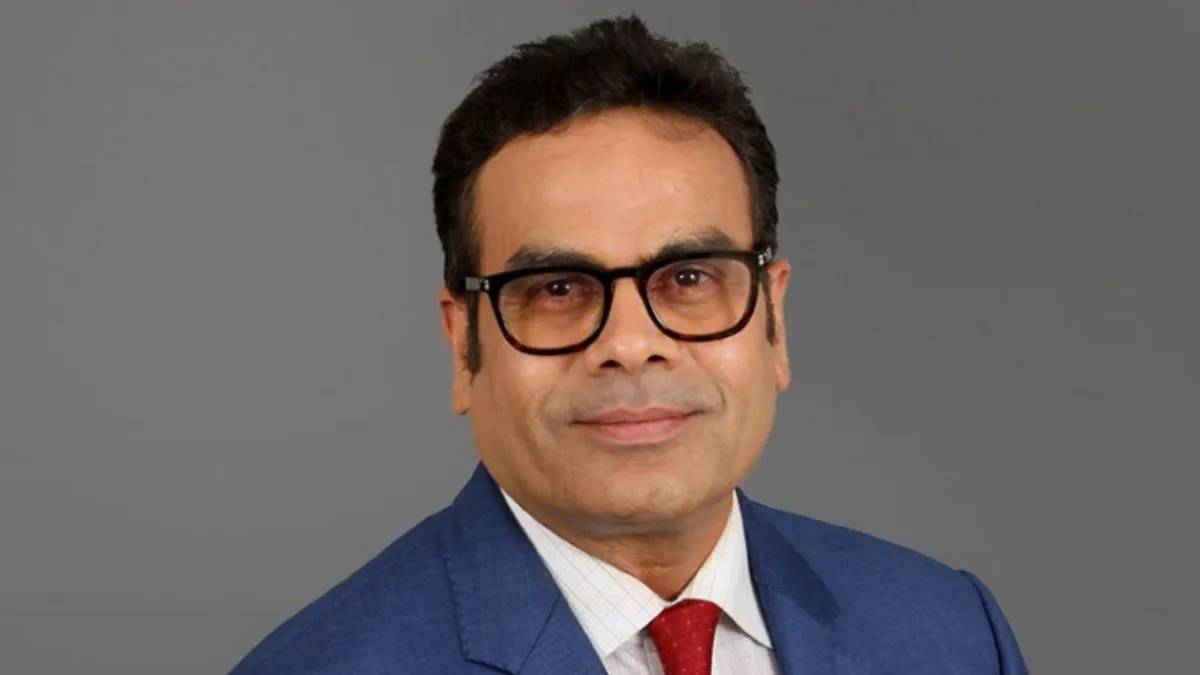
Ashiss Kumar Dash has spent more than three decades at Infosys, largely away from the spotlight, building businesses, managing large global clients and running some of the company’s biggest industry verticals. With Infosys designating him the next managing director and CEO, who will take charge on April 1, 2027, that relatively understated career offers a clue to where the country’s second-largest IT services company sees its future.
Unlike, say, Vishal Sikka, who was brought in to inject a fresh technology vision, or the incumbent Salil Parekh, whose nine-year tenure focused on restoring stability while expanding Infosys’ digital and cloud capabilities, Dash – currently based in Los Angeles and will return to Bengaluru to lead Infosys – inherits a company confronting a different challenge. Artificial intelligence (AI) has moved from a testing phase to deploying it at scale, integrating it into clients’ businesses and translating investment into growth.
Why Dash’s experience matters
That is where Dash’s experience comes into play. Over the years, he has built his career less around headline-grabbing strategy and more around execution, overseeing businesses across services, utilities, resources, energy and enterprise sustainability while working closely with some of Infosys’ largest global customers. His appointment suggests the company believes the next phase of competition will be won not by the boldest AI vision, but by the ability to execute it consistently across industries.
In that sense, Dash’s elevation suggests how the priorities of both Infosys and the global IT services industry are evolving as enterprises move from AI experimentation to enterprise-wide transformation.
An IIT Kharagpur graduate, Dash has steadily risen through the ranks at Infosys over the past three decades. While many of his contemporaries became identified with specific technologies or geographies, Dash built his reputation by running businesses. He managed large delivery organisations, led profit-and-loss responsibilities and developed long-term relationships with Fortune 500 clients, experiences that have increasingly become central to the way large IT services companies compete.
His current portfolio illustrates that evolution. As the head of businesses spanning services, utilities, resources, energy and enterprise sustainability, Dash has overseen industries undergoing profound technological change. Utilities are adopting AI-driven grid management, energy companies are digitising operations while navigating the transition to cleaner fuels, and industrial enterprises are using data and automation to improve productivity. These are no longer niche technology projects but large-scale business transformation programmes, requiring a combination of industry understanding, technology expertise and disciplined execution.
That background also explains why Dash has become one of Infosys’ key customer-facing executives. He has represented the company at global platforms such as the World Economic Forum and the B20, engaging on issues ranging from AI and sustainability to the future of enterprise technology. Those interactions reflect the changing role of IT services companies, where discussions increasingly involve CEOs and business leaders rather than just technology heads.
A wider leadership portfolio
Within Infosys, Dash has also taken on responsibilities beyond his operating role. He serves on the boards of several subsidiaries, including Infosys Public Services, Simplus, Blue Acorn iCi and Health Sigma. Together, these businesses span public sector technology, enterprise software, customer experience and healthcare, giving him exposure to diverse markets and business models at a time when clients increasingly expect integrated technology solutions rather than standalone services.
His educational background follows a familiar Infosys trajectory. Alongside his engineering degree from IIT Kharagpur, he completed the executive leadership programme at Stanford Graduate School of Business. Yet, unlike some of the company’s more visible leaders, Dash has maintained a relatively low public profile, focusing instead on execution and customer engagement.
That profile appears well suited to the environment Infosys finds itself in today. The company is not searching for a dramatic turnaround or a reinvention of its strategy. It has already invested heavily in cloud, digital engineering, cybersecurity and AI, while building consulting capabilities through acquisitions and organic expansion. The challenge now is to convert those investments into sustained revenue growth at a time when clients remain selective about technology spending.
The broader industry is confronting a similar transition. Generative AI is reshaping software development, improving productivity and changing the economics of traditional IT services.
For Infosys, the competitive advantage is, therefore, likely to come less from announcing the next breakthrough technology and more from helping clients navigate that transition at scale. Companies that can combine domain expertise with operational discipline and deep customer relationships are expected to be better positioned as AI adoption accelerates.
Dash’s career has been built around exactly those capabilities. His appointment suggests Infosys believes the next phase of the industry’s evolution will be defined not by the loudest vision for AI, but by the ability to execute it consistently.