
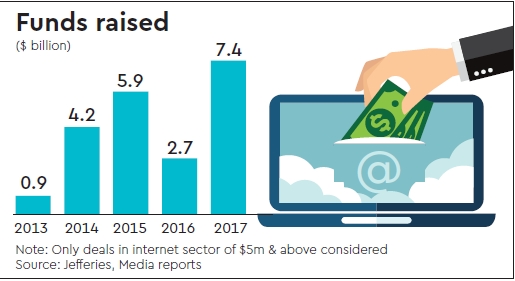
A fairly hefty $7 billion flowed into e-commerce ventures in 2017, data put together by research firm Jefferies shows, suggesting Indian e-retailers are living up to their promise. After a somewhat dull 2016, when the e-commerce space attracted just $3 billion in investments, 2017 saw (PE) players and venture capitalists firms top up their exposure to e-tailers. The stand-out investor last year was undoubtedly Japanese conglomerate SoftBank Bank Group which committed $4 billion to three companies — Flipkart, Ola and Paytm. The Masayoshi Son-led Softbank has bet close to $6 billion in the last three years, data from Traxn shows. Other big players such as Tencent and Alibaba were also supportive of e-commerce ventures last year. Meanwhile, Amazon, which has committed $5 billion to its India venture, continues to infuse capital arm from time to time. While e-tailing continued to account for the largest share of the investments in value terms, travel, fintech and gaming businesses also managed to raise a fair bit as part of larger rounds of fund raising of $50 million or more.
Among the chunkier investments, e-grocer BigBasket raised $280 million in September from Alibaba Group, Sands Capital Ventures and Abraaj Group. Alibaba Group also picked up a stake in Paytm Mall. Interestingly, analysts at Jefferies observed activity in online food-tech has picked up sharply over the last six months, thanks to the entry of large players like Google, Uber, Ola and Delivero, the parent of Foodpanda which raised $431.45 million from South African internet investor Naspers. Meanwhile, existing players such as Zomato and Swiggy continue to do well.

In October, taxi-hailing service Ola closed funding of $1.5 billion from SoftBank, Tencent Holdings, RNT Capital and Tekne Capital Management. SoftBank’s investment of about $ 2.5 billion in Flipkart, via its $100-billion Vision Fund, has made it the largest shareholder in the Bengaluru-based e-retailer, displacing Tiger Global, which made a partial exit following the deal. While $7 billion was not an amount o be sneezed at, industry watchers point out that many smaller businesses have lost the support of financiers as they struggle to become viable.