




Milk and dairy brand Amul, marketed by the Gujarat Cooperative Milk Marketing Federation (GCMMF), which turns 80 this year, also became the first food brand in the country to reach the Rs 1 lakh crore turnover mark in FY26. Beyond its financial success, what has kept it top of mind is its social commentary and moment marketing manoeuvres.
In a recent interview with Brandwagon, Jayen Mehta, managing director at GCMMF, said that the organisation’s purpose is built in Amul’s brand DNA. It has always served two interests – one of the consumers and the other of the producers. Over the past decades, Amul’s portfolio has extended beyond milk to include cheese, ice-creams, dahi, sweets and beverages. In India, its products reach over 1 million retail outlets, from top metros to the remotest villages. The company also has a presence in over 50 countries globally.
Its cooperative foundation structure remains to this day, which means that it continues to empower farmers who are owners and not mere suppliers. “Its origin story is very different from most FMCG brands, having been built on something real,” observes Manish Solanki, COO and co-founder, TheSmallBigIdea, noting that the creation of Brand Amul wasn’t just a positioning exercise.
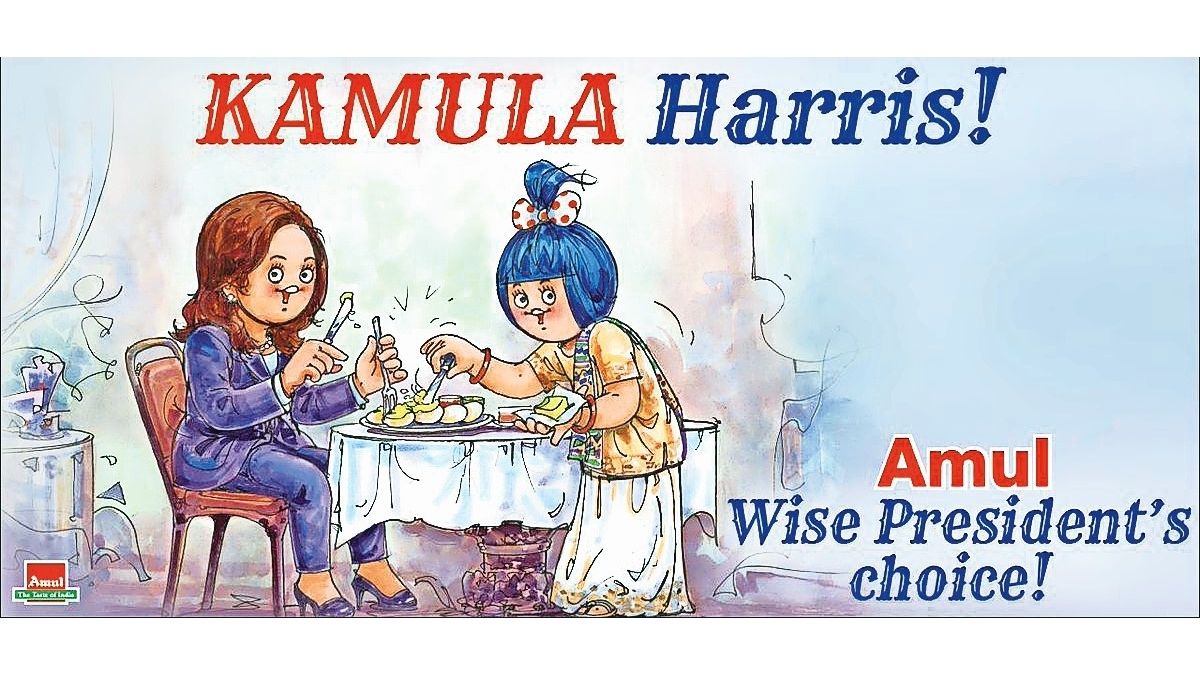
While its cooperative model is a case study in itself, advertising leaders also applaud Amul’s marketing strategy that has kept it in the consumer’s mind and shopping cart. The much-loved Amul girl mascot, created by advertising legend Sylvester daCunha in 1966, has been an integral part of the brand’s advertising, alongside its ‘utterly butterly delicious’ slogan. Over the last six decades, her billboards have kept consumers engaged with her takes on movies, politics, cricket and more.
Solanki observes that more than the humour in its hoardings, the brand’s discipline and consistency is underrated. “Amul has always held its opinion, commenting on everything from the Emergency to the latest iPhone launch and even Covid, without softening its point of view to avoid controversy. Most brands today over-manage their tone,” he adds.
While its core values have remained unchanged, it has stayed iconic by remaining part of contemporary culture, points out Aparajita Biala, national planning head, Cheil India. Its mascot, colours, humour and typography have become an enduring mental shortcut for the brand. The brand has succeeded in earning a unique cultural capital through its billboards. “The Amul girl is India’s longest-running real-time social commentator. By occupying a meaningful role in everyday Indian life, the brand has become part of people’s home culture and not just media consumption,” Biala remarks. One of the biggest takeaways for marketers is that iconic brands do not chase every cultural wave or trend. Amul’s relevance stems from expressing itself consistently in ways that have resonated with every generation.
With the proliferation of media platforms, Amul continues to lead with its mascot across digital media, in addition to outdoor and print. But as Rutu Mody Kamdar, founder of Jigsaw Brand Consultants, explains, the medium was never the point. At a time when brands are collaborating with content creators and tapping into the internet’s meme culture, Amul continues to effortlessly place itself in the consumer’s life without screaming for attention. The brand reportedly spends around1% of its revenue on marketing.
“That is a moat no media budget can build. The brand became a chronicler of our lives, showing up with that familiar wit every day. Amul’s rare power is that a grandparent and a teenager can sit at the same breakfast table, and both feel it is theirs. Brands that try too hard to look young usually surrender the very timelessness that made them matter,” observes Kamdar.


