




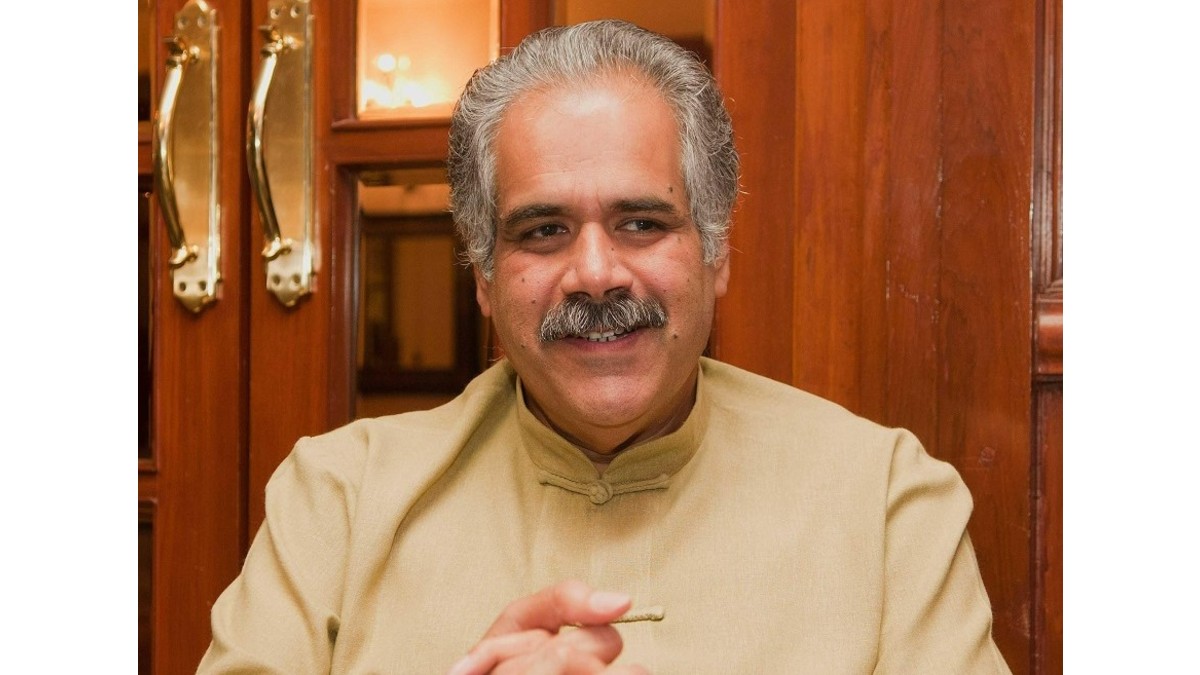
IndiGo promoter and Managing Director Rahul Bhatia on Thursday cautioned against any move to allow private airport operators to own and operate airlines, saying such a policy would create a massive conflict of interest and ultimately hurt consumers.
Bhatia made the remarks during IndiGo’s post-earnings analyst call when he was asked about reports that the government may review its policy to allow private airport operators to own scheduled airlines.
“If the news has any merit, it has no global precedent because it would typically raise a massive conflict of interest. Over a period of time, it would be against the interests of consumers. We’ll watch this space and how it develops, then we can take a considered view on how to approach things into the future,” he said.
His comment came as The government is considering one of the biggest policy changes in the civil aviation sector since the privatisation of Delhi and Mumbai airports, with a proposal to relax the cross-ownership restrictions that prevent airport operators from owning more than a 10% stake in an airline, as part of a wider strategy to encourage new entrants and reduce the dominance of IndiGo and Air India.
Fe on on Wednesday report that Ministry of Civil Aviation (MoCA) is examining amendments to the Operation, Management and Development Agreement (OMDA) governing the two airports, under which airport operators are barred from holding more than 10% equity in any airline.
If the proposal is approved, airport operators such as the Adani Group and GMR Airports could either launch airlines, acquire meaningful stakes in existing carriers or partner with foreign airlines looking to establish a larger presence in the domestic market. The proposal is part of a broader package of reforms under discussion, including simplification of licensing procedures by easing the process for obtaining the mandatory no objection certificate (NoC) from the ministry and the air operator permit from the Directorate General of Civil Aviation, with the aim of reducing entry barriers for new airlines.
The policy rethink comes as the government is getting increasingly concerned over the concentration in the aviation market. IndiGo alone now accounts for around 66% of the domestic passenger market, while Air India Group has emerged as the second dominant player following the merger of Vistara and AirAsia India. Together, the two groups control nearly 90% of domestic capacity, leaving Akasa Air, SpiceJet and regional carriers with a relatively small share of the market.
Bhatia argued that allowing airport operators to own airlines could create conflicts in areas such as slot allocation, airport charges and operational priorities.


