




By Manoj Kohli
It is usual to have the government’s assertion of staying the course of achieving “one-nation-one-grid” in Budget 2019 reflects its determination of framing policies which targets the integration of the nation. “To take connectivity infrastructure to the next level, we will build on the successful model in ensuring power connectivity — one nation, one grid — that has ensured power availability to states at affordable rates,” finance minister Nirmala Sitharaman said in her maiden budget announcement.
Espousing the similar idea of national integrity, the government had also recently announced that it is going to implement the “one nation-one ration card” scheme in the whole country by June 30, 2020.
The Budget is targeting faster economic growth of the country through larger investments which will surely lead to a higher level of job creation. However, in light of the current slump in the global economy, achieving the 8% growth target might come across as a challenging task. Luckily, the consumers are changing. Breaking away from the prevalent tradition, consumers are now willing to take up new products and this would provide a fillip to the economy.
However, in order to achieve the 8% growth, both the government and the private sector has to put a lot of investment into infrastructure. In order to do so, we have to attract global investment. In support of the government’s initiatives, SoftBank is planning to invest as much as $2-4 billion in the country in the coming two years. We have already invested about $10 billion in various start-ups in the country.
The Budget outlines that it would continue supporting young entrepreneurs and start-ups. On top of that, steps to encourage electric vehicles and strengthen the banking sector also send positive signs to investors.
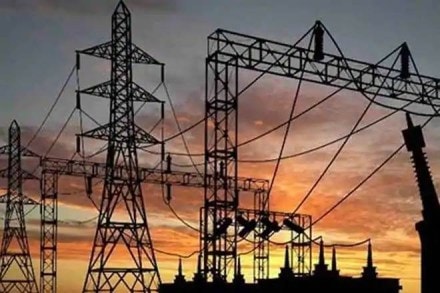
We appreciate the focus of the finance minister on affordable power to all states through one-nation-one-grid infrastructure development. The idea bodes well for the power sector of the country as synchronisation of all regional grids will not only help in optimal utilisation of resources, but it will also boost spot electricity markets by facilitating power trading across regions. The Indian power system is currently divided into five regional grids.
The necessity for new power transmission infrastructure is becoming crucial to support upcoming renewable generation capacities and make the system more flexible to accommodate the evolving trends in power consumption.The Central Electricity Authority estimates investment requirement of about `2.7 lakh crore to commission 1.1 lakh ckm of new transmission lines to cater to annual peak load demand of 225.7 GW by FY22-end.
(The author is executive chairman, SB Energy, SoftBank Group)


