Founded 200 years ago, Umicore was built as a result of a bunch of multiple mining and smelting companies coming together. Today, the brand ensures that it has the largest electric battery recycling plant in the world. This one currently has a capacity of 7.000t/y. We happened to have a chat with Tom Van Bellinghen, director value chain management, Umicore on what ways batteries can be recycled and what are the plans for expansion.
Umicore, Tom says, has partnered with ABB FIA Formula E Championship to recycle the lithium-ion battery units and cells used during the first two seasons of the electric street racing series. The batteries of the other editions are still in use. Umicore’s involvement in Formula E reflects its activity in the battery value chain. Umicore offers its battery materials (cathode and anode materials) knowhow to Mahindra Racing, one of the teams competing in the Formula E championship, and then close the battery loop by recycling the cells after their use in the racing cars. The batteries have been collected and are currently in the process of being recycled.
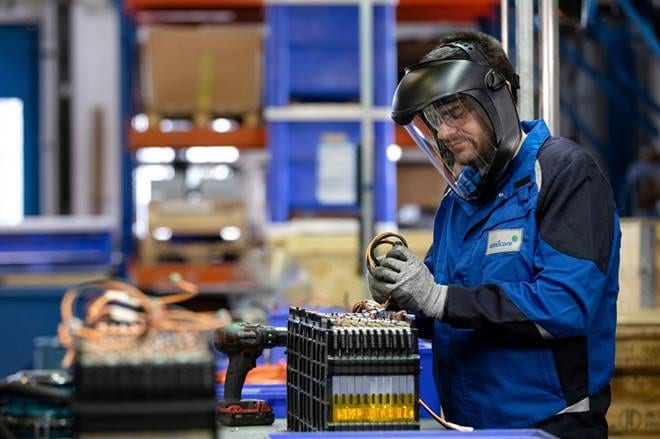
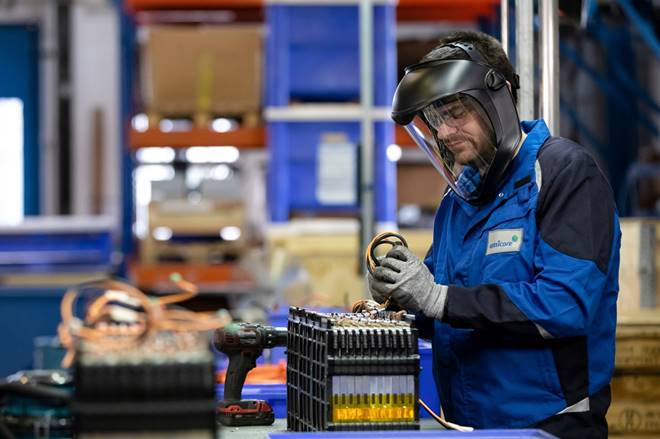
The Umicore battery recycling process is a combination of pyro metallurgical and hydro metallurgical processing. Batteries are sorted and dismantled in a safe way without crushing or shredding the cells. The advantage of this process is that operators and the environment are not exposed to hazardous battery compounds. Afterwards, the metals are recovered in a high temperature smelting process. A proprietary (in-house) smelting technology, minimising energy consumption and treating potentially harmful gases is used. The smelting process results in a metal alloy, containing Co, Ni and Cu and a concentrate with Li. This fraction is further refined for Li recovery. Hydrometallurgy is used to refine the metal alloy. The recycling process allows the re-use of critical metals without losing any quality and the extracted metals are subsequently converted into active cathode materials for the production of new rechargeable batteries or other products. This closed loop approach results in a dramatically lower environmental footprint of the resulting battery materials.
Today recycling of end-of-life batteries used in portable electronics applications like notebook PCs, smartphones and tablets has become mainstream even though only three percent is actually being recycled on a global scale. For EV batteries, it is clear that the market will gradually grow in coming years when higher volumes of end-of-life EV batteries will become available. Eventually large EV-batteries will all have to be recycled as valuable metals like Co and Ni and should not go to waste and hazardous components should not end up in the environment. Umicore recycles Li-ion batteries in its industrial ‘pilot’ plant that has a design capacity of 7.000t/y for input materials. This installation is currently the largest of its kind on a global scale. As market will grow for recycling of batteries, Umicore plans to use the experience of the current installation to further upscale its recycling activities.