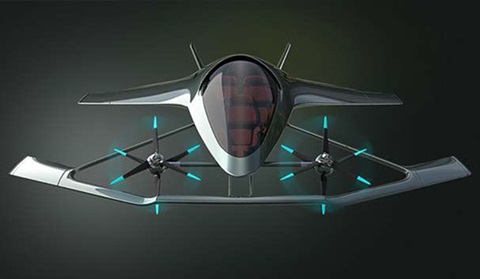
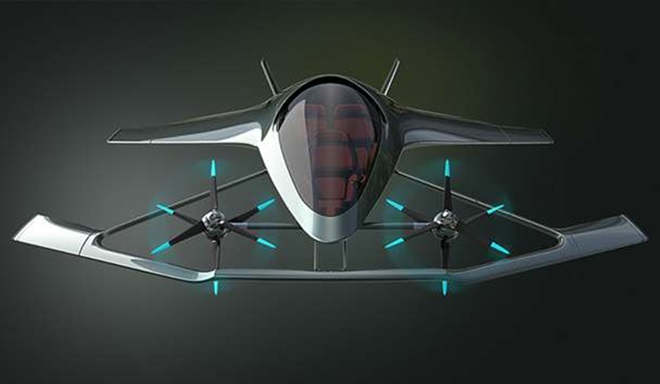
Think or Aston Martin and there will be visuals of magnificent looking cars in your mind and of course, of James Bond. And then throw in some cool gadgets and you’re imagining a perfect spy car. Now though, the egg heads employed with the British car manufacturer have come up with a concept straight out of a Bond film. Aston Martin believes that the new flying car concept, dubbed “sports car for the skies”, would one day revolutionise the idea of flying cars and travel. Aston Martin unveiled the three-seater hybrid-electric vehicle this week at the Farnborough Airshow.
Aston Martin’s new flying car design, the Volante Vision Concept has VTOL (vertical take-off and landing) capabilities and would be able to exceed speeds of up to 320 km/h. “So you can go from the centre of Birmingham to the centre of London in about 30 minutes,” Aston Martin’s Simon Sproule told Reuters.
Aviation and technology leaders are working to make electric-powered flying taxis a reality, including Airbus, US ride-sharing firm Uber and a range of start-ups including one backed by Google co-founder Larry Page, called Kitty Hawk. The luxury car manufacturer based in Britain believes it could grow bigger in the luxury flying vehicle market in the future.

“The same way that you have Uber and you have an Aston Martin, you’ll have ‘Uber in the skies’ and you’ll have ‘Aston Martin in the skies’,” said Sproule, adding that such an aircraft won’t come cheap. “This is clearly a luxury object – it’s a sports car for the skies – so pricing is going to be commensurate with that, so certainly into the seven figures.”
Aston Martin has partnered with Cranfield University, Cranfield Aerospace Solutions and British jet engine maker Rolls-Royce to develop the concept vehicle, including artificial intelligence-powered autonomous capabilities.
Separately at Farnborough, Rolls-Royce unveiled plans for a flying taxi – an electric vertical take-off and landing (EVTOL) vehicle which could carry four to five people at speeds of up to 400 km per hour for approximately 800 km.
The company said it was starting a search for partners to help develop a project it hopes could take to the skies as soon as early next decade.