




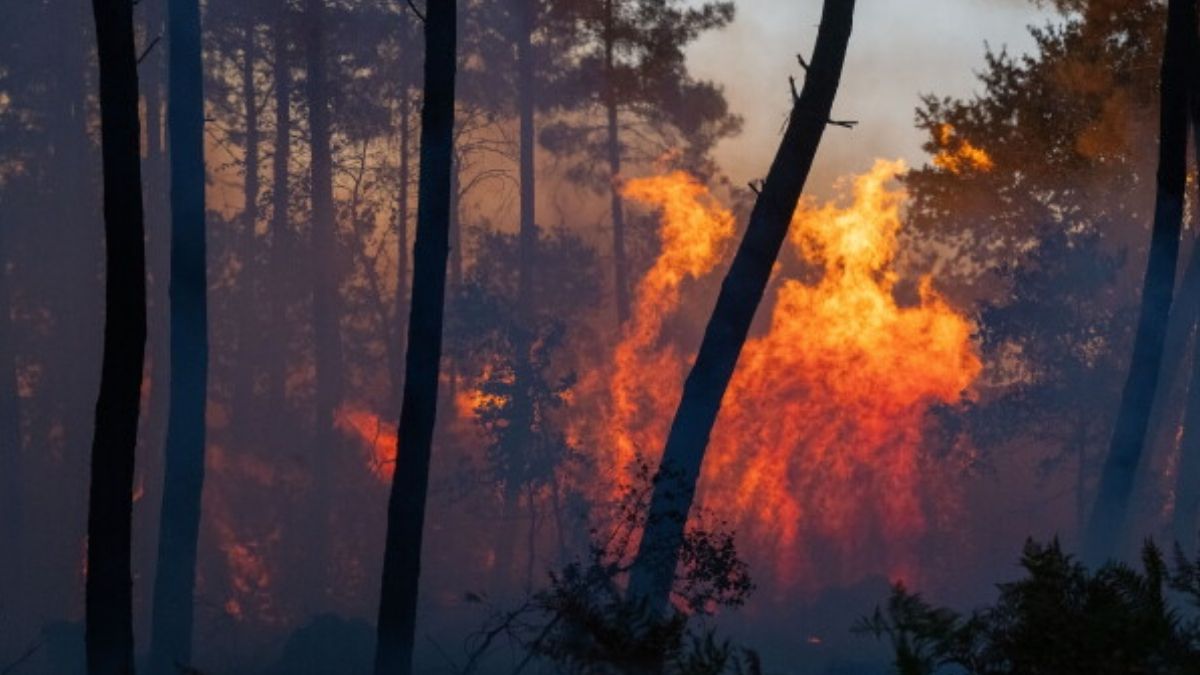
France has deployed military aircraft, sent hundreds of additional soldiers and ordered fresh evacuations as massive wildfires advanced towards the outskirts of Bordeaux on Saturday. Spain, meanwhile, declared its first national wildfire emergency after blazes forced tens of thousands of people to flee. Across the two countries, over 250,000 people have been displaced, making it one of southern Europe’s worst wildfire crises in recent years, reported news agency AP.
France prepared to deploy a specially adapted A400M military transport aircraft to drop flame retardants over the Gironde region, while firefighters, helicopters and water-bombing aircraft continued efforts to stop the flames from reaching more areas, reported AP. Several European countries have also sent aircraft and firefighting support to help Spain and France battle the blazes.
BREAKING: Wildfires force more than 200,000 in total to flee in France and Spain, authorities say pic.twitter.com/AWo9ubvL0E
— Insider Paper (@TheInsiderPaper) July 25, 2026
Prime Minister Sebastien Lecornu described the Gironde wildfire as “unprecedented”, saying it had become so intense that it generated its own winds. “Our priority is clear: protecting human lives,” Lecornu said, urging residents to follow evacuation orders immediately, as reported by AP.
Meanwhile, Spanish Prime Minister Pedro Sanchez said cooler weather had given firefighters “a window of opportunity” to slow some of the fires after they burned through vast stretches of forest.
What’s making the fire more aggressive?
Officials and scientists suggest several factors have combined to create ideal conditions for large wildfires. The biggest reason is the intense heat that has gripped southern Europe this summer, reported Reuters. Spain and France experienced repeated heatwaves that arrived earlier than usual and lasted longer than expected. The prolonged high temperatures dried forests, grasslands and shrubs, leaving vegetation ready to catch fire, reported AP.
Strong winds have made the situation even worse. Winds push flames rapidly across forests, carry burning embers over long distances and ignite new fires far ahead of the main blaze. In the Gironde region, authorities warned that changing winds could push the wildfire closer to Bordeaux, prompting evacuation orders in several western suburbs of the city. Firefighters responded by digging firebreaks, dropping flame retardants and deploying additional emergency crews.
Another important reason is the large amount of dry vegetation available to burn. Experts say abundant plant growth earlier in the year dried out during the hot summer months, creating vast amounts of fuel for wildfires, reported Reuters. Once a fire starts under these conditions, it can spread at extraordinary speed and become difficult to stop.
Scientists also link the growing intensity of European wildfires to climate change. Rising temperatures have increased the frequency and severity of heatwaves across southern Europe. Hotter weather dries soil and vegetation more quickly, extends the wildfire season and creates conditions where even a small spark can trigger a major blaze. The European Union’s Copernicus Climate Change Service has repeatedly warned that hotter and drier conditions are increasing wildfire risk across much of the continent.
Why are authorities struggling to contain these fires?
Officials say these fires are behaving differently from many previous wildfire seasons. Spanish firefighters stated that several blazes spread so rapidly and with such intensity that crews could not attack them directly, reported AP. In France, some residents escaped by boat after flames cut off roads along the Atlantic coast.
The fires have also stretched emergency resources. Several European countries, including Italy, Greece, Portugal, Croatia, the Czech Republic, Slovakia and the Netherlands, have sent aircraft and helicopters to help France and Spain under European cooperation mechanisms, reported AP.
Spain has already recorded about 130,000 hectares of burned forest this year, exceeding its average annual burned area over the past decade, reported AP quoting Prime Minister Sanchez.
Experts say Europe is entering wildfire seasons that are becoming longer, more destructive and less predictable. The European Commission’s Copernicus programme has warned that wildfire danger is increasing because hotter and drier conditions are becoming more common across the continent.


