




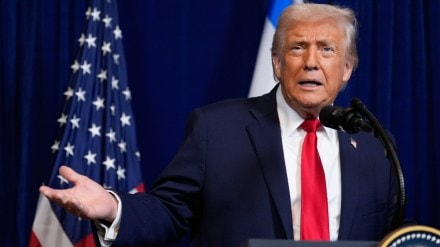
US President Donald Trump has issued his first two vetoes of his second term in office. He rejected two bills that had been passed in the Congress due to bipartisan support, news agency Reuters reported quoting the White House.
Which bills did he block?
The Republican leader has vetoed a pipeline measure and legislation that would include more land for the Miccosukee Tribe in Florida, the White House said on X.
The pipeline bill, known as the Finish the Arkansas Valley Conduit Act, was passed by both the House and the Senate by voice vote, indicating overwhelming bipartisan support. The legislation aimed to facilitate completing a pipeline project to bring clean water to south-eastern Colorado.
Speaking about his decision to veto the bill, Trump said, “Enough is enough…My administration is committed to preventing American taxpayers from funding expensive and unreliable policies. Ending the massive cost of taxpayer handouts and restoring fiscal sanity is vital to economic growth and the fiscal health of the Nation.”
The second bill that Trump vetoed is known as the Miccosukee Reserved Area Amendments Act, would expand the Miccosukee Reserved Area in Florida to include part of the Everglades National Park known as Osceola Camp. It also passed Congress by voice vote.
The White House said Trump had also vetoed a measure to spend $14 million to protect the Osceola Camp within the Everglades National Park that is inhabited by members of the Miccosukee tribe of Native Americans, which has fought Trump’s makeshift immigrant detention center “Alligator Alcatraz” in the Everglades. A federal judge has now ordered the detention center to be shut down.
The legislation was sponsored by representative Carlos Gimenez, whose office did not immediately respond to a request for comment on Trump’s veto.
Trump has accused the Miccosukee Tribe of seeking “to obstruct reasonable immigration policies that the American people decisively voted for when I was elected.”
How many bills has Trump vetoed in the past?
Trump has vetoed 10 bills during his first term and only one of the vetoes was overridden by Congress.
The first veto came two years into his term, on a Senate joint resolution that sought to terminate a national emergency he had declared on the Southern border.


