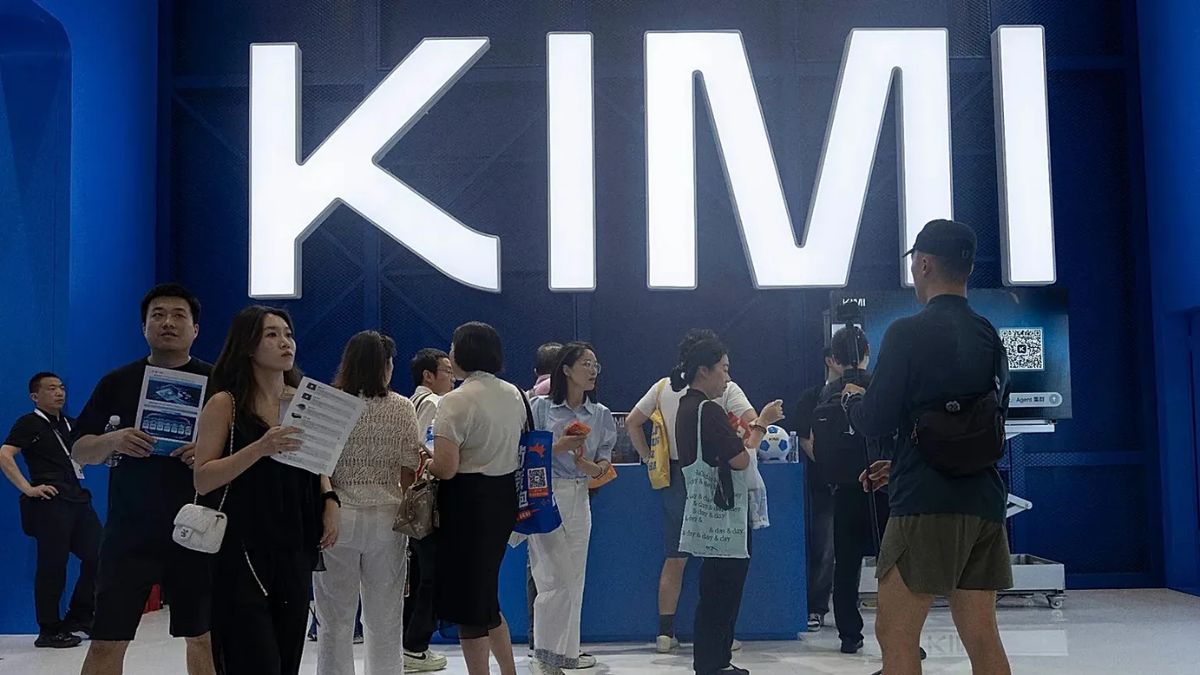
China‘s Moonshot AI is preparing for something that could be one of the biggest artificial intelligence public listings this year, with the company reportedly planning to raise fresh capital at a valuation of as much as $50 billion ahead of a Hong Kong initial public offering (IPO), Bloomberg reported.
The planned fundraising comes just days after the company’s flagship AI model, Kimi K3, went viral, attracting so much interest that Moonshot had to temporarily stop accepting new subscribers because its computing infrastructure could not keep up with demand.
According to Bloomberg, the Beijing-based startup plans to hold talks with investors in August after completing its current funding round, which values the company at $31.5 billion. The upcoming fundraising is expected to be the last outside investment before the company goes public, with an IPO possible before the end of the year.
Moonshot is also working to unwind its offshore red-chip corporate structure before August, a move that would allow it to raise capital onshore and complete other preparations needed for a Hong Kong listing, Bloomberg reported, citing people familiar with the matter.
Kimi K3’s viral success boosts Moonshot’s growth
The fundraising plans come as Moonshot is seeing rapid business growth driven by Kimi K3.
The company reached $300 million in annual recurring revenue (ARR) in June, up from $200 million in April. Since Kimi K3 was launched, the company’s daily revenue has increased by at least six times, according to people familiar with the matter.
But the model’s popularity has also created unexpected challenges. Just 48 hours after Kimi K3 was released, Moonshot paused new registrations and subscriptions because demand was close to exceeding its available computing capacity.
In a post on X, the company said, “Over the past 48 hours, demand has pushed close to the limits of our current capacity. To protect the experience of existing subscribers, we’re temporarily pausing new subscriptions and prioritising compute for current members. Existing subscribed users are not affected.”
The company said it will reopen subscriptions after adding more GPUs and also introduce separate membership plans. “Going forward, we’ll also split membership into two more focused plans: Kimi Membership for Kimi Web, App, and Work; and Kimi Code Membership for coding workflows,” it added.
What makes Kimi K3 different
Kimi K3 has attracted global attention because it combines massive scale with an open-weight approach that gives developers access to the model.
The AI model has 2.8 trillion parameters, making it one of the world’s largest open-weight AI models. Moonshot has said it will release the model’s full weights on July 27, allowing developers to build on top of it.
Instead of depending only on larger computing power, Kimi K3 uses technologies such as Kimi Delta Attention (KDA), Attention Residuals and an ultra-sparse Mixture of Experts (MoE) architecture. Only 16 of its 896 experts are activated at a time, making the model significantly more efficient while supporting a context window of up to one million tokens.
The model is also designed to handle long, complex tasks instead of simple chatbot conversations. It can work across large software projects, use coding tools, understand visual feedback and assist with tasks such as frontend development, CAD design and video editing.
Model impressed developers and industry leaders
Kimi K3 also made an impact across the AI industry soon after its launch.The model ranked below Anthropic’s Claude Fable 5 and OpenAI’s GPT-5.6 in overall capability rankings by Artificial Analysis, but it outperformed both companies’ previous-generation models in coding and general agent evaluations. In Arena blind tests, developers preferred Kimi K3 over leading US models for front-end coding tasks. The launch also drew praise and criticism from prominent figures in the technology industry.
Elon Musk described the model as “impressive”
Dean Ball, who leads strategy at OpenAI, warned that releasing such a powerful model as open-weight pushes the technology industry toward what he called “full AI communism.”
Meanwhile, US Treasury Secretary Scott Bessent said this week that Washington plans to closely examine foreign open-source AI models, including those from China, and act wherever it finds evidence that American companies’ intellectual property has been stolen.
Backed by major investors
Moonshot AI was founded in 2023 by Yang Zhilin, a 33-year-old who studied at Carnegie Mellon University and previously worked at Meta and Google.
Its investors include Meituan, Tencent, IDG Capital, China Mobile and the Beijing AI Industry Investment Fund.
The company had previously raised funding at a valuation of more than $20 billion in a Meituan-led financing round in May. If the new fundraising reaches the reported $50 billion valuation, it would mark one of the fastest valuation jumps among AI startups as Moonshot heads toward its planned Hong Kong IPO.