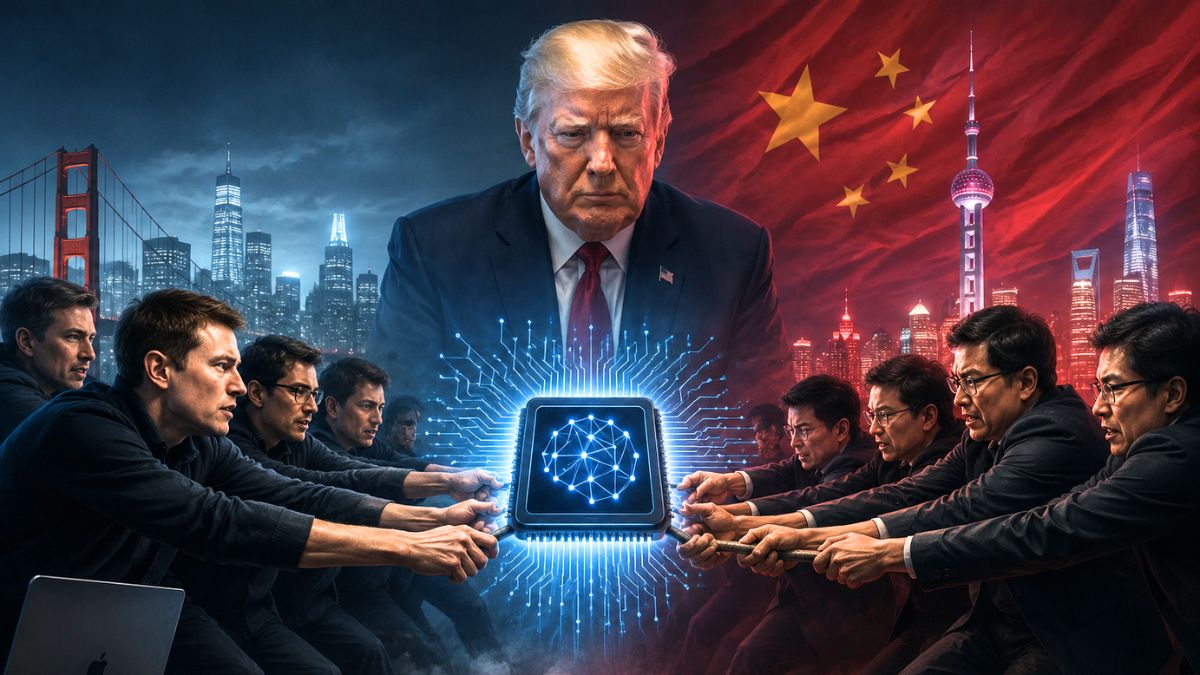
The battle over artificial intelligence in the United States is no longer just about who wins the technology race against China. It has now become a fight over who gets to build the next generation of AI.
Nearly 200 Silicon Valley startups, investors and technology companies have come together to urge the Trump administration not to restrict access to Chinese open-weight AI models, warning that such a move would not hurt China as much as it would cripple America’s own startup ecosystem. Their argument is that while the biggest AI companies can afford expensive proprietary models, thousands of smaller firms cannot.
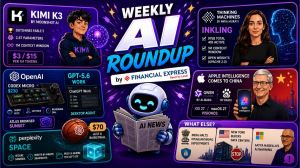
The debate has increased after reports that the White House is weighing measures against Chinese AI models following the rapid rise of Moonshot AI’s Kimi K3, a low-cost, highly capable model that has impressed developers worldwide. At the same time, senior administration officials have accused Chinese firms of intellectual property theft and indicated that sanctions could be on the table.
The growing divide now pits national security concerns against innovation—and startups against some of the biggest names in artificial intelligence.
A startup ecosystem built on affordable AI
For years, the AI conversation has centred on companies such as OpenAI, Anthropic and Google. But behind the scenes, thousands of startups have been building products using open-weight AI models, many of which increasingly come from China.
Unlike closed models, open-weight models make their trained parameters publicly available, allowing developers to customise them, deploy them on their own infrastructure and significantly reduce operating costs. That cost advantage has become increasingly important as American frontier models continue to command premium prices.
Startups say cheaper Chinese models have allowed them to experiment faster, launch products with smaller budgets and compete with larger rivals. Many founders argue they simply cannot afford to build entirely on proprietary AI systems.
That is why reports of a possible US crackdown sparked immediate concern across Silicon Valley. Founders fear restrictions could leave them dependent on a handful of American AI companies that dominate the market.
The newly formed Little Tech Association which includes companies such as Proton and startup accelerator Y Combinator warned that broad restrictions would weaken the very companies expected to drive America’s next wave of innovation.
Why founders see a ban as a win for Big AI
Startup leaders argue that restricting Chinese models would not eliminate competition, it would simply concentrate more power in the hands of OpenAI and Anthropic.
As reported by Politico, in a letter to President Donald Trump and senior administration officials, the association argued that American leadership depends not only on producing world-class domestic AI models but also on allowing builders to access open models already available globally.
Instead of blanket prohibitions, the group urged Washington to adopt targeted safeguards that address genuine security risks without limiting innovation.
Suhail Doshi, founder of AI infrastructure startup Particle and a member of the association, summed up the industry’s concerns bluntly.
“There’ll be hundreds of companies that instantly die. It’s great for Anthropic. We’re all going to have to spend money on Anthropic,” Doshi told Politico.
Harry Godfrey, executive director of the Little Tech Association, echoed that view, saying policymakers should use “a scalpel rather than a sledgehammer.”
“The answer here would be, What is the lightest-touch way that doesn’t raise costs, limit access or inhibit American innovation while still addressing” legitimate security concerns, he told Politico.
Kimi K3 changed the conversation
The debate gained urgency after Moonshot AI unveiled Kimi K3, a Chinese open-weight model that many developers say performs close to leading American systems while costing significantly less to use.
Its arrival reinforced a growing trend already visible with models from DeepSeek and Alibaba, Chinese AI companies are no longer competing only on price but increasingly on capability as well.
The rapid improvement of these models has unsettled both policymakers and American AI companies, raising questions about whether expensive proprietary systems can maintain their technological edge.
The popularity of Kimi K3 also reportedly reignited discussions within the Trump administration over whether Chinese AI models should face restrictions.
According to reports, officials have considered measures ranging from procurement restrictions and tighter licensing requirements to potential executive orders governing how US companies deploy Chinese AI systems. While a blanket ban has reportedly not been seriously discussed in recent meetings, the administration is exploring multiple ways to discourage their adoption.
Washington’s concerns go beyond competition
The administration argues the issue is not simply economic. Officials have repeatedly raised concerns about cybersecurity, potential surveillance risks and the possibility that Chinese companies are using American AI technology without authorisation.
Treasury Secretary Scott Bessent this week said the US would investigate whether Chinese AI firms had copied American models through intellectual property theft.
“We’ve seen a lot of talk about open source models coming and threatening the large language models in the U.S.,” Bessent said on Fox Business.
“This administration supports open source models, but what we do not support is IP theft. If we see, especially, that overseas models are stealing from our great companies, we have the ability to sanction them because of this theft.”
The administration has also alleged that Moonshot AI used large-scale model distillation, a technique where one AI model learns from another to develop Kimi K3. Officials claim the company built sophisticated systems to distil American models while attempting to avoid detection.
A tougher approach is taking shape
Washington has already restricted China’s access to advanced AI chips and tightened export controls on semiconductor technology. Now, officials appear to be indicating that the next stage of competition could focus directly on AI models themselves.
Previous proposals reportedly included adding Chinese AI companies to the Commerce Department’s Entity List, issuing cybersecurity advisories discouraging companies from using Chinese models and requiring firms deploying such systems to guarantee their security while accepting liability if breaches occurred.
Some of those efforts were shelved amid concerns that excessive regulation could slow American innovation. But with growing national security concerns and increasingly capable Chinese AI models, momentum behind stricter measures appears to be building once again.
Not everyone agrees with Washington
Even as pressure grows inside the administration, some of America’s biggest technology leaders argue restrictions could do more harm than good. Nvidia CEO Jensen Huang has publicly rejected the idea that Chinese open-source AI models should be banned. He described claims that these systems inherently serve as backdoors for the Chinese government as a “misconception,” noting that developers download the models themselves and can customise their guardrails.
Huang also dismissed suggestions that Chinese open-source models would replace American frontier AI. Instead, he argued the industry needs both open-source and proprietary systems to thrive. “These Chinese models are excellent,” Huang said. “Open-source models that are excellent should be used.”
The next AI battle is about who gets to innovate
The dispute shows a growing divide within the American AI industry. Large frontier AI companies have increasingly pushed for stronger restrictions on Chinese developers, citing security risks and intellectual property concerns.
Many startups, however, believe the bigger danger lies in limiting competition. They argue that banning globally available open-weight models would neither stop China from advancing nor prevent those models from spreading internationally. Instead, they say, it would make AI development more expensive for smaller American firms while strengthening the market position of a few dominant players.