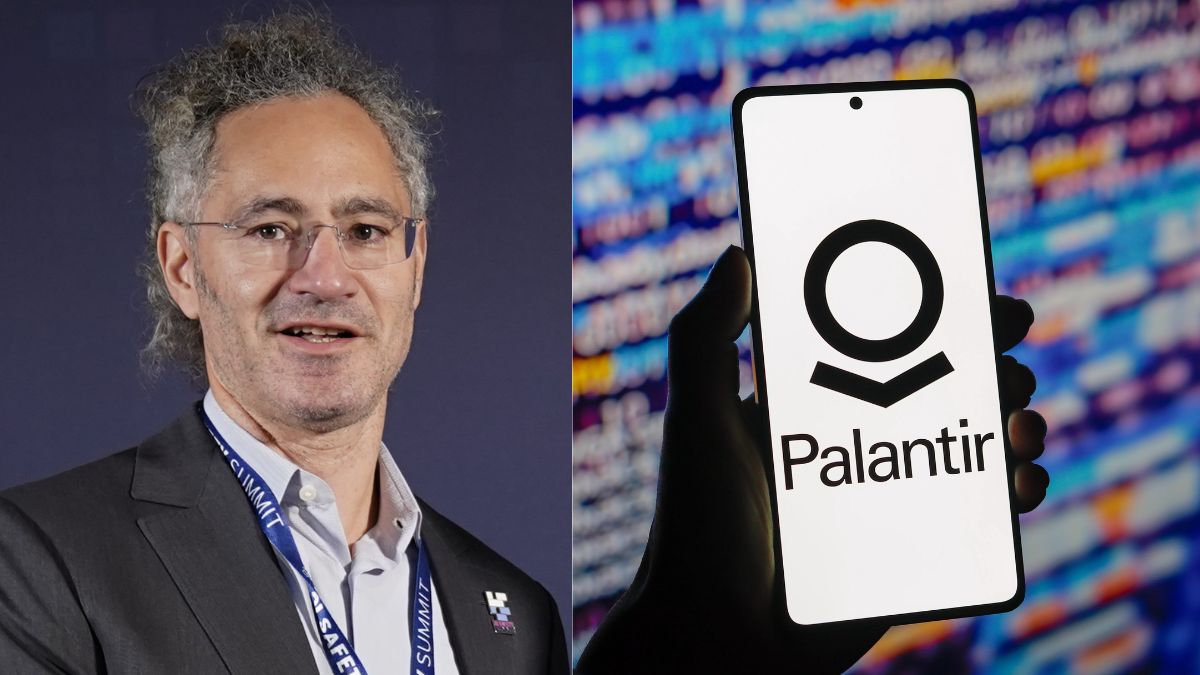
The artificial intelligence boom may improve life for the average person, but the biggest financial rewards could flow to a small group of people already sitting at the top, according to Palantir CEO Alex Karp.
Karp has warned that AI could create a hugee divide between ordinary people and those building and controlling the technology, with the latter accumulating levels of wealth that were far less common during previous technological revolutions.
In an interview with Axel Springer CEO Mathias Dopfner, Karp called AI-driven wealth disparity the “biggest problem in this country.”
“While it will raise the standard of living of the average person, the people involved are likely to get 10, 100 times wealthier than they already are,” Karp said on an episode of Döpfner’s “MD Meets” podcast that aired Monday.
AI could create ‘unimaginable wealth’ for a few
Karp said the distribution of wealth created by AI could look very different from that of earlier technological shifts. In the past, he argued, people at the top became richer, but the gap between them and everyone else did not expand on the same scale.
“The person at the bottom, maybe their salary doubled, and the person at the top became five times wealthier, but it was very unusual to be a billionaire 40 years ago.”
AI, he said, could change that equation dramatically. “You now have a revolution where, you know, I could become 20 times wealthier than I am now,” he added.
According to Karp, AI is creating a “complete decoupling” between the economic gains experienced by ordinary people and the “unimaginable wealth” that could be accumulated by a small group at the top.
‘They’re telling you your life is going to suck’
The wealth divide is only one part of the public anxiety surrounding AI. Karp said people are also being told by some of the industry’s own leaders that the technology could disrupt their jobs and livelihoods, even as those building it become increasingly wealthy.
“The people running the lab companies, who are the leaders, told you it’s true,” Karp said. “They’re telling you your life is going to suck. And they’re also getting very wealthy, and you don’t find them very likable.”
Karp did not name any executives. However, Anthropic CEO Dario Amodei and OpenAI CEO Sam Altman have previously warned about AI-driven job disruption, though they have recently softened their positions.
Public unease over AI has also been growing. Gen Z has shown resentment toward the technology, while the rapid expansion of data centers has faced opposition from some communities and politicians.
Karp says AI is being oversold
Karp does not believe AI will only produce negative outcomes. He said the technology could improve many people’s lives, but rejected the idea that everyone would benefit equally or profit from the boom.
“The overselling of AI in this country is really, really, really, somewhat disconcerting, but it’s also depressing because you don’t have to do it,” Karp said.
He described AI as a “natural resource” that carries both positive and negative potential, rather than a technology that will automatically deliver a “plethora of good things” for everyone.
Karp also took aim at the personalities leading the AI race. “These are like very oddly-shaped-IQ specimens that you probably wouldn’t want to have over for dinner,” he said. “And if they were over for the dinner, you have nothing to talk to them about. And, by the way, vice versa.”
‘Something has gone completely wrong’ with the AI market
Karp’s latest comments follow another criticism of the AI industry earlier this month, when he questioned the token-based model used by major US AI labs such as Anthropic and OpenAI as costs continue to rise.
“I’m not throwing shade at them, but something has gone completely wrong,” he told CNBC. “The basic view among enterprises in this country is I’m going to chillax and waste my time with tokens.”
The cost of using newer AI models has been rising, pushing businesses to focus more closely on whether their AI spending produces a clear return. Some enterprises are also turning to open-weight models that can perform similar tasks at a lower cost, while the rapid progress of Chinese AI models has intensified competition with US frontier labs.