US forces struck Iranian coastal radar and surveillance sites on Saturday after shooting down four Iranian drones near the Strait of Hormuz, marking the latest escalation in the three-month-old conflict between the two countries, reported Reuters. According to US Central Command, the drones appeared to be targeting maritime traffic in the region. A US official told Reuters that military assessments indicated the drones posed a threat to commercial shipping.
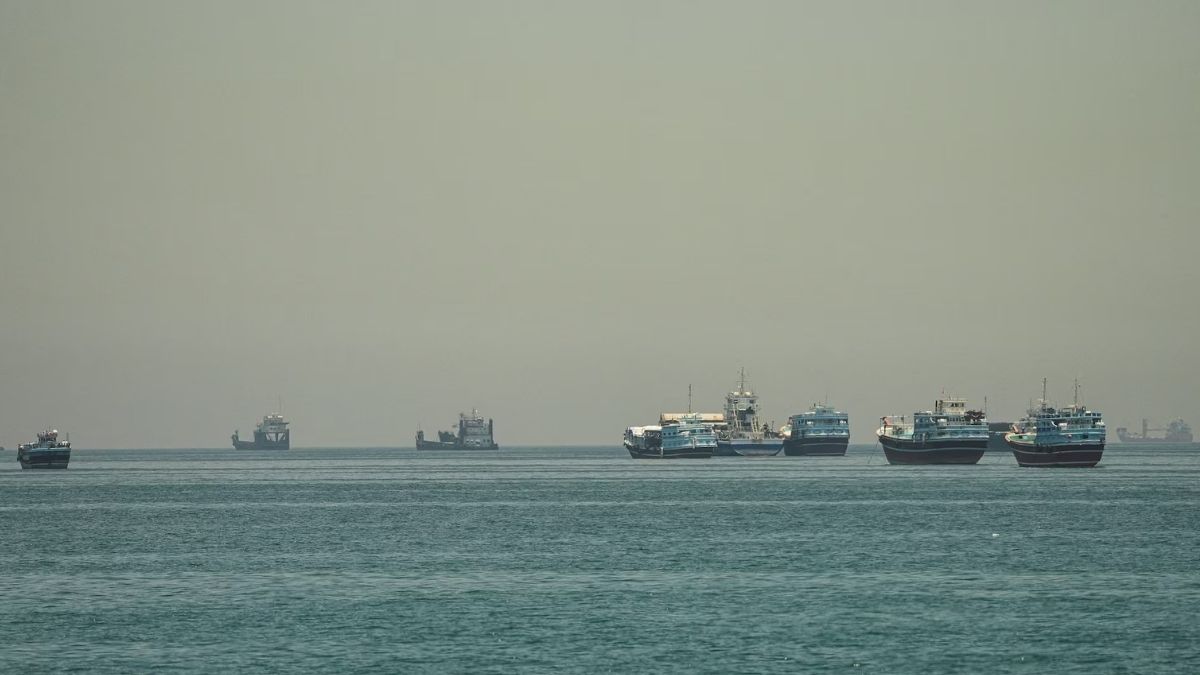
Following the interceptions, the US military launched strikes against Iranian coastal surveillance and radar sites at Goruk and on Qeshm Island. Both locations sit along the Strait of Hormuz, a strategic waterway through which a significant portion of the world’s oil supply normally passes.
Iran condemned the strikes. The country’s foreign ministry accused the US of violating an April 8 ceasefire agreement and warned that repeated military actions showed the United States was not serious about reducing tensions. In a statement, Iran said the US would bear responsibility for the consequences of its “illegal actions” and any future escalation.
Details of US-Iran conflict
The Strait of Hormuz has become one of the most crucial points in the war. Before the conflict erupted, nearly one-fifth of the world’s oil shipments passed through the narrow waterway connecting the Persian Gulf to global markets.
Since the war began in late February, Iran has significantly restricted shipping through the strait. Tehran has sought greater leverage in negotiations by linking maritime access to demands that include sanctions relief, access to frozen oil revenues and the easing of restrictions on its ports, reported Reuters.
The latest military exchange has added fresh uncertainty to global energy markets. Any disruption to shipping through the Strait of Hormuz can affect oil supplies and fuel prices worldwide.
The conflict has already contributed to higher energy costs and supply chain disruptions. The United Nations World Food Programme warned this week that rising fuel and transportation costs linked to the war are pushing millions of people closer to hunger.
What IRGC said
Iran’s Revolutionary Guard Corps claimed responsibility for retaliatory attacks against US military facilities in Kuwait and Bahrain. The group also said it targeted four tankers attempting to cross the Strait of Hormuz without Iranian permission.
Kuwait’s military reported that seven ballistic missiles entered the country’s airspace early on Saturday. Authorities said the missiles passed over populated areas and debris fell in several locations, causing material damage but no casualties.
Bahrain activated emergency sirens and advised residents to seek shelter. Iranian officials later claimed they had struck US bases in both countries. However, the US military said six missiles were intercepted and a seventh failed to reach its intended target.
Kuwait strongly condemned the attacks. Its foreign ministry described the strikes as “blatant aggression” that threatened civilians and regional stability.
Despite the military escalation, diplomatic channels remain open. The United States and Iran continue indirect negotiations aimed at securing an interim agreement that could pause the conflict and create room for broader talks on Iran’s nuclear program and regional security issues.
However, progress has remained slow. Periodic military confrontations have repeatedly disrupted attempts to reach a breakthrough. A possible diplomatic development emerged on Saturday when Iranian state media reported that Pakistan’s Interior Minister Mohsin Naqvi was traveling to Tehran. According to a Pakistani source cited by Reuters, Naqvi was carrying a message for Iran’s Supreme Leader Mojtaba Khamenei as part of mediation efforts.
Economic concerns
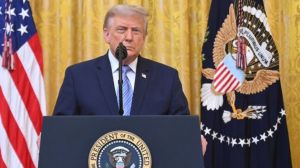
The war has also created political challenges for US President Donald Trump. Rising gasoline prices and economic concerns have increased pressure on the administration to find a path toward ending the conflict. Speaking to NBC News, Trump earlier said US military operations had severely damaged Iran’s missile and drone production capabilities. “They have some missiles, they have some drones. I would say percentage wise, maybe 21%-22% of their missiles. It’s a lot of missiles, but it’s not what it was when we first attacked,” Trump said.
When asked why Iran had not agreed to a deal despite mounting pressure, Trump replied, “Because they are strong. They’re proud. There are things they never thought they’d be doing that they’re going to have to do, they’ve got no choice, and it takes a little while.”
Iran has also attached conditions to any future agreement. Mohsen Rezaei, an adviser to Iran’s supreme leader, told CNN that progress toward peace would require the United States to unfreeze $24 billion in Iranian assets. “The US would enter into a dark corridor” if it resumed major attacks, Rezaei warned.
The regional crisis extends beyond the US-Iran conflict. In Lebanon, tensions flared after an Israeli strike killed two Lebanese army officers and a soldier in southern Lebanon. The Lebanese military confirmed the deaths, while Israel said it was investigating the incident.
The Israeli military said it targeted the vehicle after identifying what it believed was a threat linked to Hezbollah activity. Hezbollah rejected that claim and accused Israel of continuing its military campaign in Lebanon.
Iran has tied any future peace arrangement with the US to a ceasefire between Israel and Hezbollah. Hezbollah leader Naim Qassem recently rejected a US-backed proposal aimed at ending the fighting because it did not include a full Israeli withdrawal from Lebanese territory.