




By Anuradha
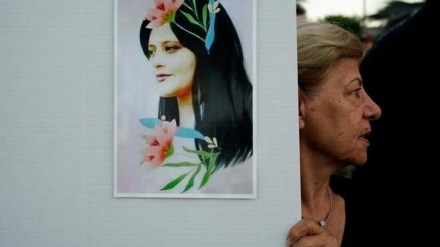
This September marks the one-year anniversary of the custodial death of Kurdish-Iranian woman Zhina (Mahsa) Amini. Iran’s morality police detained Amini for her non-compliance with hijab regulations. Her death proved to be a catalyst, sparking nationwide protests that reverberated globally, shedding light on the pervasive atrocities and gender discrimination prevalent in the country.
Originating in her hometown, Saqqez, in the northwestern Kurdish region of Iran, the protests quickly gained momentum and expanded nationwide. This marked a significant turning point in the country’s political landscape, with the protests erupting and extending to major urban centres. While much coverage rightly focuses on the broader social discontent of Iranians toward the regime, the Kurdish dimension of the protests in Iran remains a less-explored aspect.
Here, attention is drawn towards three points that highlight this. First, although the Iranian protests are fueled by women’s grievances at their core, an intrinsic Kurdish perspective is woven into the fabric of these demonstrations. Notably, the government has actively worked to prevent the protests from adopting a distinctly Kurdish outlook, mindful of the potential repercussions on Iran’s multi-ethnic society, encompassing Azeris, Lurs, Baluch, and Arabs. This is of considerable significance, as the regime aims to forestall the fragmentation of the Iranian identity and strengthen the Kurdish identity within Iran.
One avenue through which this was manifested was in the language of the protests. While the general populace might recall the 22-year-old victim as Mahsa Amini, in the persistent and vocal protests of Kurdish areas, her Kurdish name, Zhina, took precedence. This holds significance given that, like several other nations in the region, Iran restricts Kurds from emphasizing their language and culture. Legal constraints in Iran prevent ethnic minorities, including Kurds, from registering names considered foreign by the regime, especially those not aligned with ethnic nationalism. Strikingly, even in international reporting, the name Mahsa Amini has been utilized, thereby overlooking her Kurdish identity.
Secondly, the regime leveraged the Kurdish component of the protests to portray the protests as fueled by foreign-backed Kurdish separatism. This holds significance, considering that the Kurdish factor played a pivotal role in the protracted duration of the protests. It should be noted that areas in Iran dominated by the Kurdish populace, like Kordestan, West Azerbaijan, Kermanshah, and Sistan and Baluchistan, have been reeling under protests since last year. It also sheds light on Iran’s strained relationship with Kurds in neighbouring Iraq. This diversionary tactic aims to shift focus away from the genuine grievances fueling nationwide demonstrations, allowing the regime to justify oppressive measures to preserve national security and territorial integrity.
To such effect, Iran’s ideological military force, the Islamic Revolutionary Guard Corps (IRGC), executed multiple missile and drone attacks on Iraqi Kurdistan over the last year. These military actions targeted Iranian Kurdish opposition factions, primarily the Kurdish Democratic Party of Iran (KDPI), Komala, Kurdistan Free Life Party (PJAK), and the Kurdistan Freedom Party (PAK), who were actively involved in protests in the region. In March this year, Iran and Iraq signed a security agreement to enhance border security with Iraqi Kurdistan. As part of this agreement, Iraqi authorities were given until September 19 to disband these groups and relocate their camps out of the Kurdish zone.
In anticipation of this approaching deadline and to prevent a recurrence of the protests witnessed the previous year, the IRGC significantly augmented its presence in several Kurdish cities. Recent reports also indicate that, under pressure from Tehran, Iraqi Kurdish authorities have taken steps to disarm Iranian Kurdish groups operating in their territory by relocating these individuals to refugee camps in Nineveh province.
Thirdly, as the Kurdish-majority regions within Iran remain focal points of protests, they have borne the brunt of the government’s harsh reprisals. The heightened crackdown in Kurdish areas is partly fueled by the regime’s apprehension that these regions could serve as a catalyst for protests across Iran. Approaching the one-year mark of the protests, the IRGC resorted to employing overwhelming force to assert control. According to the Statistics and Documents Center of the Hengaw Organization for Human Rights, government institutions detained a minimum of 91 Kurdish individuals in less than two weeks in September.
Furthermore, hundreds of individuals have been summoned for questioning, subjected to interrogations, and faced threats. Notably, IRGC deployed tanks in Saqqez’s Aychi Cemetery, where Amini is laid to rest. Even Amini’s family members, including her father, have been apprehended and cautioned against organizing any event to commemorate her on the anniversary of her passing.
In the end, these year-long protests have strained Tehran’s relationship with Kurds within Iran and the Kurdish population in neighbouring Iraq. This will likely have enduring implications for civil order within Iran and its diplomatic ties with Baghdad.
The author is Doctoral Candidate, Centre for West Asia Studies, Jawaharlal Nehru University, New Delhi.
Disclaimer: Views expressed are personal and do not reflect the official position or policy of Financial Express Online. Reproducing this content without permission is prohibited.


