




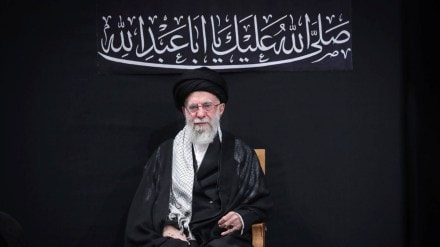
Iran’s Supreme Leader Ali Khamenei has issued a warning in his first public remarks since protests started across the country and declared that “rioters must be put in their place”. The protests, driven largely by economic hardship, have turned violent in some areas, killing at least 15 people across the nation.
America will come to rescue Iranian protestors
His remarks came shortly after US President Donald Trump warned Tehran against “shooting and violently killing” peaceful protestors.
“If Iran shoots and violently kills peaceful protesters, which is their custom, the United States of America will come to their rescue. We are locked and loaded and ready to go,” he said in a Truth Social post.
‘False promises, deception,’ Khamenei responds to Trump’s warning
Khamenei, in response to Trump’s warning, accused the United States of making “false promises” and resorting to “deception”.
“That ranting American sits there talking about the Iranian nation, spewing a combination of slander and promises. False promises! Deception!” he wrote in a post on X (formerly Twitter).
That ranting American sits there talking about the Iranian nation, spewing a combination of slander and promises. False promises! Deception!
— Khamenei.ir (@khamenei_ir) January 3, 2026
In a separate statement, Khamenei drew a distinction between peaceful protest and violence. “We talk with protesters. The officials must talk with the protesters. But there’s no point in talking with a rioter. Rioters must be put in their place.”
Protesting is legitimate, but protesting is different from rioting. We talk with protesters. The officials must talk with the protesters. But, there’s no point in talking with a rioter. Rioters must be put in their place.
— Khamenei.ir (@khamenei_ir) January 3, 2026
He also said that “Iran will not give in to the enemy” and will bring the “enemy to its knees”.
“What’s important is when one realises an enemy wants to force something on one’s government or nation with false claims, they must stand firmly against that enemy. We won’t give in to them. With reliance on God & confidence in the people’s support, we’ll bring the enemy to its knees,” he said in yet another post.
‘Victory belongs to you’: Pahlavi
Iran’s former Crown Prince Reza Pahlavi has come out in support of protesters, adding that if they maintain “discipline and solidarity”, the victory belongs to them.
“My fellow compatriots, I send greetings to each and every one of you who bravely kept Khamenei and his regime awake throughout the past week,” he said.
He added, “In particular, I want to send greetings to the patriotic teenagers and youth of our country, whom I call ‘Generation V’ for Victory. As I said before, the key issue is the continuous seizure of the streets and the creation of barricades to prevent and obstruct the regime’s repression.”
Protests in Iran
Iran is facing renewed unrest as the country continues to grapple with the aftermath of a 12-day conflict launched by Israel in June, during which the United States struck Iranian nuclear facilities. The impact of the war, combined with mounting economic strain and US sanctions, has pushed the national currency into a sharp fall. The rial is now trading at roughly 1.4 million to the US dollar.
The protests initially began with merchants in Tehran before spreading to over 170 locations in 25 of Iran’s 31 provinces, the US-based Human Rights Activists News Agency reported early Sunday. The group reported that at least 15 people have been killed, while more than 580 individuals have been arrested, AP reported.
The collapse of the rial has led to a widening economic crisis in Iran. Prices are up on meat, rice and other staples of the Iranian dinner table. The nation has been struggling with an annual inflation rate of some 40%.In December, Iran introduced a new pricing tier for its nationally subsidised gasoline, raising the price of some of the world’s cheapest gas and further pressuring the population. Tehran may seek steeper price increases in the future, as the government will now review prices every three months.
While early protests focused largely on economic grievances, they have since evolved into broader expressions of anger against the government. Public resentment has been building for years, particularly since the death of 22-year-old Mahsa Amini in police custody in 2022, an incident that sparked widespread protests across the country.


