




Singaporean authorities have ordered three social media platforms to block access to 14 online posts promoting anti-India sentiment and targeting the Indian diaspora community in the Southeast Asian country. Over the week, Singapore’s Ministry of Home Affairs (MHA) issued a statement, voicing its firm stance against inflammatory and vitriolic narratives that undermine the nation’s “model of multiculturalism.”
Singapore has a population of over six million people. Of these, 75% of residents are of Chinese descent, 15% are Malay, and between 7% and 9% are of Indian origin, PTI reported.
In accordance with the official Disabling Directions (DD) order, which invoked the Online Criminal Harms Act 2023 (OCHA), the Singapore Police Force (SPF) has been urged to deal with social media posts circulating on YouTube, Facebook and X (formerly Twitter). Once implemented, the platforms will take reasonable steps to block Singapore’s users from accessing these posts.
Officials blame Chinese platform for spreading anti-Indian content
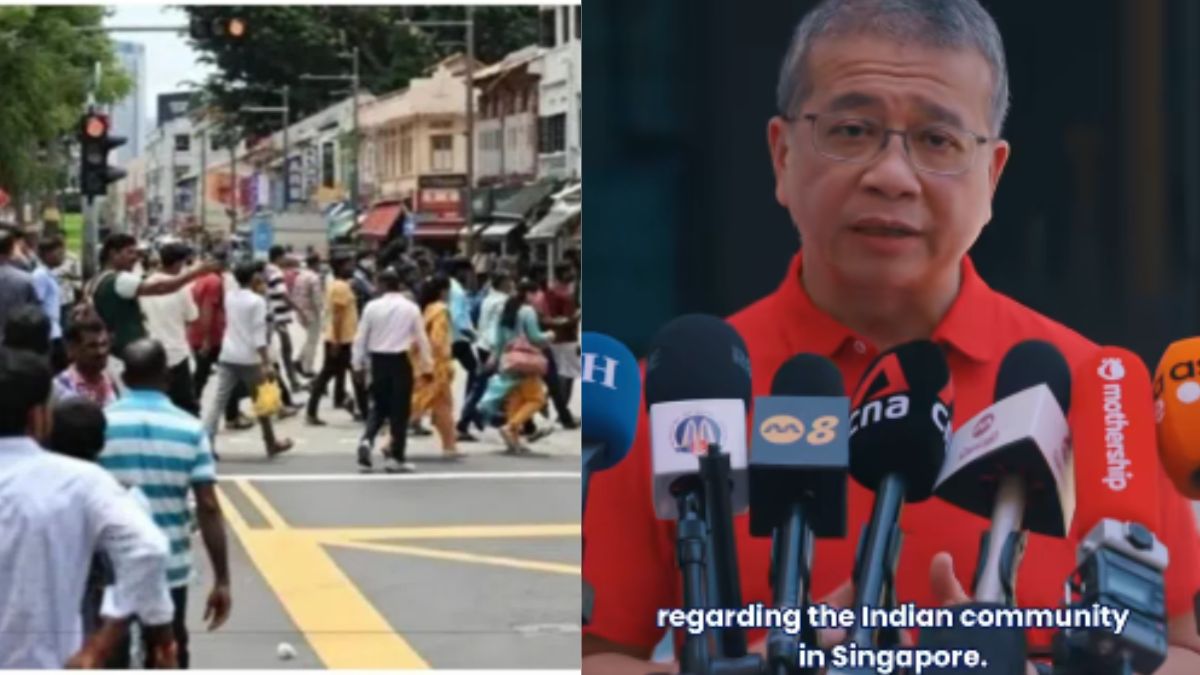
Responding to the concerning development, Second Minister for Home Affairs Edwin Tong, who is also Minister of Law, told reporters that the problematic content perpetuating anti-Indian rhetoric likely “originated from overseas.” In line with his statements, the ministry cited investigations suggesting the content emerged from a China-based platform. Subsequently, other platforms and websites amplified it.
According to MHA, these narratives intend to portray Singapore’s multiracial policy as a “facade meant to appeal to Western values.”
Further targeting the Indian community in the country, the troubling narrative pushed that the growing number of “ethnic Indian politicians in Singapore… would act in favour of Indian immigrants.”
As the derogatory information is believed to come from a Chinese source, the content instilled the idea that Singapore’s “stability” resulted not from its multiracial policy, but from its “majority Chinese demographics,” MHA stated. Furthermore, the ministry asserted that such content was fuelled by the mindset that Singapore’s culture “is fundamentally Chinese” and that the government’s strategy of “decoupling” itself from China ignores the “threat of a growing Indian community which would lead to a negative outcome.”
What kind of anti-India content was posted?
As the Ministry of Home Affairs shared a screenshot of a YouTube account using footage of crowded streets along Singapore’s Little India to target the Indian diaspora, Minister Edwin Tong said, “These videos attack our multiracial society, and they try to divide people based on race. This, however, is not who we are. Every community in Singapore here is valued, and everyone has an equal place.”
Tong also stressed that the posts were not a part of a coordinated campaign by their government. In a statement issued on June 6, MHA further highlighted that certain images of a crowd of Indian devotees at a religious festival in Pagoda Street were “selectively” used by a foreign source to push the narrative that Singapore has been “overcrowded” with Indians.
The demeaning language used in these posts described the Indian community in Singapore in reference to the increasing number of Indian migrants, likening it to “a concentration of curry.”
MHA added in the statement, “Singapore firmly opposes nativism and xenophobia. Any attempt to pit one community against another here must be firmly rejected. These attacks coming from a foreign source are doubly unacceptable.”
As stated in the official Singaporean news release, such narratives started circulating in the Chinese information space last month. They alleged that the Southeast Asian nation was “displaying anxiety over our cultural identity and ethnic politics.” It only gave way to more inflammatory online content about “Singapore’s cultural diversity and suggesting that Singapore was being overrun by Indians.”
Speaking in favour of Indian migrant workers in sectors such as construction, the Singaporean ministry underscored that they are here “to make an honest living,” and contribute to the country’s growth and development as “valued members” of society. After assessing the controversial posts, the MHA and Singaporean police noted that the content “knowingly” promoted feelings of enmity between different groups on “grounds of race.”
The authorities will also hold these posts responsible for committing an act “prejudicial to the maintenance of harmony between different racial groups in Singapore.” Therefore, they are likely to constitute an offence under Section 298A of the Penal Code 1871.
While speaking to reporters, Minister Tong said that their priority is to get these posts of foreign origin removed. “We don’t tolerate any narratives at all that seek to undermine the racial harmony that we enjoy and that we protect, especially when they are propagated by foreigners,” he asserted.


