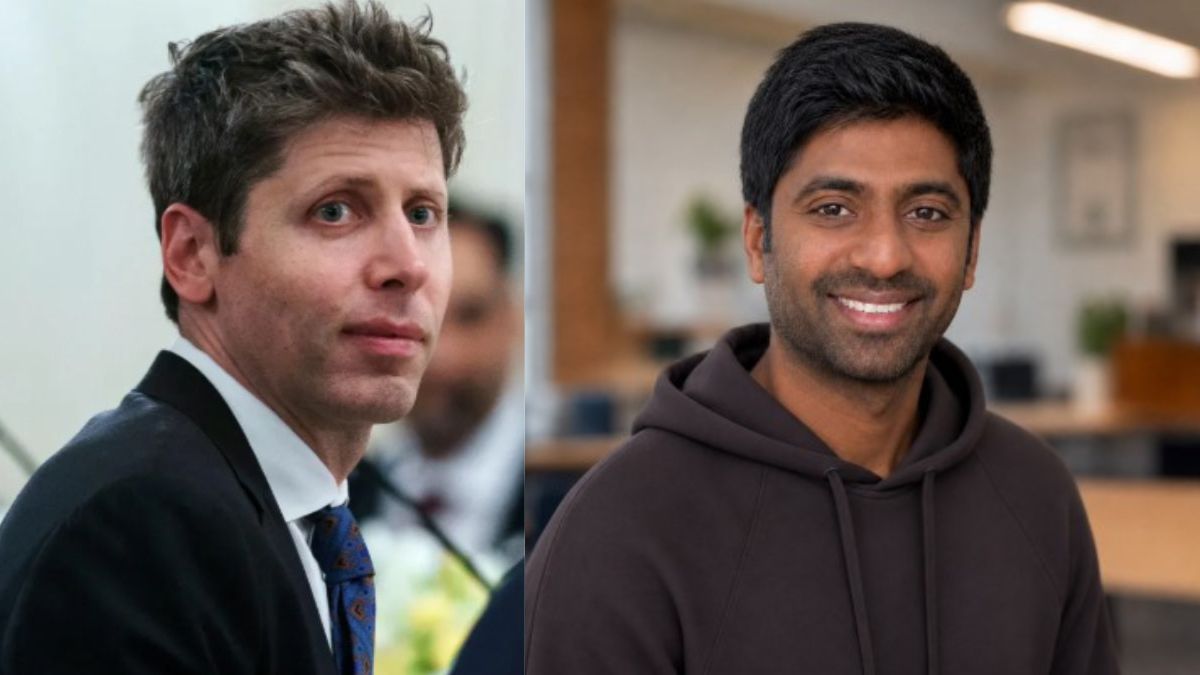
OpenAI has appointed Uday Ruddarraju as its new Chief Technology Officer for the Compute team. The confirmation came from the Indian-origin techie on Saturday after what he described as an “incredibly rewarding” first 12 months within Sam Altman’s artificial intelligence startup. Ruddarraju’s promotion, after climbing the corporate ladder as a software engineer in the United States, also comes a year after he quit Elon Musk’s xAI.
Indian-origin techie promoted to OpenAI Compute CTO’s role
Sharing the big reveal in a LinkedIn post earlier this week, Ruddarraju also used the opportunity to plug a “hiring” message to other “exceptional people across the stack” who would want to join OpenAI’s mission to “build the world’s largest compute footprint so frontier AI can reach everyone and every workflow.”
“I’m excited to share that I’m stepping into the CTO, Compute role at OpenAI,” Uday wrote in a social media post.
“My first 12 months at OpenAI have been incredibly rewarding. Our Compute team has worked relentlessly to bring capacity online quickly and reliably, while doing the deep systems across compute, network and storage, and ML work needed to train frontier models like GPT‑5.6. As we scale, the problems only get harder that require pushing the frontiers and innovating across every layer (literally) of the stack.”

He continued, “We’re on a mission to build the world’s largest compute footprint so frontier AI can reach everyone and every workflow. We have a very exciting compute ramp and roadmap coming up. There is a lot to build across large scale distributed systems, hardware, manufacturing, and data center builds spanning civil, mechanical, and electrical engineering. We’re hiring exceptional people across the stack. Come build with us.”
According to his LinkedIn profile, the Indian-origin tech executive first joined OpenAI as Head of Compute and Infrastructure in July 2025, the same month he left his role as Head of Infrastructure Engineering at xAI. Spending a little over a year at Elon Musk’s artificial intelligence company, Uday led the team responsible for building the supercomputer Colossus with over 250,000 GPUs.
Uday Ruddarraju left Elon Musk’s xAI to join OpenAI a year ago
Ruddarraju announced his resignation from xAI in a July 8, 2025, social media post, wherein he also affirmed that reporting to the richest man in the world and learning from him directly were some of the most crucial takeaways from his previous stint.
“When I first joined, I thought everyone was absolutely nuts for thinking we could deploy 100K GPUs in 4 months, especially without a fully functioning site. Watching us go and double that, and most importantly successfully train Grok 3 made me incredibly proud… and very happy to be wrong,” he wrote on X at the time.
“Thank you @elonmusk and everyone at xAI for the rare opportunity to help build something truly foundational with Colossus. It was a privilege to be part of a mission this bold, and to see from the inside what relentless focus and execution really look like. Reporting into Elon and learning directly from him was definitely the best part about working at xAI.”
He added, “Special thanks to everyone on the infrastructure team who met impossible expectations and the entire research team for your partnership throughout. You’re the best! I am sure building Colossus and training Grok 3 are definitely highlights of my career I will remember forever.”
After an unforgettable ride, I’ve decided to move on from @xai and yesterday was my last day.
— Uday Ruddarraju (@udayruddarraju) July 8, 2025
When I first joined, I thought everyone was absolutely nuts for thinking we could deploy 100K GPUs in 4 months, especially without a fully functioning site. Watching us go and double…
The Indian-origin techie even name-dropped Musk’s longtime pal and Nvidia CEO in the farewell post, saying, “Jensen Huang was right, Elon and his teams are singular in what they can achieve. Grateful to have played a small part in shaping the future of AI Compute from the inside.”
The former eBay and Robinhood executive earned his Master of Science degree in Computer Science from the University of Minnesota. Before kicking off his educational and professional journey in the US, he secured his Bachelor of Engineering degree in Computer Science from Chaitanya Bharathi Institute of Technology in Hyderabad, India.