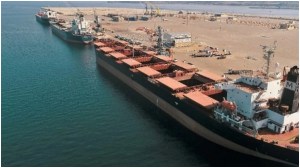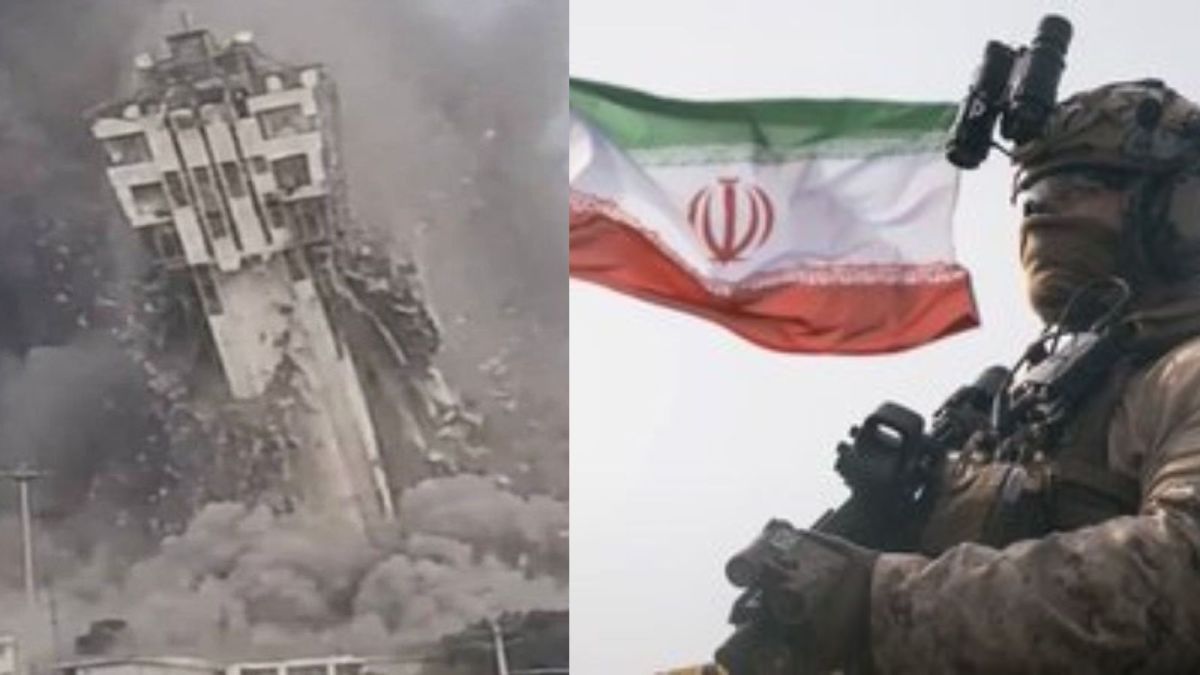
India has confirmed that the Shahid Beheshti terminal at Iran’s Chabahar Port, which is developed and operated by India, was not damaged after the United States carried out an airstrike on a surveillance tower at the neighbouring Shahid Kalantari port earlier this week.
The confirmation came from the Ministry of External Affairs (MEA) on Friday after the United States carried out strikes on Chabahar as part of its ongoing military campaign against Iran.
For India, Chabahar gives direct access to Afghanistan and Central Asia without passing through Pakistan. It is also a key part of the International North-South Transport Corridor (INSTC), a trade route connecting India with Russia and Europe. Because of its strategic importance, India has continued to support the project despite growing political and economic challenges.
On July 16, U.S. forces successfully destroyed the Chah Bahar Shahid Kalantari Port surveillance tower, part of a maritime surveillance network along Iran’s Gulf of Oman coastline used for decades by the Islamic Revolutionary Guard Corps (IRGC) to track and target commercial… pic.twitter.com/CgBNvgOFf9
— U.S. Central Command (@CENTCOM) July 17, 2026
MEA responds to report of destruction
Speaking at a media briefing in New Delhi on Friday, MEA spokesperson Randhir Jaiswal said India had seen reports of the strike but confirmed that the Indian-operated terminal was safe.
“The Shahid Beheshti Terminal at Chabahar has not suffered any damage, and discussions on the project continue with stakeholders.”
When asked whether the US strike had affected India’s work at the port, Jaiswal pointed to another issue that has already been affecting the project. “A waiver granted by the American side lapsed some time ago, and India has since been in discussion with relevant stakeholders on how to move the issue forward.”
The Shahid Beheshti terminal is operated by India Ports Global Limited (IPGL), a wholly owned subsidiary of India Ports Global Chabahar Free Zone (IPGCFZ). The company runs the terminal under a renewable 10-year agreement signed with Iran’s Ports and Maritime Organisation.
US confirms Chabahar port attack
The US Central Command (CENTCOM) said its forces destroyed the surveillance tower at Shahid Kalantari Port on July 16. Shahid Kalantari is the second terminal at Chabahar Port and is separate from the Shahid Beheshti terminal, which is developed and operated by India.
According to CENTCOM, the tower had been used for years by Iran’s Islamic Revolutionary Guard Corps (IRGC) to monitor commercial ships passing through the Strait of Hormuz. The US said the strike was meant to weaken the IRGC’s ability to plan attacks on shipping, protect freedom of navigation, and support its ongoing naval blockade of Iran.
US Secretary of War Pete Hegseth later shared a picture of the collapsed tower on social media.
https://t.co/jZlSVRePRC pic.twitter.com/Nj5o0oiphH
— Pete Hegseth (@PeteHegseth) July 17, 2026
In its statement, CENTCOM said: “On July 16, U.S. forces successfully destroyed the Chah Bahar Shahid Kalantari Port surveillance tower, part of a maritime surveillance network along Iran’s Gulf of Oman coastline used for decades by the Islamic Revolutionary Guard Corps (IRGC) to track and target commercial vessels transiting the Strait of Hormuz.”
It added: “The destruction of the tower directly degrades IRGC’s ability to coordinate attacks on innocent civilian crew members. Furthermore, the strike protects freedom of navigation in regional waters for all vessels, except for ships attempting to violate the ongoing U.S. naval blockade against Iran.”
Iran’s state news agency IRNA also confirmed that the surveillance tower had been destroyed. However, it said the port’s berths, cargo-handling equipment and other key facilities were not damaged. Port officials have started safety inspections and damage assessments so that normal operations can resume.
Iranian state broadcaster Press TV reported that overnight US strikes in the provinces of Hormozgan, Bushehr, Sistan and Baluchestan, Khuzestan and Lorestan killed at least 38 people and injured more than 400, citing Iran’s Health Ministry. It also said six bridges in Khamir County were damaged, affecting transport links near Bandar Abbas.
Sanctions remain a major challenge
The US had given India a sanctions waiver in 2018, allowing it to continue developing and operating the port despite American sanctions on Iran. However, that exemption ended in late September 2025 after the Trump administration restored its “maximum pressure” policy against Tehran.
At that time, Jaiswal had said India was “examining the implications” of the US decision for its role at Chabahar.
Iran’s Foreign Minister Abbas Araghchi, who was in New Delhi for the BRICS foreign ministers’ meeting, admitted that work at Chabahar has slowed because of US sanctions. Even so, he said he hopes India will remain involved, calling the port “one of the symbols of India-Iran cooperation.”
Jaiswal also repeated India’s long-held position that civilian infrastructure should not be targeted during armed conflicts. The strike on the surveillance tower is the latest development in the Iran war that began on February 28, 2026, when the United States and Israel launched joint airstrikes on Iran, killing Supreme Leader Ali Khamenei.
The conflict has continued for months, with both sides carrying out repeated attacks. Strikes intensified again in early July after Iran attacked commercial oil tankers in the Strait of Hormuz. CENTCOM said it responded by striking more than 80 targets inside Iran.
Trump has said that an earlier memorandum of understanding with Tehran is now effectively over, though he has not said how long the military campaign will continue.