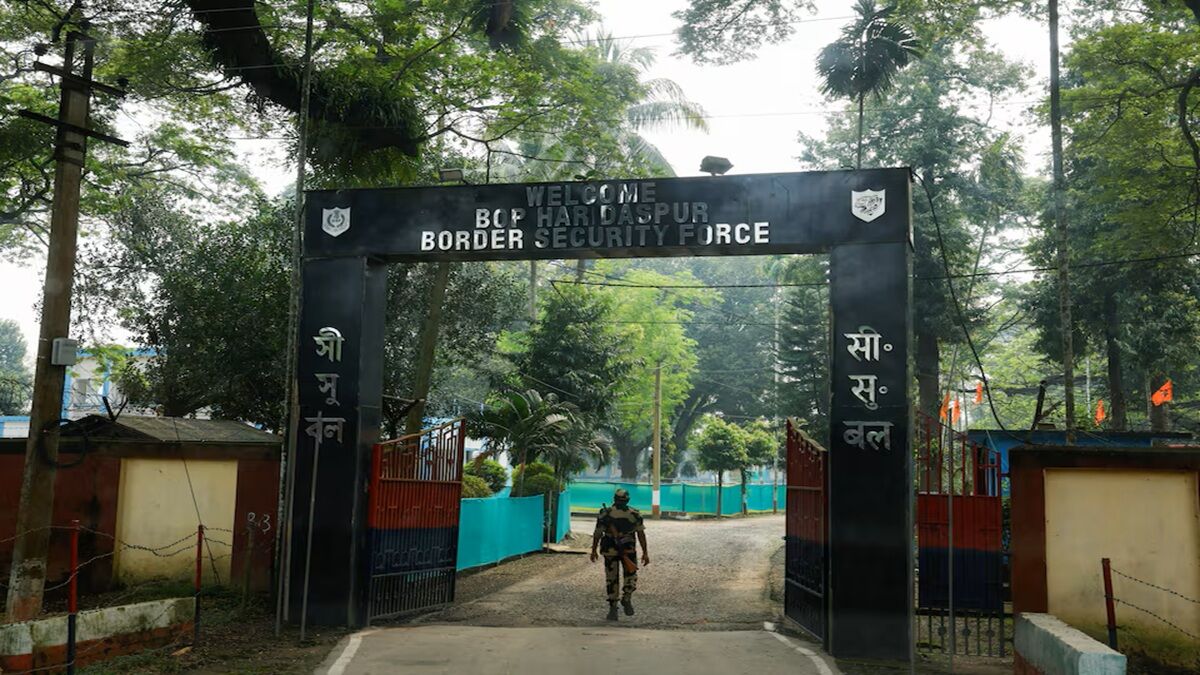
Bangladesh’s Border Guard (BGB) on Thursday (June 4) said it had stopped several attempts by Indian personnel to force people into Bangladeshi territory over the previous 24 hours, reviving a sensitive dispute over alleged undocumented migration and complicating efforts to normalise ties between the neighbouring countries.
In a statement, the BGB said it detected 10 attempted infringements by Indian authorities along different sections of the more than 4,000‑kilometre land frontier that separates the two countries. “No individual or group will be allowed to enter Bangladesh illegally through the border,” the statement said, adding that any attempt to violate international border management norms and bilateral understandings would be strictly resisted.
In one incident in the southwestern Jhenaidah district, the BGB alleged personnel of India’s Border Security Force (BSF) opened a border gate and tried to move 30–35 people toward Bangladeshi territory in a prison van. The BGB said it forced the vehicle to retreat. India did not immediately comment. Reuters’ requests for comment to India’s Border Security Force and the Ministry of External Affairs (MEA) were not answered.
Push-ins and the migration dispute
The incidents revive a broader dispute over alleged ‘push-ins’- informal transfers in which people are moved across the border without formal verification or repatriation procedures. Rights groups, analysts and Bangladeshi officials have raised concerns about such practices, which Dhaka says bypass established legal channels.
Last month, Bangladesh intensified border patrols and launched public awareness campaigns along parts of the frontier after raising alarms about suspected push-ins. Dhaka insists that anyone identified as a Bangladeshi national should be returned through formal legal and diplomatic channels rather than being driven across the border.
On its part, India’s foreign ministry in the month of May said it had asked Bangladesh to verify the nationality of more than 2,860 suspected Bangladeshis living illegally in India. India’s ruling Bharatiya Janata Party (BJP), which governs border states such as Tripura, West Bengal and Assam, has made tackling undocumented migration a political priority. Since last year, critics say, BJP‑led state authorities have sought to register and remove Bengali‑speaking Muslims they label “illegal infiltrators,” a move that has strained relations with Dhaka.
Diplomatic and operational follow-up
Bangladeshi officials said the issue is expected to be taken up during director‑general‑level talks between the two sides’ border forces in New Delhi from June 8 to 11. The meetings will offer an early forum to raise recent allegations and discuss mechanisms to manage the long, complex frontier.
Analysts say the challenge of policing the more than 4,000 km border- which runs across varied terrain, rivers and settlements- complicates verification and repatriation processes and increases the risk of isolated incidents escalating into diplomatic rows.
What will be the impact on bilateral ties?
The migration dispute has already clouded efforts to improve ties between the countries following the 2024 political change in Dhaka that removed Sheikh Hasina, a long‑time India‑aligned leader. The recent allegations of push‑ins and Bangladesh’s stepped‑up patrols add fresh friction at a time when both capitals publicly seek stable relations but face domestic political pressures on migration and border control. Dhaka’s public stance signals it will resist informal transfers and press for adherence to formal processes. The outcome of the director‑general‑level talks next week will be watched closely by diplomats and human‑rights observers as a test of whether operational confidence‑building measures can check further confrontations along the lengthy frontier.