




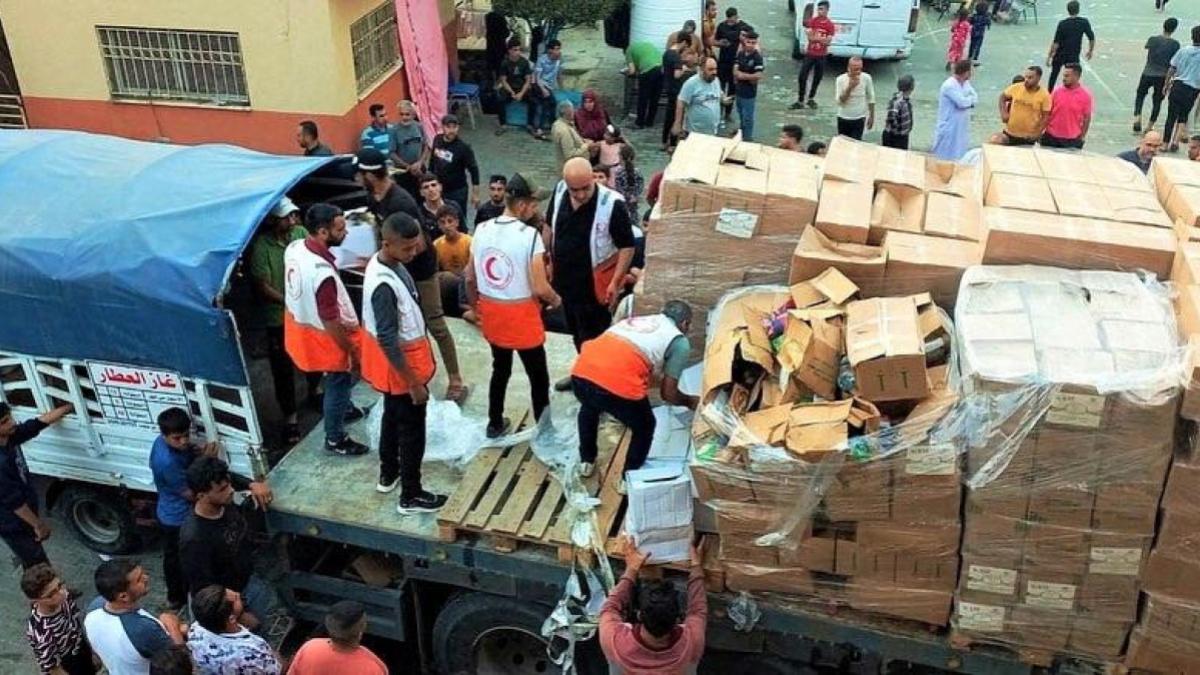
The International Committee of the Red Cross (ICRC) is stepping up its efforts to support the ceasefire between Israel and Hamas, with President Mirjana Spoljaric emphasizing the organization’s readiness to facilitate the release of hostages and massively scale up humanitarian aid in Gaza. Spoljaric’s comments came during her five-day visit to Israel, Gaza, and the West Bank, where she underscored the urgent need for both sides to honor the terms of the agreement and prioritize civilian protection.
A Critical Moment for Humanitarian Action
During her visit to Jerusalem, Spoljaric confirmed that the ICRC is prepared to assist in the release of hostages and detainees, following the ceasefire agreement. “We are ready to facilitate any release operation as agreed by the parties so that hostages and detainees can return home,” she stated, reaffirming the ICRC’s commitment to its neutral and impartial role in the conflict. “We are also prepared to massively scale up our humanitarian response in Gaza, where the situation demands it.”
The ICRC’s efforts in Gaza will require constant cooperation from all parties involved to ensure their teams can operate safely. “This will require continuous effort from the parties to ensure that our teams can carry out their work safely and effectively,” Spoljaric noted, adding that the scale of the suffering in the region is indescribable. “There are no words to describe the level of suffering that Palestinians and Israelis are enduring on a daily basis. This nightmare has gone on for far too long. The suffering must end.”
A Call for Political Commitment
As the ceasefire offers a window of hope, Spoljaric stressed that a sustainable solution requires political commitment from all sides. She urged that humanitarian principles should take precedence over political differences. “The hostages need to come home. This is only possible with political commitment from all sides to put humanity first and respect the rules of war.”
In her remarks, Spoljaric expressed hope that the ceasefire could represent a turning point, but cautioned that the real challenge lies in meeting the region’s long-term needs. “I hope this agreement marks a new beginning. Civilian lives must be protected and their needs prioritized,” she said. “While the agreement is welcome, it is not the end. There are immense humanitarian needs that must be addressed, which will take months, if not years.”
ICRC’s Role in Hostage Release Operations
The ICRC has a long history of facilitating the release of hostages and detainees, often in highly sensitive and complex situations. Spoljaric highlighted the logistical challenges involved, explaining that such operations require careful planning to minimize risks to life. “These operations are highly complex and require meticulous logistical and security planning,” she said.
In the past, the ICRC successfully facilitated the release of 109 hostages and 154 detainees, demonstrating its capacity to act as a trusted neutral intermediary. The organization has called on all parties to respect international humanitarian law, including the protection of civilians and healthcare facilities.
On-the-Ground Efforts and Diplomacy
Spoljaric’s visit also included meetings with Israeli authorities in Jerusalem and Palestinian officials in the West Bank, as well as visits to Gaza and Kibbutz Nir Oz in southern Israel. She met with families of hostages and Palestinian detainees, expressing her solidarity with their suffering.
The ICRC leader also held discussions with the Palestine Red Crescent Society and Magen David Adom, which provide crucial emergency services in the region. These ongoing diplomatic efforts are aimed at ensuring that the ceasefire holds and that critical humanitarian aid reaches those who need it most.
Looking Ahead: Long-Term Challenges
While the ceasefire is a significant development, Spoljaric cautioned that it is only the beginning of what will be a long road to recovery for the region. “The coming days are critical and we are counting on the parties to hold to their commitments,” she said. “But this is just the first step—months, if not years, of aid and reconstruction will be required.”
The ICRC remains committed to its role as a neutral intermediary, facilitating dialogue and cooperation, and working to alleviate the suffering of civilians on both sides of the conflict.
A Fragile Peace
As the region moves forward, the success of the ceasefire and the humanitarian efforts that follow will depend on the sustained commitment of all parties. The ICRC’s work in facilitating the safe return of hostages and providing life-saving aid will be critical, but lasting peace in Gaza and Israel will require a broader, more comprehensive resolution to the underlying political and humanitarian challenges.


