




There was no gym. There was a porch.
In the mid-1980s, in Imphal, two teenage girls turned up every evening at the house of a coach named Kunja Kishore Singh and lifted iron that wasn’t really iron. Rods pulled off broken autorickshaws, welded onto heavy plates. A squat rack cut from bamboo. No mats, no federation cheque, no idea anyone outside Manipur would ever care.
One of the girls was Nameirakpam Kunjarani Devi. Four feet ten inches tall. Later, people would call her the Pocket Dynamo. Nobody on that porch was thinking about sponsorship or television deals. They were thinking about how to scrape together the entry fee for the next competition, because the state wasn’t paying it. That one detail, more than any medal that came after, is the real starting point of this story. It took almost 40 years to pay off.
A sport nobody wanted her to play
Weightlifting in 1980s India wasn’t just poor, it was suspect, particularly for a woman. The common belief then was that lifting heavy weights would ruin a girl’s body and her marriage prospects along with it. Kunjarani heard this constantly. She kept lifting.
She’d been pulled toward sport at 14, watching PT Usha sweep medals at the 1982 Asian Games in Delhi, the first big Indian event shown in colour on TV. She tried hockey, football, running, but her small frame worked against her.
Weightlifting, strangely, suited her. By 1985 she had three golds at her first National Games, in the 44 kg class. Two years later, records fell in Trivandrum. None of it made her money. It made people notice her.
Winning silver, again and again
In 1989 she went to Manchester for the World Championships and came back with three silver medals, a combined lift of 132.5 kg, the first Indian weightlifter, man or woman, to win a medal at the World Championship.
Then it happened again. And again. Seven silvers between 1989 and 1997, every time behind a Chinese lifter. That wasn’t bad luck so much as two economies colliding. China’s sports program was centralised, state-funded, monitored to the last training session. India’s was, in effect, a teenager and her willpower.
To pay her bills, she joined the Central Reserve Police Force in the late 1980s, eventually reaching the rank of Commandant. That, not sponsorship, was the real safety net for athletes of her generation.
In 2001 her career nearly came apart. A urine sample at the Asian Championships in South Korea tested positive for the banned stimulant strychnine. Her gold medal was stripped and she was banned for six months.
She blamed contaminated coffee and a painkiller taken for pain. Whatever the actual cause, it exposed something uncomfortable about Indian sport then: almost no nutritional oversight or anti-doping awareness for athletes at the highest level.
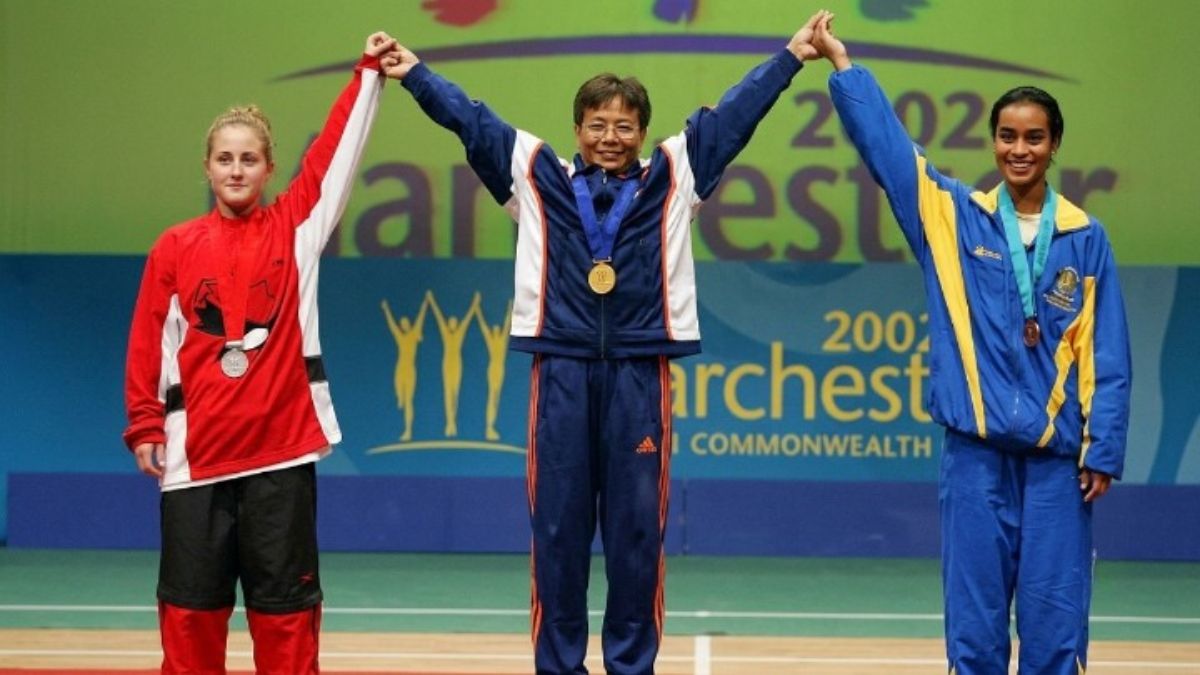
She came back anyway. Three golds at the 2002 Commonwealth Games. A career-best lift at the Athens Olympics in 2004, aged 36, finishing fourth. A Commonwealth Games record in Melbourne in 2006, aged 38, beating rivals young enough to be her daughters.
She trained into her forties and was still blocked from the 2009 Nationals after the federation banned the whole police weightlifting team when five teammates failed dope tests. A punishment for a system’s failure, served to an athlete who hadn’t failed anything that year.
The girl who wandered into the wrong room
Manipur’s sporting culture didn’t come from a government plan. It grew out of neighbourhood clubs, run on volunteer time and local money, a habit left over after the old local administration faded under colonial rule.
These clubs were good at spotting raw talent. What they never had was money to carry that talent to a podium. That is where the second half of this story starts, and somebody finally puts real money behind the bet.
Saikhom Mirabai Chanu was born in 1994 near Imphal, to a construction worker father and a mother who ran a small tea shop. Money was tight enough that the children gathered firewood in the forest to cut fuel costs. On one such trip, aged twelve, her family noticed something: she carried a heavy bundle of wood home with ease, a load her older brother could barely lift.
She went to a sports academy meaning to take up archery. The archery room was shut that day. Next door, the weightlifting hall was playing a documentary about Kunjarani Devi. She watched it, walked in and stayed.
For the first six months, in 2006, she trained with bamboo trunks standing in for barbells, travelling 40 km a day on sand trucks. The infrastructure gap hadn’t closed in the twenty years since Kunjarani’s porch. What had started to change was everything above her.
The economics of somebody believing in you
In 2011, at a national camp in Bangalore, Chanu met Kunjarani. She was scared of her at first, the training was famously brutal, but the relationship grew into something closer to family. By 2013, at the Patiala camp, Chanu was cooking Manipuri meals for her mentor, telling her worries the way she might tell her own mother.
In 2014, Kunjarani coached Chanu to a silver medal at the Glasgow Commonwealth Games, shouting instructions in Meiteilon from the corner. Two years later, at the Asian Championships in Tashkent, Chanu matched Kunjarani’s long-standing national total of 190 kg.
Her own student was catching her, and by most accounts Kunjarani was pleased about it, not threatened. That is, in its own way, a business decision. Kunjarani had come up with no institutional backing at all. She made sure the next one wouldn’t have to.
The institutional backing eventually arrived in 2014, with the Target Olympic Podium Scheme, or TOPS. Instead of routing money through federations and hoping it trickled down, the scheme funded competitors directly.
Per figures cited by the Sports Authority of India (SAI) reporting, Chanu received around Rs 51.51 lakh under the scheme, enough to send her to the United States for specialised treatment of a back injury under biomechanist Dr. Aaron Horschig.
The Annual Calendar for Training and Competition allocated close to Rs 21.18 crore to the federation between 2019 and 2021, and TOPS core athletes reportedly received a monthly stipend of around Rs 50,000. Not large by corporate measure, but for a girl whose family once counted firewood to save money, it meant she no longer had to choose between training and earning.
Every rupee here answers the same question money always answers eventually: did the bet work? In Chanu’s case, yes, by no small margin. At the Tokyo 2020 Olympics she lifted a combined 202 kg in the 49 kg category and won India’s first Olympic medal in weightlifting.
Reports at the time put the Manipur government’s cash award to her at Rs 1 crore, alongside her appointment as Additional Superintendent of Police. The Ministry of Railways reportedly added a further Rs 2 crore and a promotion. The state’s earlier, uncertain bet on a girl carrying firewood had come back many times over.
What a cement company wants from a weightlifter
For years, Indian sponsorship money went almost entirely to male cricketers. When Karnam Malleswari won India’s first female Olympic medal in 2000, a weightlifting bronze, she received a government award of around Rs 6 lakh, per contemporary reports, and almost no corporate interest followed. Strength sports were seen as too rough for ads.
That has changed. In 2021, Industry estimates place Chanu’s per-deal fee at around Rs 1 crore, with a portfolio reportedly including Adidas, Amway’s Nutrilite, Star Cement, Mobil and Britannia. Rising national-level athletes now reportedly earn Rs 10 to 25 lakh per deal, numbers unthinkable for a female strength athlete a generation ago.
Worth asking who is actually paying, and why. A cement or steel company isn’t hiring Chanu because she’s famous. It’s hiring her because the image of her lifting an enormous iron load says strength and durability more directly than a male actor standing next to a beam ever could.
Amway’s Nutrilite ties itself to her training discipline to back its own health claims. In a strange way, the athlete’s body has become the advertisement. Digital platforms add a separate stream, with campaign fees for elite athletes reportedly running Rs 25 lakh to Rs 1 crore, and single social posts fetching up to Rs 3 lakh.
The conveyor belt
The pipeline Kunjarani built more or less by accident is now producing lifters on a schedule. Sorokhaibam Bindyarani Devi, a 2022 Commonwealth Games silver medallist, set a national snatch record at the 2025 National Games.
Eighteen-year-old Martina Devi Maibam swept the senior national records in snatch, clean and jerk (136 kg) and total lift (237 kg) at the 2026 IWLF Championships in Modinagar.
Chanu, now 31, will carry the Indian flag at the 2026 Glasgow Commonwealth Games, leading a twelve-member squad, while bulking up from her lifelong 48/49 kg category to the heavier 53 kg class, a carefully managed transition that would have been unaffordable, and frankly unthinkable, in Kunjarani’s time.
Kunjarani, at 58, still serves as a Commandant with the CRPF and sits on national selection and anti-doping panels. At a recent public event, she said physical strength and disciplined national unity are, in effect, the same pursuit.
It’s a neat line for a speech. The real proof is plainer than that. A porch in Imphal, a welded autorickshaw rod, and a girl too small for running sports built, without anyone planning it, one of Indian sport’s more reliable investment stories. The returns just took forty years to show up.
Editorial Note: This is an independent profile. Kunjarani Devi and their representatives were contacted but did not respond prior to the time of publication. In the absence of direct comment, this article was reported using publicly available records and regulatory filings, where applicable. This content was produced in accordance with FinancialExpress.com’s editorial guidelines.


