
There are players whose careers you remember as a series of images. Tendulkar straight-driving. Ganguly weaving his shirt at Lord’s balcony. Dhoni swivelling and sending that six into the Wankhede night.
And then there is Gautam Gambhir, who you remember not as an image but as a feeling. The feeling of watching someone fight for something they were never going to be fully credited for.
He is 44 now. Head coach of India. Said to be worth somewhere north of INR 200 crore. Still the same man, more or less, that his grandfather decided to keep when he was 18 days old.
This is the story of a man who was given away at 18 days, who gave away his Man of the Match trophy at 28 years, and who now serves meals to the needy people meals for 1 rupee. It is also the story of 436 balls in Napier. It is a man learning to stay when every instinct says leave.
The Boy Who Stayed Before He Chose To
Satpal Gulati saw the infant and said no. Not in those words. But that was the meaning. His daughter had stopped at his house on the way back from the hospital after delivering Gautam. And Satpal decided that the child would stay with him.

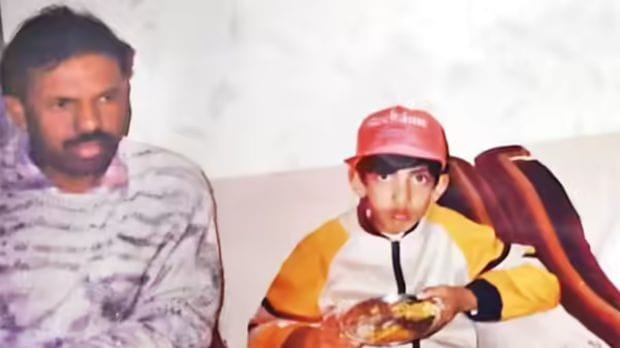
He later explained it as a matter of sequence. His house was the first stop. Therefore, the boy was his.
Gambhir grew up in Rajendra Nagar, New Delhi, in a house that was not technically his parents’. His father Deepak ran a textile business in the fabric alleys of Old Delhi. His mother Seema was a homemaker. His sister Ekta went to Presentation Convent.
He went to Modern School on Barakhamba Road, then Hindu College, then left in 2000 for the National Cricket Academy in Bangalore and never looked back in any conventional sense.
Ekta stayed nearby. She still picked his clothes when he was unsure. She still called when she sensed something was wrong. His maternal uncle Pawan Gulati got a phone call from him before every big international match.
Not tactical discussion. Just a voice that knew him before fame arrived. A voice that required nothing from him except presence on the other end of the line.
This is not unusual in Indian families. The geography of love is rarely the geography of address. You can live 3 roads away and be as close as a heartbeat, or 3 thousand miles away and still the person your sister thinks of when she sees a blue shirt she knows will suit you.
Gambhir understood this arrangement without needing to name it. He absorbed the lesson that care and proximity are different things. That loyalty is a choice made daily, not once.
It shaped everything that came after.
642 Minutes and the Thing He Would Not Do
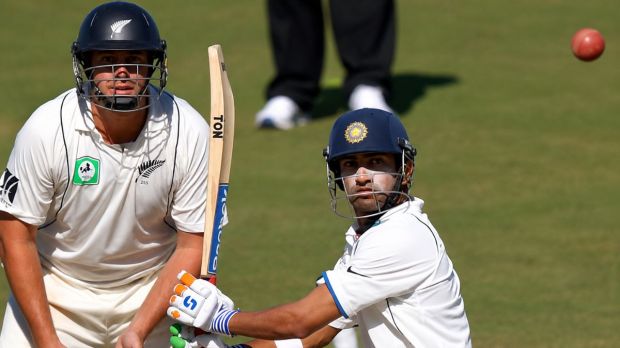
The Napier Test of 2009 is not a story cricket tells loudly. India were following on, trailing New Zealand by 314 runs. Gambhir had got himself out cheaply in the 1st innings. Recklessly, by his own reckoning.
He had let the team down in the way that quietly devastates professional athletes, which is not failure itself but unnecessary failure, the kind where you know you contributed to it.
What happened next was 642 minutes. 10 hours and 42 minutes. 436 deliveries. A score of 137. A draw.
His natural instinct was to attack. The 75 off 54 balls in the 2007 T20 World Cup final against Pakistan. The way he moved his feet and committed early. He was not a defensive player by inclination.
But in Napier, he shut that down. He stood there and he refused to give it away, ball after ball, session after session, telling himself in whatever language the interior monologue of a cricketer runs, that the error of the 1st innings had cost something and the payment was this. Staying. Not leaving.
There is a quality that coaches and parents and managers all search for and rarely name precisely. It is the quality of remaining in a difficult situation without comfort, without reward, without recognition, for as long as the situation requires. Most people leave. They find reasons. They find the exit.
Gambhir, in Napier, did not find the exit. Or rather, he found it and turned away from it.
The Trophies He Gave Away and the Shadows He Chose
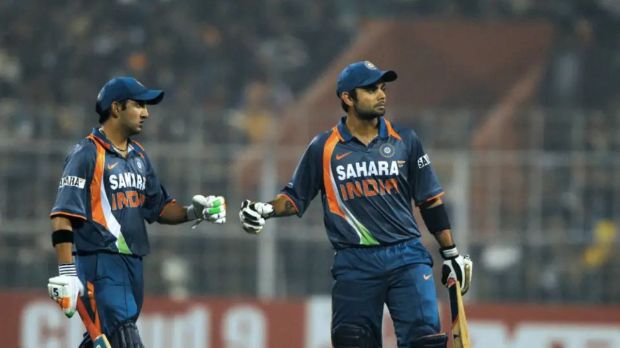
Later that year, at Eden Gardens, Virat Kohli scored his maiden ODI century. Gambhir won Man of the Match. He handed the award to Kohli.
People interpreted it variously. Generosity. PR instinct. Sentimentality. But Gambhir himself has spoken about what he actually believes, which is that in team sport, the scoreboard is a collective document and the attribution of credit to individuals is mostly a convenience for journalists and broadcasters.
Gambhir believes in instinct over data. He believes that the quick 20 at the end matters as much as the century at the start. He believes teams win, not faces. This is why he is a difficult man to celebrate. He will not let you celebrate an individual only. He stands in the shadow and points at the light.
In 2007, when India won the T20 World Cup, the cameras went to MS Dhoni. In 2011, when India won the ODI World Cup, the cameras went to Dhoni again. Gambhir scored 97 in that final. He built the partnership with Kohli. 83 runs. They ran like men being chased.
Every run was hard. Every call was loud. Kohli was young. Gambhir was the senior. But they ran together. Then Dhoni came. Gambhir had seen Dhoni finish games before. He knew his role was to stay until Dhoni was set. Then he could leave. He got out at 97. 3 short. He did not get the six. He did not get the century. He got 97. And he got out.
Think about that 97 for a moment. India lost Sachin Tendulkar early. Then Virender Sehwag. The crowd was silent. Mumbai was nervous. Gambhir came in and played like the house was on fire and he was the only one with a bucket.
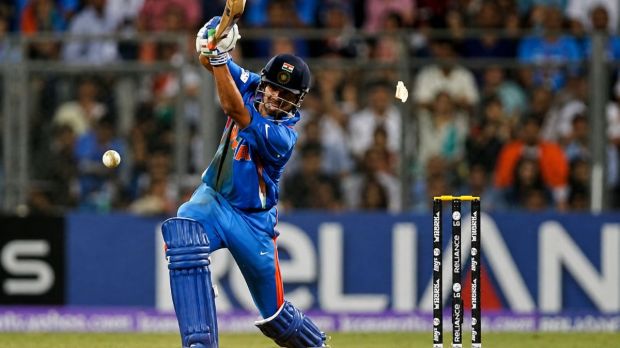
He ran hard. He took risks. He kept the scoreboard moving. Then he got out at 97. If he had stayed 5 more minutes, he would have had the century. He would have been the hero. But he got out. And Dhoni finished it.
When he mentors IPL teams, he tells players that the unheralded 15 runs are mathematics. They are not glamour. They are arithmetic. 15 runs in 10 balls is sometimes the difference between winning and losing. He learned this in 2007. He learned it in 2011. He learned it in Napier.
When he sits in the India dressing room now on a salary of INR 12 to 14 crore a year, which exceeds what the BCCI pays its A+ contracted players, he is still coaching this. The match matters more than the man.
The Denim Trade and the Weight of 3% Margins
Deepak Gambhir started Yogesh Trading Company in 1977. Denim and non-denim fabric. Bulk supply to Delhi’s wholesale clothing markets. The company is 4 years older than his son.
Gautam holds 20% as an active partner. This is not a ceremonial stake. He is in the business, and the business is large in a way that requires careful definition of the word large.
In FY23, YTC reported total operating income of INR 734.94 crore. By FY25, that had come down to INR 556.89 crore. The decline is real and the reason is straightforward: wholesale textile trading in Delhi is hostage to consumption cycles, and the market does not forgive over-dependence on a single geography.
90% of YTC’s sales happen in Delhi. That concentration is both the business’s strength and its oldest vulnerability. On margins of 3% to 4%, a INR 556 crore revenue produces maybe INR 20 crore in operating profit before interest and taxes.
The collection period runs 96 days on average. Inventory sits for 62 days. Bank credit lines of INR 69 crore are used at 60% to 80% utilisation on most months.
This is not, in any sense, passive wealth. This is active, working-capital-intensive, daily-anxiety business. The kind where a large buyer paying 2 weeks late can create a small crisis. The kind where you know every supplier and every debtor by name because you have to.
Gambhir grew up observing this. He learned that thin margins aren’t embarrassing. Just reality. Surviving in business year after year is already an achievement. And that same discipline applies at the crease. Bad session. Difficult conditions. You still don’t abandon the plan.
The Health Startup, the Pandemic, and the Cricket Captain in the War Room
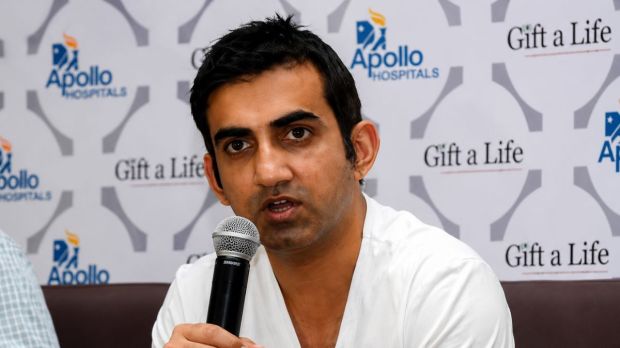
In May 2020, just as India was shutting down and everyone was terrified and nobody knew anything, Gambhir invested in FYI Health. The company had built a contactless health kiosk, priced at INR 74,900, that could do temperature screening, mask detection, sanitization dispensing, and push real-time data to a corporate dashboard.
This was classic pandemic hardware. Necessary, urgent, and with a very short window.
What is more interesting is how he invested. The FYI Health team was 12 engineers and product people trying to build something in a crisis environment where government regulations were changing sometimes weekly. Gambhir did not just put money in and wait. He turned up.
His advice, reportedly, was something he called the “One Day at a Time” strategy, which sounds like a cliche until you understand what he actually meant. Do not lock yourself into a 12-month roadmap when the ground is shifting daily.
Build for today’s regulation. Pivot when it changes. The startup is the batting team. The pandemic regulations are the bowling attack. Read the ball, not the match report.
This is not how most angel investors talk to founders. Most angel investors talk about total addressable market and unit economics. Gambhir apparently talked about collective resilience and how a team survives when the scoreboard looks bad.
The Balance Sheet Under Glass
Gambhir’s net worth is estimated at 200+ crore. In his Election Commission affidavit, Gambhir disclosed his personal movable assets at INR 1,16,38,96,188. His wife Natasha’s assets were declared at INR 1,15,09,110. The Hindu Undivided Family corpus added another INR 98,42,626. Financial Express has not independently verified these numbers.
His real estate portfolio sits across Rajendra Nagar, Karol Bagh, Old Rajinder Nagar, Noida’s Jaypee Wish Town, and various other Delhi and Greater Noida parcels. The primary residence is estimated at INR 15 to 20 crore. The Karol Bagh commercial property at INR 6 to 8 crore. Total immovable assets declared at INR 28 crore.
His mutual fund portfolio runs across HDFC, Kotak, and ICICI schemes. His alternative investment fund positions include the Zodius Technology Fund at around INR 85.6 lakh, Baring Private Equity India AIF at INR 79.3 lakh, and the India Whizdom Fund at INR 1.12 crore.
His government infrastructure bond positions include NHAI, IRFC, and Power Finance Corporation across roughly INR 1.16 crore.
The liabilities stand at INR 35.53 crore in secured bank loans. For a portfolio of this size, that is not worrying. But it is worth knowing.

The BCCI Contract and the Face You Recognize
When Gambhir took over as India’s Head Coach in July 2024, replacing Rahul Dravid, the BCCI reportedly structured the contract at INR 12 to 14 crore annually. Daily touring allowances add INR 21,000 per day with five-star travel and accommodation covered.
This compensation exceeds what central contracted A+ category players earn from BCCI. It is not a typical coaching salary. It is a recognition that Gambhir brings something more than cricket knowledge.
He brings a public profile, a certain psychological authority, and a media presence that the team requires regardless of the scoreline.
His endorsements have migrated accordingly. Uber used him for a 2025 mobility campaign.
CoinDCX appointed him as a crypto education ambassador in 2024 under the positioning of “Crypto Coach.”
Redcliffe Labs has been running him continuously since 2021 on preventive healthcare messaging, renewing the contract in March 2023 and again in August 2025.
The Redcliffe association is the most coherent one. The campaign, “Thoda Gambhir Ho Jao,” roughly translates to “be a bit more serious.” It is a pun on his surname and a message about not ignoring health warning signs.
Gambhir himself has always been associated with seriousness, with doing things that matter rather than things that look good. The brand fit is real rather than manufactured.
Pinnacle Speciality Vehicles did something different. They structured his endorsement as a barter: he promotes their premium motorhomes, they provide customized logistics vans for his foundation’s community kitchens. That is a deal that only works if both parties actually believe in what the other is doing.
Garbage Dumps and the Cost of Dignity
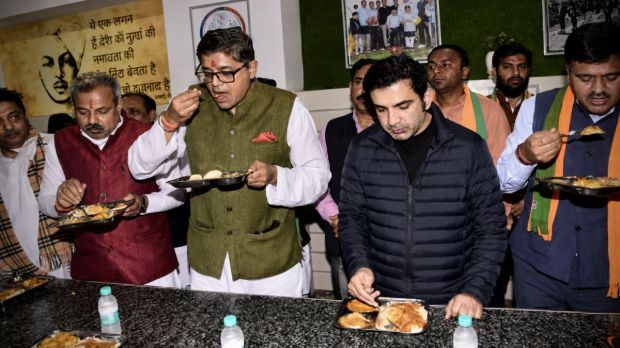
The Gautam Gambhir Foundation opened its first Jan Rasoi kitchen in Gandhi Nagar on December 24, 2020. A full meal of rice, lentils, vegetables, and salad cost INR 1. Not free. 1 rupee.
Gambhir has never explained the symbolism but it is not difficult to read. Free food is charity. A 1 rupee meal is a transaction. It asks something small of the recipient and gives something large in return.
The kitchens now number 4, operating across Gandhi Nagar, New Ashok Nagar, Patparganj, and Shakarpur in Laxmi Nagar. Collectively they serve roughly 4,000 meals per day.
All 4 kitchens were built inside abandoned municipal garbage dumps. Dhalav Ghar in the local language. Sites that the municipal corporation had effectively given up on.
The foundation cleaned them, structurally rebuilt them, and converted them into hygienic commercial kitchens. This approach saved capital and demonstrated something about how Gambhir thinks: the resource you need is often already there, misused or abandoned, and what is required is not money but imagination and willingness to do the unglamorous work.
His Salute to the Martyrs program has covered education costs for children of military and paramilitary personnel killed in service across 21 states.
After the Sukma encounter of 2017, in which 25 CRPF personnel were killed in Chhattisgarh, the foundation assumed complete educational responsibility for their children. RBL Bank directed INR 1.75 crore in CSR funds to this program.
An independent audit by SoulAce Consulting found 100% of beneficiaries confirmed the funding was adequate to prevent school dropouts.
Still at the Crease
The numbers of Gambhir’s life do not arrange themselves into a tidy argument.
18 days when his grandfather decided he was worth keeping. 642 minutes in Napier when he decided the same about himself. 97 runs in a World Cup final that history chooses, repeatedly and unfairly, to summarise as someone else’s evening.
INR 556 crore of fabric revenue at margins a non-accountant could miss in a calculation. INR 1 per meal in kitchens built inside places the city had already thrown away.
He has never been the story that cricket wanted to tell. Cricket wanted to tell stories of elegance, of domination, of the kind of inevitable-seeming greatness that photographs cleanly.
Gambhir was always the other kind of cricketer. The one who showed up. Who stayed. Who fixed what he broke in the 1st innings by refusing to repeat it in the 2nd.
His grandfather’s instinct, that October morning in 1981, was to hold on to something. That has been Gambhir’s instinct at every subsequent junction: the crease in Napier, the partnership in the World Cup final, the family business, the garbage dumps in East Delhi, the lawsuit in 2026 against people selling his name.
Some people spend their lives chasing credit. Gambhir has spent his carrying responsibility. They are not the same thing. One is addictive and the other is exhausting and only one of them builds anything that lasts.
But what his career tells you, and what his portfolio tells you, and what those community kitchens built inside garbage dumps tell you, is that this man has never particularly needed the recognition to do the work.
The 97 in the World Cup final. The 75 in the T20 final. The decades of IPL mentoring. The fabric business that never makes headlines. The work is the point. The spotlight is an accident.
Editorial Note: This is an independent profile. Gautam Gambhirand their representatives were contacted but did not respond prior to the time of publication. In the absence of direct comment, this article was reported using publicly available records and regulatory filings, where applicable. This content was produced in accordance with FinancialExpress.com’s editorial guidelines.