




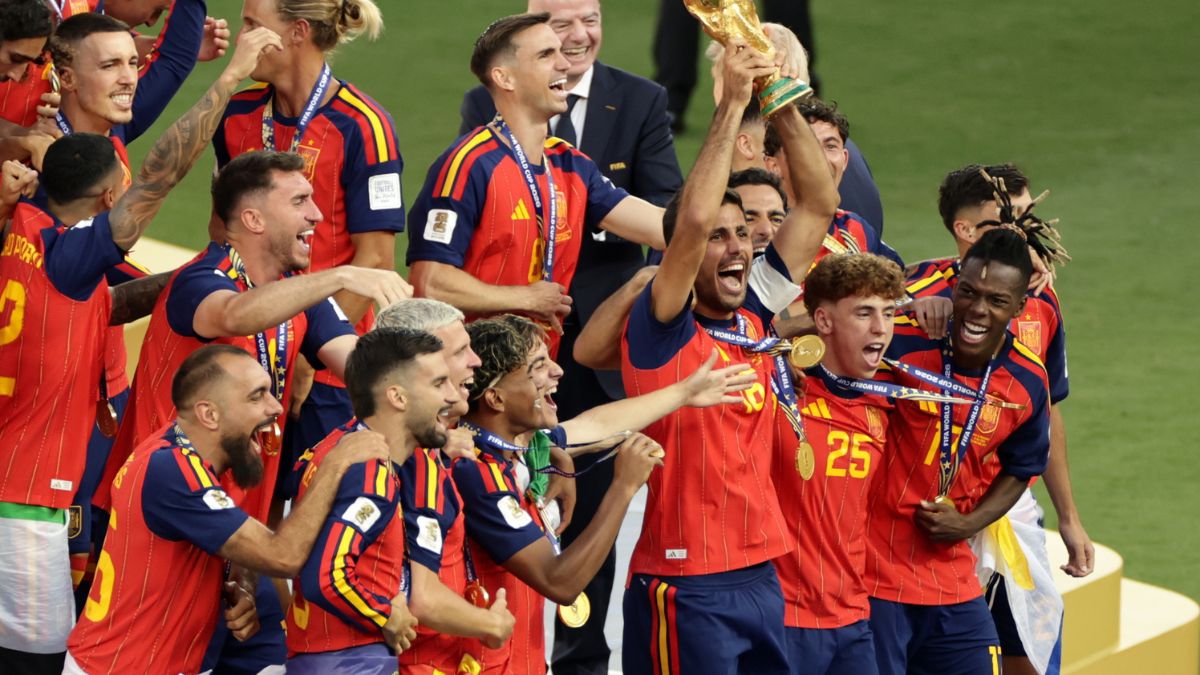
The FIFA World Cup 2026 ended with Spain lifting the trophy after defeating Argentina, but the tournament’s biggest winner may have been FIFA itself.
Long before the final whistle in New Jersey, football’s governing body had already secured a commercial victory. Record attendances, unprecedented ticket prices and surging global demand have pushed the expanded 48-team tournament into a new financial league, with FIFA president Gianni Infantino revealing that the organisation now expects to generate more than $15 billion across the 2023-2026 commercial cycle.
“I think we can top the $15 billion mark,” Infantino said while discussing the tournament’s expected revenues, underlining the scale of football’s biggest commercial event.
Record crowds despite record prices
The tournament began amid concerns that soaring ticket prices, tighter US visa rules and domestic political uncertainty could affect attendance.
Those fears proved largely unfounded.
According to FIFA’s official attendance analysis, around 99.7% of available seats were filled during the group stage, with more than half of the matches played before full houses. Most of the remaining fixtures were only a few hundred spectators short of capacity.
Early concerns had intensified after the opening Group A match between South Korea and Czechia in Guadalajara appeared to feature visible empty seats, despite an officially reported attendance of 44,826 in a stadium capable of holding nearly 46,000 spectators.
As the tournament progressed, however, demand only strengthened.
Dynamic pricing changed the game
One of the biggest commercial changes introduced for FIFA World Cup 2026 was dynamic pricing, allowing ticket costs to fluctuate according to demand.
Group-stage tickets initially started at $575, already more than double the highest-priced group-stage ticket available during the 2022 World Cup in Qatar. But prices rarely stayed there.
By the week of the final, tickets available through FIFA’s official platform were listed at around $7,000, prompting speculation that prices had finally gone too high. Within days, almost every remaining seat had disappeared, with some official listings climbing to approximately $32,000.
Football’s commercial evolution
The expanded World Cup also benefited from strong on-field quality.
For the first time, the tournament featured the world’s top-ranked teams deep into the knockout stages, maintaining global interest until the final between Spain and Argentina.
The combination of elite football, record attendances and aggressive pricing has transformed FIFA’s flagship tournament into one of the most lucrative sporting events ever staged.
If the 2022 World Cup proved football’s global reach, the 2026 edition demonstrated something equally significant: fans remain willing to pay unprecedented prices to be part of football’s biggest spectacle.


