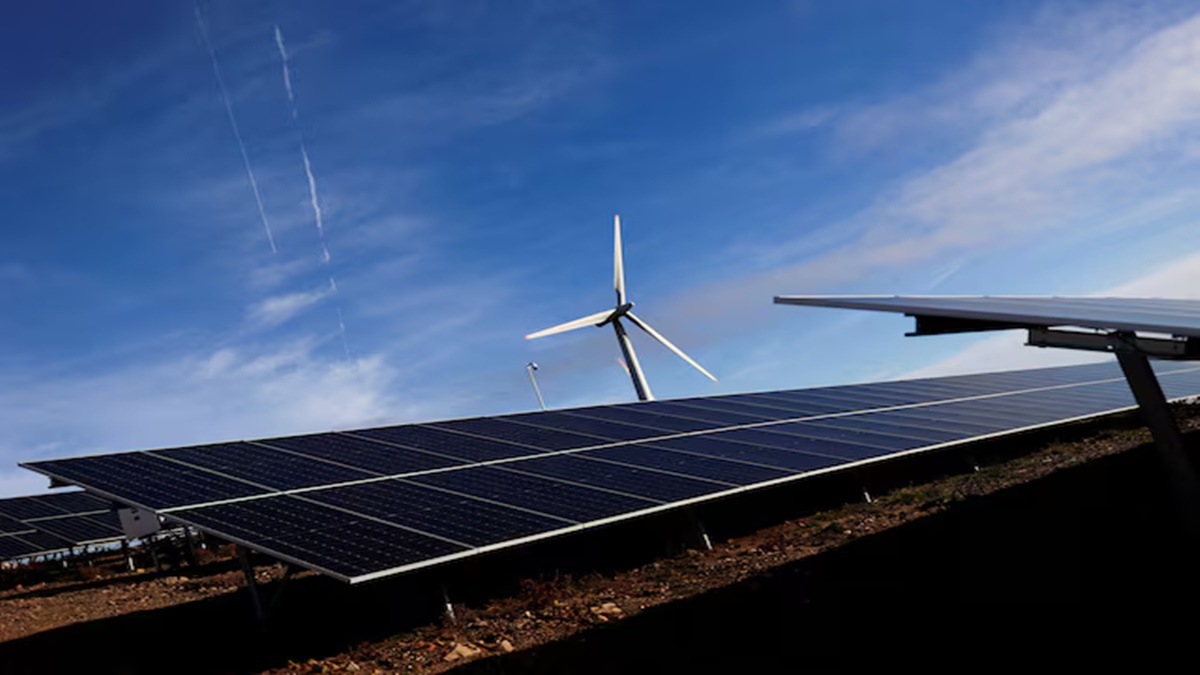
India’s solar and wind electricity generation surged by over 25% in the first half of 2026, lifting their share in the country’s power supply mix to 16.5% from 14% a year earlier, as renewables overtook coal to become the world’s largest source of electricity generation, according to the International Energy Agency.
Solar generation in India rose by more than 30% during January-June, while wind output increased by slightly less than 10%. The expansion, however, coincided with a 3.5% rise in coal-fired generation as the country met stronger electricity demand and a record peak load of 270.8 GW in late May.
At the same time, gas-fired generation decreased by about 15%, compared to H1 2025, and was more than 40% below H1 2024 levels.
Strong Industrial Demand
India’s electricity consumption grew around 6% in the first half, driven by stronger industrial and services activity and heatwaves between mid-April and early June. Demand rose 11% year-on-year in May, when solar supplied 60 GW, or 22% of the daytime peak. The IEA expects India’s full-year demand growth to rebound to 7% in 2026 from 1.6% in 2025.
“Renewables are overtaking coal as the world’s largest source of electricity generation,” the IEA said, after the two reached near parity in 2025.
Global renewable generation is forecast to grow about 8% in 2026 and another 9% in 2027, increasing its share in the electricity mix from 33% in 2025 to 37% by 2027. Solar photovoltaic remains the main growth driver, with output expected to rise 23% this year, or by 610 TWh.
India and other Asian economies will play a larger role in the solar build-out, with their combined contribution to global growth rising from almost 10% in 2025 to around 17% in 2026.
LNG Supply Disruptions
In contrast, India’s gas-fired generation fell about 15% in the first half and stood more than 40% below H1 2024 levels. High prices and disruptions to LNG flows through the Strait of Hormuz led to supply curtailments, particularly affecting industrial and captive gas-based generation.
Global gas-fired generation is forecast to remain broadly flat in 2026, breaking from the sustained growth recorded over most of the past decade. Output may recover by around 1.5% in 2027, though geopolitical uncertainties “may continue to weigh on the outlook”.
The gas shock pushed electricity futures prices up most sharply in regions dependent on LNG imports and gas-based generation. Australia, however, saw wholesale prices fall about 45%, as strong renewable output and rapidly expanding battery storage reduced reliance on gas-fired plants during peak demand.
China’s lithium-ion battery output rose 39.3% year-on-year in H1 2026, while its EV charging network crossed 22 million units by May, up 45%. New-energy vehicles accounted for 58.5% of new vehicle sales in June, with first-half sales rising 7.3%.