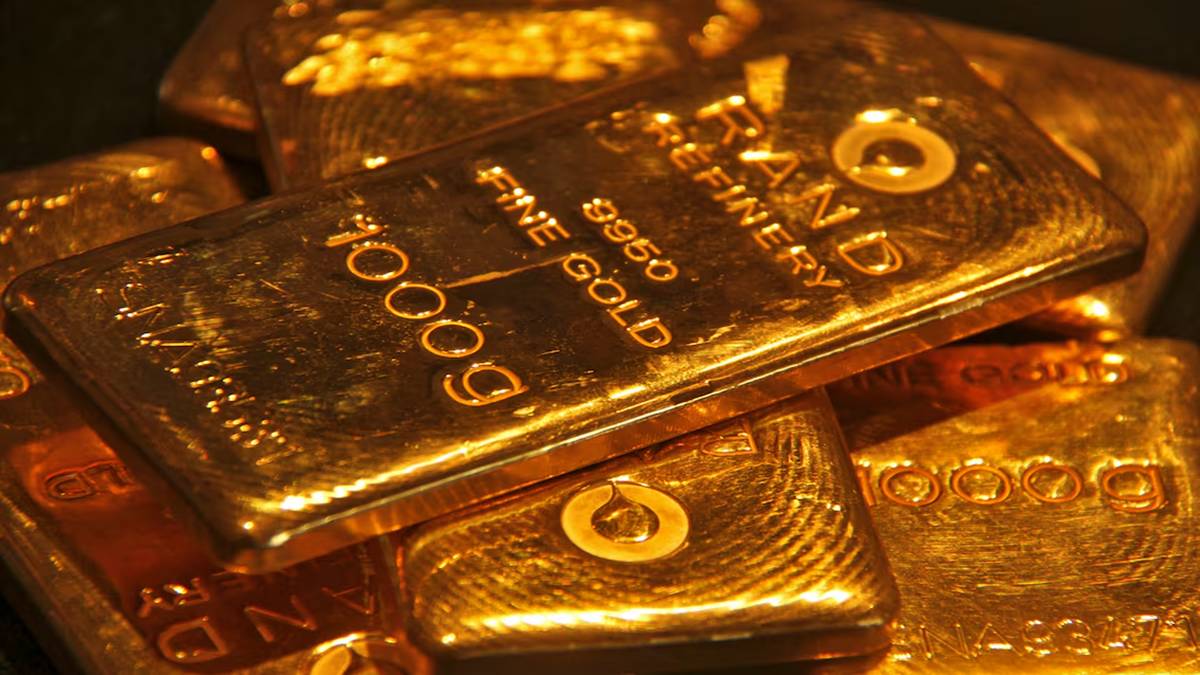
The government’s efforts to curb the gold import bill are yet to show results, with imports remaining elevated in the April-June quarter despite the sharp increase in import duty.
India’s gold import bill rose 47.1 % year-on-year to $11 billion in the first quarter of FY27 from $7.5 billion a year ago. Gold accounted for 5.1 % of the country’s total import bill during the quarter, according to data released by the Union Ministry of Commerce.
Price Corrections
In mid-May, Prime Minister Narendra Modi urged people to avoid unnecessary purchases of gold. Soon after, the Centre raised the import duty on gold and silver to 15% from 6%. However, the subsequent correction in domestic gold prices has largely offset the impact of the duty hike.
Gold prices in Mumbai, which were around Rs 1,51,000 per 10 grams on May 12—the day before the duty hike—have since declined to around Rs 1,41,000.
In volume terms, gold imports remained almost unchanged. Industry estimates suggest India imported about 90 tonnes of gold during the April-June quarter, compared with 90.3 tonnes in the corresponding period last year.
Demand has remained subdued in July. However, earlier issues relating to renewal of import licences and GST payments by importing banks have largely been resolved. Licences have been renewed, while banks have resumed imports after addressing GST-related concerns.
“Gold imports remained broadly flat year-on-year at 90 tonnes in Q2 FY26. Ample availability of metal has kept the market well supplied, with gold currently trading at a discount of around $40 an ounce,” said Adarsh Diwe, Research Consultant at Metals Focus.
Following the duty hike, domestic gold prices had briefly moved to a sharp discount before narrowing. The market has since returned to a discount, reflecting adequate supplies despite higher duties.
According to a market participant, demand was strong in April due to Akshaya Tritiya, weakened in May following the duty hike and the adhika mas period—when many consumers avoid buying gold and property—and recovered modestly in June as prices corrected below pre-duty-hike levels.
Surendra Mehta, National Secretary of the Indian Bullion and Jewellers’ Association (IBJA), said the fact that imports have remained flat in tonnage terms is significant.
“The government’s measures are recent. It is too early to draw conclusions about their long-term impact,” he said.
Silver Imports Plunge
However, there is some good news on the white metal. The silver import bill declined 42.7% year-on-year to $547 million in the April-June quarter from $954 million a year ago. In volume terms, imports plunged 72% to 258 tonnes from 930 tonnes.
Silver prices in Mumbai have also fallen, from around Rs 2.64 lakh per kg on May 12 to about Rs 2.20 lakh per kg currently.
“Silver imports in all forms are now restricted and require import licences. As a result, silver imports declined 72 per cent year-on-year to 258 tonnes in Q2 FY26, pushing local prices to a premium of $4-6 per ounce,” Diwe said.
Imports under the India-UAE trade agreement have also been restricted. According to a banker, delays in renewing import quotas for licence holders have further constrained shipments. While some quota renewals have been issued over the past two days, the quantities approved remain significantly lower than earlier allocations.