Latest economic data signals there was an uptick in demand, seemingly mostly made up of consumption, during the Diwali period, but at best indicates a sputtering economic recovery.
A 12% year-on-year rise in GST collections from November transactions, a sanguine 7.6% growth in imports in December, the first increase in ten months, and a sustained rise in railway freight loading in the five months through December, suggest a somewhat sustained momentum towards recovery.
However, other high-frequency data doesn’t quite confirm an unhesitant, broad-based resurgence. Core-sector production, manufacturing and services PMI and fuel sales have been weaker in the latest print (see chart).
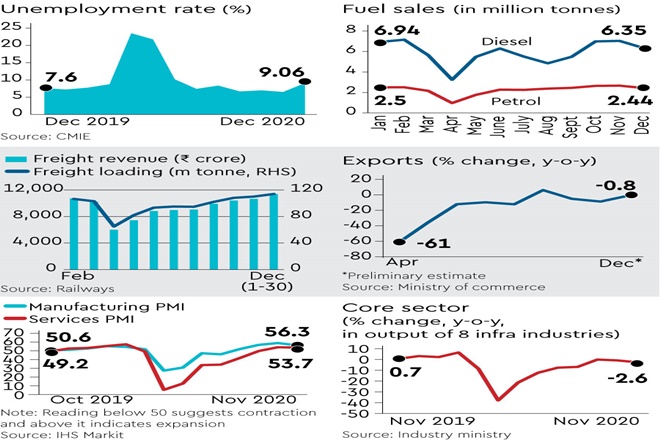

Some amount of pent-up demand for raw materials from industry may also have contributed to the rise in imports in December. If inbound shipments continue to rise, import-sensitive exports, too, will get a boost. Seasonal demand during Christmas may have improved export orders for December, meaning the jury is still out on a sustained trade recovery.
Reflecting a gloomy picture of job creation, the unemployment rate headed downhill, from 6.5% in November to 9.1% in December, according to the CMIE data. The RBI’s forecasts of mild positive GDP growth rates of 0.1% and 0.7% in Q3 and Q4 respectively, still look optimistic.
The Centre is apparently giving a leg-up to demand with its budget spending and by encouraging CPSEs to bolster capex.
Its overall budgetary expenditure rose 48.3% on year, improving from a 9.5% rise in the previous month and a 26% decline in September. The capex in November at `43,803 crore was up 248.5% on year.
India’s GDP shrank at 7.5% in September quarter, a contraction much narrower than expected; the economy had contracted at a record 23.9% in the first quarter of this fiscal. All three components of demand — private consumption, fixed capital formation and government consumption — had contracted in Q2, but the first two at slower pace than in Q1. Government- consumption support to the economy was weaker in Q2 (-22.2%) compared with Q1 (+16.4%).