




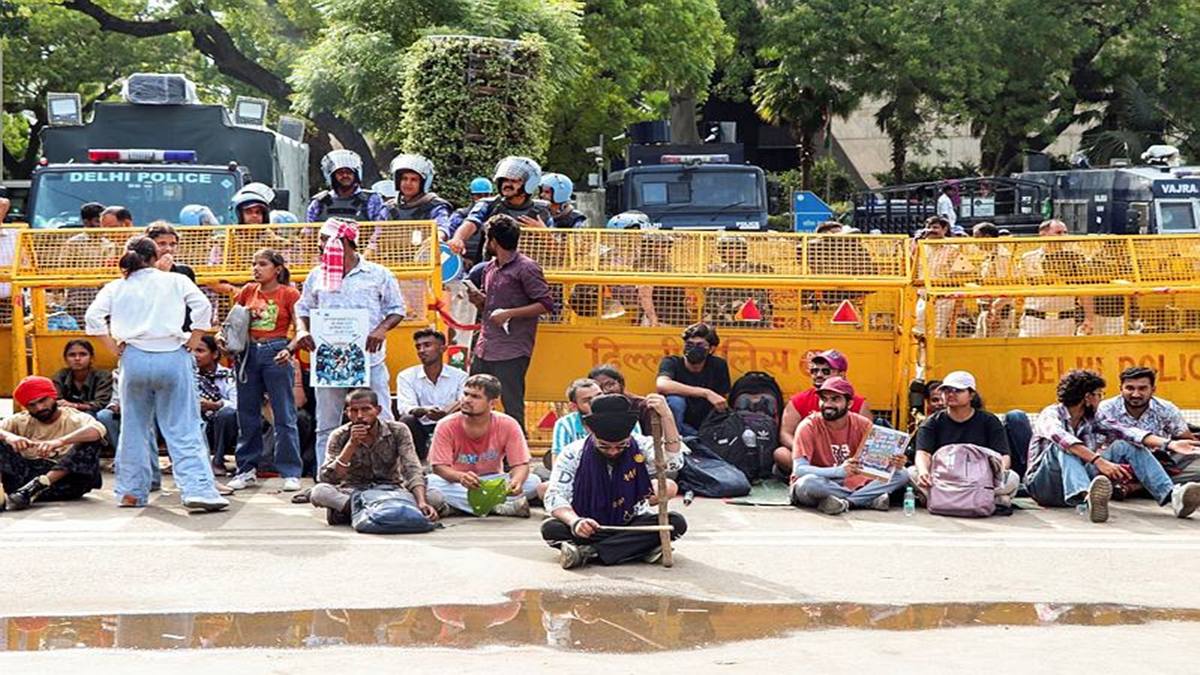
Dharmendra Pradhan’s resignation after the massive youth-led protest is a victory for democratic accountability. It shows that public anger, organised on the streets, and amplified through social media, can force a government to listen and accept responsibility. It has also exposed an Opposition that appeared hesitant until the crowds became too large to ignore, and then moved quickly to claim the moment.
Yet the resignation should be understood as a beginning, not a resolution. The National Eligibility cum Entrance Test paper leak was grave because millions of young people stake years of work, family savings, and their futures on the integrity of competitive examinations. But the leak became explosive because it touched a deeper anxiety: that the ladders of mobility promised to young Indians are becoming narrower, more expensive, and less reliable.
At the heart of this discontent is a divided India. Absolute poverty has fallen and economic growth has created wealth, enterprise, and opportunity, but access to the foundations of advancement remains profoundly unequal. One India can work around inadequate public systems through private schools, coaching centres, expensive universities, and private hospitals. The other depends on institutions whose quality varies sharply by geography, income, and social background.
Higher-education enrolment has expanded dramatically since 1991, but unemployment in some young age cohorts ranges between 25% and 40%. Families invest heavily in education as their strongest hope of upward mobility, only to find that good jobs are scarce and the gateway to them unforgiving. When even an examination appears compromised, the administrative failure becomes a moral one: it tells those without influence that effort alone may not be enough.
The answer, however, cannot be a simplistic Robin Hood politics of robbing Peter to pay Paul. India does not have to choose between wealth creation and social justice; it needs both to reinforce each other. Enterprise, investment, innovation, and success must be encouraged, because redistribution without growth merely divides scarcity. But growth that allows opportunity to be purchased rather than earned will deepen resentment and weaken social cohesion.
The state’s role is not to punish prosperity, but to ensure that birth, location, and income do not determine the quality of a child’s education, access to healthcare, the credibility of an examination, or the possibility of dignified employment. Governments must be held responsible when institutions fail, while the Opposition must offer more than opportunistic solidarity after public anger becomes politically useful. The malaise is larger than any single minister, party, or examination board.
India’s demographic dividend was always conditional, never guaranteed. A large young population becomes an asset only when people believe effort can lead to advancement and that institutions will treat them fairly. A minister can resign, an exam can be repeated, and officials can be punished, but restoring confidence requires deeper reform: secure and transparent testing, stronger public education, affordable healthcare, credible pathways from learning to employment, and enough quality jobs to match rising aspirations. It also requires institutions willing to listen before frustration becomes despair and despair reaches the streets.
The recent protests offer grounds for cautious optimism: young Indians have demonstrated that democratic pressure can produce accountability. The task now is to turn that accountability into durable change. They are not asking for guaranteed success, nor for one section of society to be diminished so another can rise. They are asking for a fair chance to build their futures. India must prove to its citizens that this remains possible.


