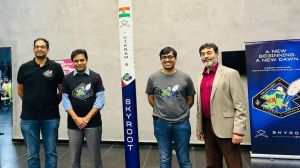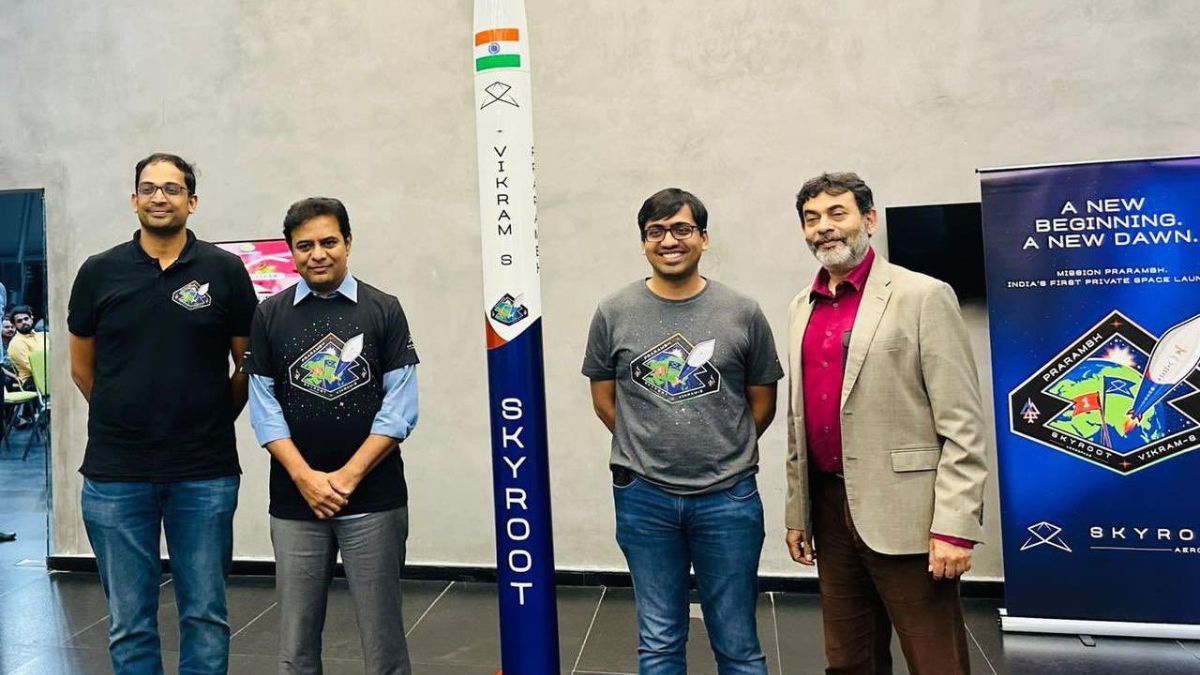
Skyroot Aerospace’s successful Vikram-1 mission has done more than place payloads into orbit. It has settled an important question that has hovered over India’s private space sector since it was opened up in 2020: can a private Indian company build and launch an orbital rocket? That alone makes the mission a defining moment for the country’s emerging space industry.
But it would be a mistake to view the achievement as the culmination of India’s private space ambitions. If anything, Vikram-1 marks the end of the technology debate and the beginning of the business debate. Building a launch vehicle is one challenge; building a commercially viable launch company is another altogether.
Around the world, success in the space economy has depended not merely on engineering excellence but on the ability to launch reliably, frequently, and profitably. The reforms have demonstrated that private enterprise can complement the Indian Space Research Organisation (ISRO) in developing advanced launch capability. The harder task now is ensuring that capability evolves into a globally competitive business.
The distinction is important because launch services operate under economic realities very different from those governing software or digital businesses. Customers buying launch services do not choose providers on the basis of a single successful mission.
They look for reliability over multiple launches, predictable schedules, competitive pricing, and confidence that future missions will perform with the same consistency. That requires manufacturing scale, robust supply chains, specialised talent, and sustained investment over several years.
It also requires demand that extends beyond demonstration missions. In an interview with FE, Skyroot Co-founders Pawan Kumar Chandana and Bharath Daka said the paid commercial market would open up meaningfully only after the company demonstrates repeated successful launches. That is important because in the launch business, repeatability is as valuable as innovation. The product is not merely a rocket that reaches orbit once, but a launch system that customers can trust every time.
Skyroot’s success also has implications well beyond one company. A new generation of Indian space startups, including Agnikul Cosmos, Pixxel, Digantara, and Bellatrix Aerospace, is attempting to build businesses across launch services, satellite manufacturing, space situational awareness, and propulsion systems.
Their prospects, too, will depend on whether a commercially viable space economy can be created rather than isolated technological successes. This is where public policy must now shift its focus. The reforms that created IN-SPACe, expanded private participation, and opened ISRO’s facilities to industry have delivered their first major validation.
The next phase is less about liberalisation and more about ecosystem building through predictable regulation, timely approvals, access to testing and launch infrastructure, and a stronger domestic supplier base. Patient capital will also remain critical because deep-tech businesses operate on far longer development cycles than consumer technology ventures.
That broader perspective should shape expectations from private space programme. Vikram-1 deserves to be celebrated because it validates years of policy reform, engineering effort, and entrepreneurial risk-taking. But it should not become another instance where a single milestone is mistaken for structural transformation.
The real measure of success will not be one successful rocket or one space-tech unicorn, but whether India can produce a pipeline of globally competitive space companies that launch regularly, attract international customers, and generate sustainable revenues. The private space journey has crossed an important technological milestone.
The challenge now is to convert that technological capability into commercial competitiveness. Only then will the promise of opening up the space sector be fully realised.