




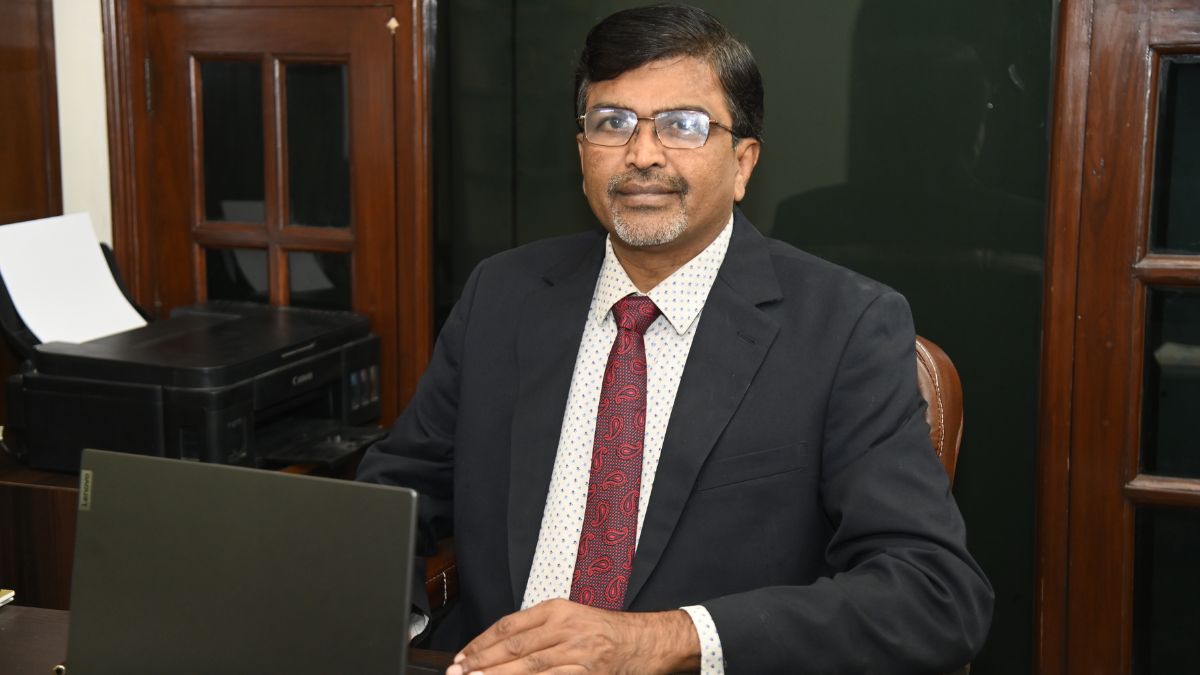
By Jiji Mammen
Microfinance emerged as a powerful tool for financial inclusion in India during the 1990s. Two models evolved. One was the Self-Help Group (SHG)-Bank Linkage Programme, promoted by Nabard and supported by the Reserve Bank of India (RBI).
The model was later adopted by the Ministry of Rural Development under the National Rural Livelihood Mission, and has since become the world’s largest microfinance programme as well as one of the country’s biggest poverty alleviation initiatives.
Around the same time, leaders from the development sector introduced the microfinance institution (MFI) model as a more direct route to financial inclusion. Many banks were initially reluctant to lend directly to SHGs. Under the MFI model, banks extended loans to institutions, which in turn lent to borrowers and assumed the associated credit risk. The RBI recognised this model as well, and it expanded rapidly.
As MFIs grew, so did their need for capital. Raising equity for development-oriented institutions proved difficult, prompting many to convert into non-banking financial companies (NBFCs), and later into NBFC-MFIs after the category was introduced in 2012. Some eventually graduated into small finance banks, while Bandhan Bank became the first MFI to transform into a universal bank.
The microfinance sector has always been cyclical, experiencing periods of rapid growth followed by stress. Yet its resilience and ability to recover have consistently reassured lenders. The latest downturn, however, has been deeper and more prolonged, making banks cautious about fresh exposure to MFIs.
To revive credit flows, the Government of India introduced CGSMFI 2.0, a credit guarantee scheme similar to the one launched during the Covid-19 pandemic. The scheme is expected to encourage lending, particularly to smaller MFIs. Of the ₹1,500 crore sanctioned so far, around ₹700-800 crore has gone to small and mid-sized institutions. Larger MFIs are expected to continue receiving funding from banks, while the guarantee scheme should help normalise credit flows across the sector.
At the same time, five structural changes are reshaping an industry that has relied on the Joint Liability Group (JLG) model for nearly three decades.
First, the Covid-19 pandemic disrupted the group culture. Social distancing prevented regular group meetings for almost two years, allowing borrowers to experience MFI services without the traditional peer-group interactions that formed the backbone of the JLG model.
Second, India’s rapid adoption of digital payments has changed repayment behaviour. With nearly 70% of the rural population now familiar with digital transactions, many borrowers can repay instalments electronically without attending group meetings.
Third, rising aspirations and growing credit needs have pushed up loan sizes. The average loan ticket has doubled over the past two to three years to around ₹63,000. More than 40% of loans are now larger than this average, while 10-15% exceed ₹1 lakh. Larger loans and higher EMIs inevitably weaken the effectiveness of joint liability.
Fourth, competition has intensified. Besides MFIs, borrowers today have access to banks, NBFCs and fintech lenders. While greater choice benefits customers, it has also reduced the borrower loyalty that MFIs once enjoyed.
Finally, advances in artificial intelligence (AI) and machine learning (ML) are opening new possibilities for credit assessment and underwriting. Data-driven models can supplement traditional lending practices by enabling more accurate risk assessment and helping prevent over-lending.
These developments suggest that microfinance lending is likely to become increasingly individual-centric, even when delivered through group structures. AI-based underwriting is already being adopted by several institutions to strengthen credit appraisal. This does not imply the end of the JLG model. Rather, technology can complement group-based lending by adding another layer of borrower assessment. Many MFIs have already begun combining individual credit evaluation with traditional group appraisal, while others have introduced individual lending products by utilising the 40% non-qualifying asset window available under the regulatory framework.
The sector is therefore entering a new phase, one that blends technology with relationship-based lending. But modernisation also brings an important risk: financial exclusion. More than 15 million borrowers have exited the microfinance system over the past two years. Better underwriting can reduce defaults and curb over-indebtedness, but it should not come at the cost of excluding low-income households with limited credit histories.
For first-time borrowers and those entering the formal financial system, the group lending model continues to serve an important purpose by providing both access to credit and social support. As microfinance evolves, the challenge will be to harness technology without diluting its core mission of financial inclusion. The sector’s future will depend not only on smarter underwriting, but also on ensuring that the poorest borrowers remain part of India’s formal credit ecosystem.
The author is ED and CEO of Sa-Dhan, a self-regulatory organisation for MFIs.
Disclaimer: The views expressed are the author’s own and do not reflect the official policy or position of Financial Express.


