




By Akhilesh Tilotia & Akshata Kalloor,
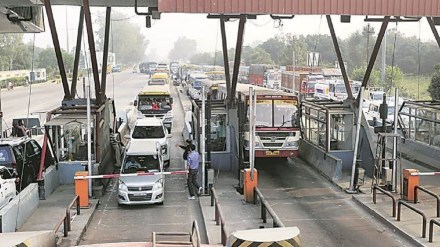
Last August, we highlighted that India discloses a large repository of data on digital toll collection (bit.ly/3xJBkW7). For a brief period around that time, the data dissemination stopped. Thankfully, the data sets are now being released again, though some granularity is missing. Almost all toll collection across the ~950 plazas is now digitised. With data now available for many months, we build various time series to uncover patterns.
Average tolls and inflation
Difference between year-on-year (y-o-y) value and volume growth approximately equals inflation-linked formula of tolls. Tolls in India annually rise by “3% + 40% of WPI (wholesale price index) increase as on December 31”. In our calculations across all plazas, the average value growth in FY24 was 11.9% while the volume growth was 6.8%, a ~5% difference. This roughly equals 3% + 40% of 5.02%, or ~5%. Over time, the average “swipe” at a FASTag has grown from `155 in March 2022 to `181 in March 2024.
Importance of freight
The break-up between passenger vehicles (PV) and commercial vehicles (CV) was available till August 2023. We calculated that PVs account for ~60% of the traffic on Indian tolled roads generating ~30% of tolls. As a corollary, CVs with ~40% of volume generated ~70% of tolls. In August 2023, the average toll collected from a PV was `80 and from a CV was `308. A large part of the value of tolling roads, hence, comes from freight and goods movement.
Over time as the dedicated freight corridors of the Indian Railways come up, these heat maps generating data from the toll collected could give a near real-time indication of how the relative modal shift between roads and Railways evolves.
Monsoons and festivals
There are two peaks: one in May before the monsoon dip comes through and another in September/October just before the festival season. When calculating y-o-y growth, one needs to consider the lunar calendar for festival seasons. Since the road traffic typically precedes expected demand, tracking movement on Indian roads can give market participants a good view of underlying demand and supply patterns.
Linking freight to trade
While analysing data of June 2023 in our heat maps, we had noted that toll plaza points on the map to and from ports started to turn yellow (lower yoy growth) and, in some cases, red (reflecting a drop over last year), indicating an overall slowdown in traffic movements. Over the next few months, we could see the changes in India’s goods exim trade broadly reflecting this slowdown. Again, over the next few months since June, as India’s exports and imports picked up, the toll plazas turned green. Data from toll plazas, especially those connecting to ports, can be used to act as an indicator for trade. Similarly, we found that the overall volume growth on roads tracks reasonably closely (with a one-month lag) with growth in e-way bills generated on the goods and services tax network.
Understanding state growth
We pull together data on all toll plazas in respective states (see graphic). A mosaic of state-wise growth in tolls over time can depict a one-shot comprehensive picture of growth over time and space.
Top 10 plazas
Mapping the top 10 toll plazas highlights the key revenue and traffic points: no surprise that the highest value tolls are on the roads connecting the northern hinterland to the western and eastern ports; and the highest volume ones are around cities. A typical top 10 toll plaza sees a daily toll collection of around ~1 crore.
Some caveats
FASTag is now used not just for paying tolls but also for parking charges and, in some cases, fuel. Over time, as usage of FASTag widened, we noted divergence between total value of swipes at plazas and FASTag spends. Many high-frequency indicator charts still make use of the overall FASTag number to get a sense of the road activity — they may want to consider making this adjustment.
As with any new data sets and analyses, they will evolve and refine. While we now get a good grasp on many trends, polishing of analyses will be required. There are some data gaps across time and plazas. Some data sets have been discontinued, making some comparisons trickier.
Digital data disseminated widely and consistently can create a vocabulary to understand and analyse these changes. We are limited by only our imagination of how to think about analyses, visualisations, and implications. Over time, as varied digital public metadata is collected and disseminated, analyses will get refined and serve as a good indicator of economic activity.
The authors are with National Investment and Infrastructure Fund Ltd.
Disclaimer: Views expressed are personal and do not reflect the official position or policy of Financial Express Online. Reproducing this content without permission is prohibited.


