
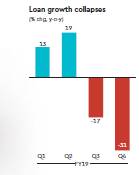
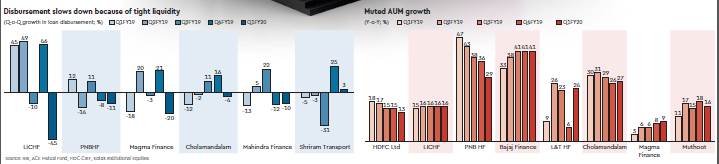
Non-banking financial companies (NBFCs) are still facing liquidity squeeze as most banks have tightened lending since Q1FY20, and mutual funds, too, have reduced their exposure to NBFCs and housing finance companies.
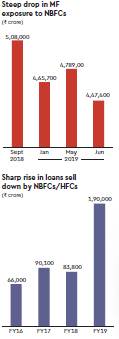

As a result, most NBFCs have resorted to assignment/securitisation of loans to meet funding requirements.
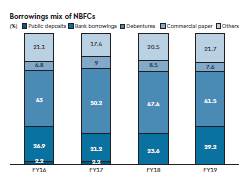

Some banks have hit single sector exposure limits on NBFCs and are not keen to increase exposure to the sector. While the Reserve Bank of India has taken multiple steps to increase availability of funds to NBFCs, the overall impact has been marginal.

The central bank has allowed banks’ lending to NBFCs for agriculture, micro and small enterprises, and housing classified as priority sector lending, up to specified limits. It has also raised any bank’s exposure limit to a single NBFC from the existing 15% to 20% of tier-1 capital to ease the liquidity pressure.

In the Budget, the government has underlined that public sector banks will be encouraged to buy high-rated pooled assets of up to Rs 1 lakh crore of financially sound NBFCs on which the government will give six-month partial credit guarantee for the first loss of up to 10%.
These changes will help some reduce some of the challenges faced by retail NBFCs as the risk factors of retail-lending NBFCs are different from infrastructure or consumer-lending NBFCs.