




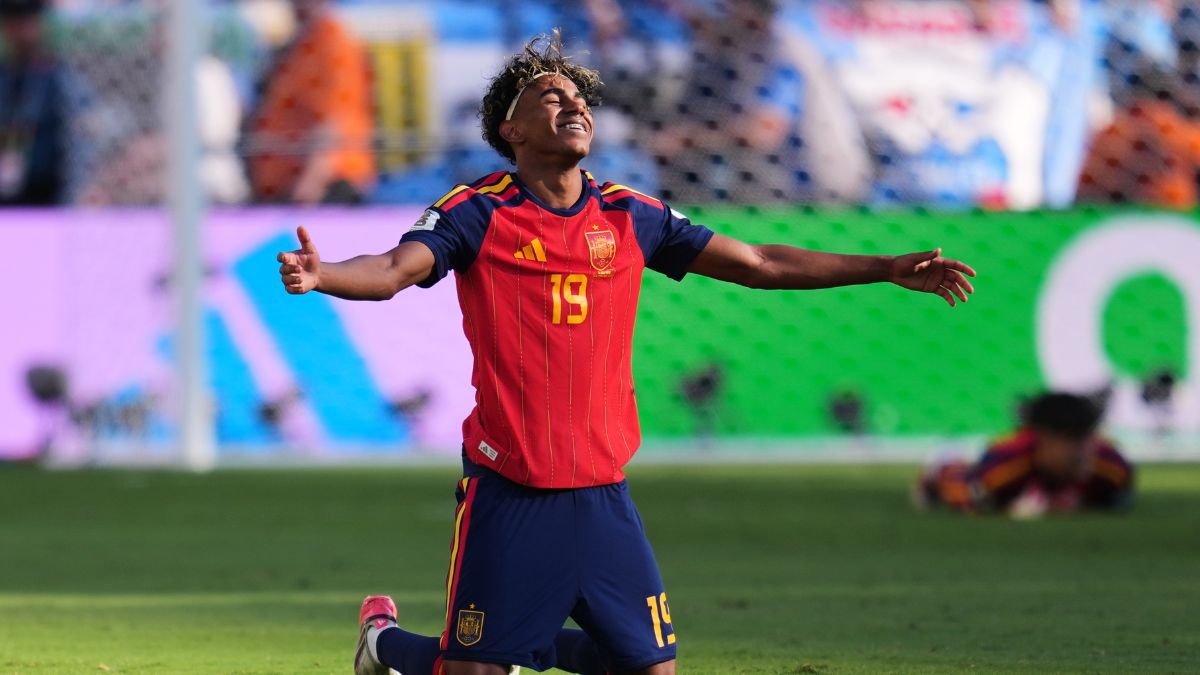
FIFA World Cup 2026 drew to a close on Sunday after Spain prevailed over Argentina by one goal in extra time, exactly the same margin of its winning the 2010 edition of this quadrennial event. To be sure, controversies swirled around this event including dodgy refereeing decisions and President Donald Trump asking the head of FIFA to rescind suspending a red-carded US player ahead of a round of 16 match against Belgium.
The Iranian team was required to enter and exit US soil on the exact same day of their matches and entry was denied to a Somali referee. None of these problems, however, detracted from the sheer magic of the beautiful game of football and the artistry of its practitioners that captivates millions of global fans.
Spain was a deserving winner with its possession-driven play. The quick passes and ability to swiftly recover the ball after losing it neutralised France which had one of the strongest attacks in the game that rivalled the heydays of Brazil in 1970 and 2002. That semifinal match was truly the final as it was between the two strongest teams in the FIFA World Cup 2026.
The score line of only one goal in Sunday’s final does not do justice to Spain’s dominance as it relentlessly attacked the Argentinian goal. Spain conceded only one goal in the FIFA World Cup 2026. This rock-solid defence stems from the legacy of Johan Cruyff whose dictum was “There is only one ball. If we have it, they can’t score,” according to Simon Kuper of the Financial Times.
Given the rich pickings of FIFA from this 48-nation event — which expects the four-year cycle that ends with this World Cup to generate $13 billion — there is a proposal to expand it further to 64 nations for the 2030 edition to give more countries a chance to play on the biggest stage. Critics carp that this would make the qualification process less challenging and impact the tournament’s quality.
The same misgivings were also expressed in FIFA World Cup 2026 which saw small island nations like Cape Verde and Curacao participating for the first time. But they acquitted themselves creditably. Cape Verde held Spain to a goalless draw in the group stage and reached the round of 32 in which it was narrowly defeated 3-2 by Argentina in extra time.
FIFA World Cup 2026 has only confirmed the dominance of western Europe. The round of 32 had as many as nine out of 10 African nations but this whittled down to only two in the round of 16, with only Morocco reaching the quarter finals. For all the talk of football’s Asian century, South Korea was eliminated in the group stage. Japan and Australia were defeated in the round of 32. China and India have not even made it to the tournament.
Twelve western European nations made it to the round of 32 which came down to seven in the round of 16 and three in the semifinals. For the first time since 1990, FIFA’s top four ranked teams lined up for the semifinals. These teams lifted the trophy once or more in the past editions of the World Cup.
The dominance of western Europe is also reflected in the fact that several squads in the tournament had members from their diaspora in the continent, including Cape Verde and Curacao. Terming Morocco as African does not tell the full story of its rise as a soccer power as only seven out of the 26-member squad were born in that country.
The captain, Achraf Hakimi, is Madrid-born. The star midfielder, Ayyoub Bouaddi, captained France’s under-21s. It remains to be seen which other nations have the potential to upend the global soccer hierarchy as there is churn underway with legends like Lionel Messi, Cristiano Ronaldo, and Neymar having the last dance while a new generation emerges as practitioners of the beautiful game.
Disclaimer: The views expressed are the author’s own and do not reflect the official policy or position of Financial Express.


