




By Ashok Gulati
Finally, the election results are out. No one has complained about the electronic voting machines (EVM) or voter verified paper audit trail. The Indian National Developmental Inclusive Alliance (INDIA) that was alleging rigging just a day before, when exit pollsters were forecasting a massive win for the National Democratic Alliance (NDA), did not speak a word about manipulation of election results. The lesson: our democratic process is reasonably good and fool-proof. Our Election Commission deserves some credit for that, especially organising such a marathon exercise at a scale that the world has never seen before. As the Election Commission said, “Parinaam main hi pramaan hai” (The proof is in the results), so the EVM debate now should be buried forever.
Many psephologists will keep digging for days to identify factors behind the election results. The exit pollsters lost credibility as the margin of error ranged from 20-30%. Although the INDIA bloc could not gather enough numbers to claim government formation, it is more than happy to challenge the incumbent government. The Bharatiya Janata Party (BJP) suffered badly, as its own tally dropped from 303 in 2019 to 240 in 2024, and now it will be heavily dependent on NDA allies, especially Chandrababu Naidu and Nitish Kumar. Both will extract from the BJP much more than their absolute numbers suggest.
On the factors behind a major fall in the BJP tally, everyone has an opinion based on their vantage point. Was it the fear factor that the Constitution will be fundamentally changed; caste or religious factors; economic factors like unemployment, high inflation, crony capitalism, widening inequalities, and the promises of “freebies” to women and youth, etc.; or a cocktail of all of these?
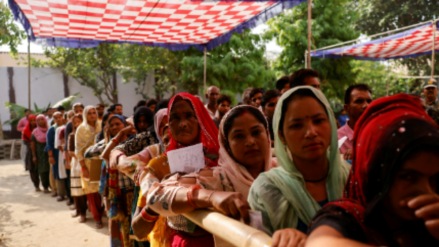
It is hard to decipher the influence of these several factors, but my take is simple: look at where the BJP lost most, constituency by constituency. It would be interesting to note that its tally in rural constituencies came down from 253 in 2019 to 193 in 2024, a whopping slide of 60 seats out of the 63 the party lost in this election compared to 2019. So, it is rural India that has sent a strong message to the BJP, but it has lessons to all those who are forming the government today or who have lost elections.
Almost two-thirds of India still lives in rural areas, and their average per capita monthly expenditure was only Rs 3,773 in 2022-23 according to the National Statistical Office household expenditure survey. Given the average family size of around 4.4, it translates to a family monthly expenditure of only Rs 16,600. Even if you adjust for inflation and their meagre savings till day, broadly speaking, an average rural family’s income is not more than Rs 20,000 per month. There is no doubt that the Narendra Modi government has made inroads into rural areas through its several ramped-up schemes to build toilets, houses (PM-Awas), drinking water (Har ghar nal se jal), rural roads, electricity supply, etc., yet the rural population’s income levels remain much lower. And within the rural space, the income of agricultural households is even lower. This clearly shows that the rural economy has not been doing well. A good indicator of it that can be tracked is the growth in real wages in rural areas, which have been largely stagnating or even marginally declined in the second term of the Modi government.
The agri-GDP in FY24 was just 1.4% according to the latest provisional estimates released by the ministry of statistics and programme implementation. The second advance estimate of this was, in fact, only 0.7%. But since the overall GDP growth in FY24 was 8.2%, the euphoria in business circles and media dominated by urban news was that India is in top gear with the highest rate of growth among all large economies of the world, including G20. There is no doubt about that. But if the agriculture sector is growing at just 1.4%, and it engages 45.8% of the workforce, one can imagine what is happening to the well-being of the masses. Just giving them 5 kg of free rice or wheat per capita per month is not enough. That’s literally a dole. Instead, what is needed is to raise their real incomes substantially. But how do we do that? And this is a lesson for all the political parties, who want masses to gain from our development process, or make the growth process more inclusive.
In this context, three things must be remembered. One, there are too many people dependent on agriculture. They need to move to more productive, non-farm jobs. These could be in rural areas to build infrastructure, or outside the rural economy to build urban India. It would require massive investments in skill formation for high-productivity jobs. Industry folks need to pitch in to train them for meaningful jobs. Second, within agriculture, the focus needs to shift from basic staples, especially rice, which is in abundant supply, to high-value agriculture such as poultry, fishery, dairy, and fruits and vegetables. High-value agriculture, being perishable, requires fast-moving logistics in a value chain approach, a la the AMUL model in case of milk. The government needs to chalk out a robust strategy for that. Third, given the climate change already causing extreme weather events (heatwaves or flash floods), India needs to invest heavily in smart agriculture, including agrivoltaics, which means solar as a third crop for farmers, giving them regular monthly income even when other crops fail due to drought or floods.
If these things have to be done right, we need an experienced and wise person heading agriculture and rural development in the Modi government. Shivraj Singh Chouhan, under whose leadership agriculture in Madhya Pradesh registered the highest growth in the last 15 years or so, would perhaps be most suitable for this job.
The author holds the position of Distinguished Professor at ICRIER.
Disclaimer: Views expressed are personal and do not reflect the official position or policy of Financial Express Online. Reproducing this content without permission is prohibited.


