




The Securities and Exchange Board of India (Sebi) is likely to issue a consultation paper on its comprehensive review of the Listing Obligations and Disclosure Requirements (LODR) framework in four–six months. The exercise is aimed at simplifying the regulations, easing compliance burdens and removing redundant provisions.
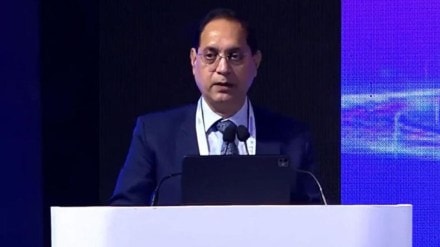
“It’s a major review and requires wider consultation,” Chairman Tuhin Kanta Pandey told presspersons on Monday. He was addressing a media briefing after a closed-door interaction with industry stakeholders organised by CII.
What did Pandey say?
Pandey said several suggestions emerged during the consultations, including inputs on ambiguities in the regulations, approaches towards new-age companies and issues related to promoter holdings. He said the comprehensive review of the listing regulations will be shared with stakeholders, their feedback incorporated, and then taken through the committee overseeing LODR before issuing the consultation paper.
“It’s a major regulation, it takes time but we have started the process. It should be taking four-six months to come out,” he said.
What are LODR regulations?
Introduced in September 2015, the LODR regulations were designed to enhance transparency in business operations, strengthen corporate governance and protect investors through timely and standardised disclosures. The framework has undergone multiple amendments over the years, related to board diversity, CEO pay ratios and ESG reporting. Sebi is now undertaking a more comprehensive review of the entire regime.
The review will also examine compliance issues faced by small and medium enterprises (SMEs). “An important issue that came up during discussion was how do we bring more MSMEs into the capital market,” Pandey said, adding that many robust MSMEs remain outside the market ecosystem.
Pandey said industry stakeholders largely appreciated Sebi’s current stance of pursuing “optimum regulation,” simplifying rules and procedures while maintaining market integrity and investor protection. “We have also received a number of ideas in terms of further simplification in terms of ease of doing business,” he said.
Citing an example, he noted that listed entities currently need to submit filings to different stock exchanges and depositories. “They could be combined through a single portal so a lot of technical pipeline created on a single line basis,” he said.
Sebi, along with stock exchanges, recently launched the unified portal “Samuhik Prativedan Manch” for stockbrokers, allowing them to submit compliance reports through a single interface and avoid duplicate filings with multiple exchanges. “I think we can have a similar portal for listed entities also,” Pandey said.
On derivatives, Pandey said Sebi has implemented several measures since with major ones in October 2024 and in May 2025 to reduce market risk and strengthen surveillance. “Many of these measures have started holding. We will have one more measure on December 6. We will be watchful,” he said, adding that a consultation paper on derivatives will be issued after detailed analysis of the outcomes to determine future steps.
The average daily turnover (ADTV) in the derivatives market rose to a 12-month high in October at ₹506 lakh crore. According to a past Sebi study, around 94% of retail investors incurred losses in derivatives trading. The regulator has introduced measures such as limiting weekly expiries to two days and discontinuing weekly contracts on non-benchmark indices to reduce retail risks.
“We should have longer term derivatives in the market… That is not to say that we are going to shut down certain derivatives,” Pandey said. He added that the market needs to develop alongside newer, longer-tenure products. “For instance, we recently introduced Electricity Future (F&O). There could be progressively more such products which are going deeper into the Future,” he said.
Pandey said the market could see futures with longer durations—quarterly, nine-month, or even two-year tenures. “The Market has to develop in different segments with all kinds of Future products so that you have more depth for hedging,” he said.


