




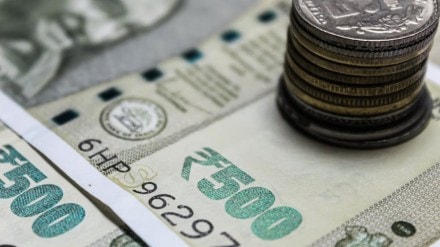
The Indian rupee remained steady as it opened at 89.64 against the US dollar, barely unchanged from Monday’s close of 89.65. As per a Reuters report, the domestic currency is likely to gain support from a weakening dollar; however, the gain is likely to be short-term on the back of increased dollar buying by importers.
Last week, the Indian currency had breached past the 91-level mark and then hit a high of 89.25 following heavy intervention by the RBI. The central bank sold dollars aggressively to help break speculative positions in the market.
Factors affecting the Indian rupee
Much of the currency depreciation has largely been on the back of a stalled trade deal with the US, which further drove foreign equities out of the domestic markets.
Lack of intervention by the RBI was also cited as one of the reasons for the weakening of the Indian rupee.
RBI Governor Sanjay Malhotra, in the December monetary policy committee (MPC) meeting, had said that the central bank does not have any target levels for the Indian currency and that market forces would naturally allow the rupee to regain its position. However, with the central bank’s recent interventions, traders have added that the RBI would not let the currency breach past the 92-level mark.
Further, year-end payments that are to be made in dollars by local corporates also created a supply-demand mismatch for the currency, weakening it further.
Outlook for the rupee
Analysts expect the rupee to continue trading in the 89–90 range in the near short term, with much of the focus on reinforced expectations of a rate cut by the US Federal Reserve. A rate cut by the Fed is likely to help the Indian currency gain momentum.
With the RBI’s neutral stance, some Indian policymakers have added that there is a strong possibility of a rate cut by the central bank in its February meeting, as the rate cut would help with benign inflation numbers. On the other hand, other currency experts have added that a rate cut at this point can lead to further depreciation of the currency.


