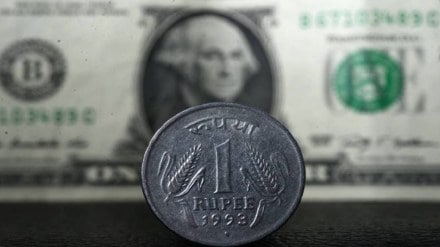
The rupee on Wednesday breached the crucially important 90/$ level mark, declining to its lowest level in history against the US dollar. The currency fell for a sixth straight session, opening at 89.97, down 0.1% from Tuesday’s close of 89.87. Yesterday, the currency had already touched the 90-per-dollar level in the inter-bank order matching system.
The 90-per-dollar level was the immediate resistance for the rupee. Some analysts now expect that the rupee may even breach the 91-per-dollar mark. The depreciation in the currency has largely been attributed to the stalled trade deal between the US and India and the outflow of equities from the markets.
Why is the rupee sliding? 3 Key concerns
1- Indian currency has witnessed a rapid slide past the 85 mark into the 90 territory over the last 24-30 months, driven by fundamental global economic shifts on the back of the Ukraine war and Trump’s tariff pressure. Escalating tension has driven investors to seek the safety of US dollar.
2- This has been followed by FIIs consistently pulling capital out of Indian debt and equity markets, leading to a reduction in dollar supply in the Indian market.
3- A stalled India-US trade deal and the lingering impact of tariffs on exports. 50% tariffs have made Indian exports less competitive, causing a drop in export volumes and, crucially, a reduction in the inflow of US Dollar into the Indian market. This has added extra pressure on the rupee. An early resolution in the trade agreement will help India with a higher inflow of dollars.
‘Rupee slipped below the 90-mark for the first time, pressured by the absence of a confirmed India–US trade deal and repeated delays in timelines. Markets now want concrete numbers rather than broad assurances, leading to accelerated selling in the rupee over the past few weeks,’ Jateen Trivedi, VP Research Analyst – Commodity and Currency, LKP Securities said.
“Speaking on the currency depreciation, Dr. VK Vijayakumar, Chief Investment Strategist at Geojit Investments, said, “the continued depreciation in the rupee and fears of further depreciation since the RBI is not intervening to support the rupee. This concern is forcing FIIs to sell despite improving fundamentals, including rising corporate earnings and a strong rebound in GDP growth.”
The rupee’s depreciation will halt and even reverse when the India–US trade deal materialises. This is likely this month. A lot, however, will depend on the details of the tariffs to be imposed on India as part of the deal,” he added.
RBI MPC kick starts
Meanwhile, the crucial RBI MPC meeting kick starts today at 10 am. The RBI is expected to address the issue of the weakening currency, as the rupee has recently been one of the worst-performing Asian currencies. Economists are split on the question of a rate cut going forward. However, given the rupee’s continuous decline and strong GDP numbers, the tables may turn.