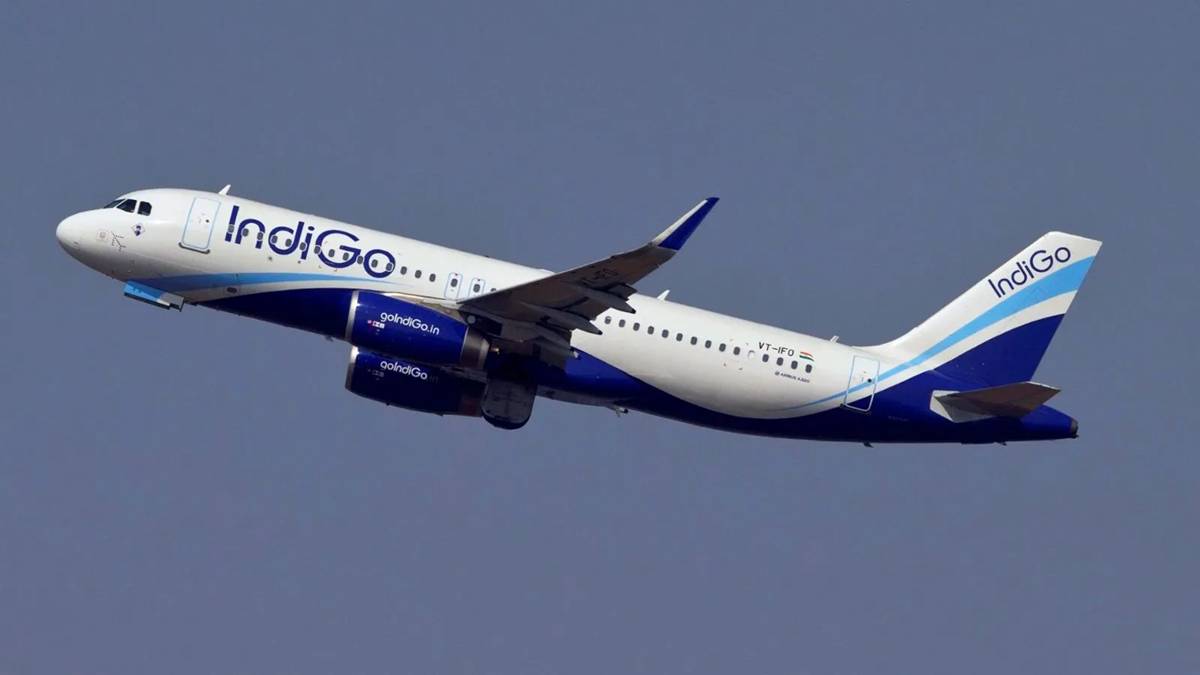
InterGlobe Aviation’s share fell 2.7% to a low of Rs 4,886 on the NSE after the company reported a net loss in the first quarter earnings, hit by rising fuel prices and tensions in West Asia.
The brokerage houses highlighted three major points that dented the results of the airline stock: higher fuel prices, tension across West Asia, and depreciation of the Indian Rupee.
Nuvama on InterGlobe Aviation
The international brokerage house Nuvama Institutional Equities has raised the price target on IndiGo to Rs 5,583 from Rs 5,335, implying an upside of 11%. This uptick in the target price came despite the company missing estimates.
Nuvama said that Indigo’s Q1 EBITDAR missed consensus estimates by 29% on elevated fuel costs, partly offset by higher yield, which was up 21% YoY. Seasonally soft Q2 to be even weaker on higher ATF (Aviation Turbine Fuel), flat ASKM (Available Seat Kilometres) partly offset by higher PRASK (Passenger Revenue per Available Seat Kilometre), which was over 25% YoY, and VAT cut on ATF in Delhi and Maharashtra.
“We cut FY27 and FY28 EBITDAR by 10% and 9% on higher fuel costs,” said Nuvama.
Motilal Oswal on InterGlobe Aviation
Motilal Oswal Financial Services maintained its ‘Buy’ rating on IndiGo and retained the price target at Rs 6,580, implying an upside of over 31% from the current market price.
Motilal Oswal remained confident in IndiGo’s growth strategy, despite continued near-term headwinds from West Asia airspace disruptions, high fuel costs, INR depreciation, and higher damp-lease exposure. This confidence comes on the back of India’s strong domestic demand base and steadily expanding international network.
Looking ahead, gradual normalisation of international operations, easing Pratt & Whitney-related groundings, fleet expansion (including A321XLR-led international deployment), and resilient demand trends are expected to support performance recovery over the coming quarters.
“We estimate a CAGR of 13% and 47% in revenue and EBITDA, respectively, over FY26-28,” said Motilal Oswal.
The biggest hit came from fuel costs. Aircraft fuel expenses surged 86% to Rs 10,833 crore from Rs 5,833 crore a year earlier, significantly increasing cost pressures despite strong demand and revenue growth.
JM Financial on IndiGo
JM Financial has an Add rating on IndiGo with a target of Rs 5,630 per share. This implies 12% upside from current levels. The brokerage house highlighted that the most important takeaway from the call was “management’s focus on protecting profitability rather than chasing market share. FY27 ASK growth guidance remains at single digits, while Q2FY27 capacity is expected to be broadly flat YoY as the company rationalises deployment amid Middle East disruptions and seasonally weaker demand.”
The brokerage believes this disciplined capacity approach, combined with healthy industry demand, has allowed it to guide for 25%+ YoY PRASK growth in Q2FY27, well ahead of 19% growth in Q1. “This reinforces our view that the current pricing environment remains structurally favourable,” JM Financial added.
IndiGo Q1FY27
InterGlobe Aviation, the parent firm of IndiGo Airlines, a net loss of Rs 238 crore for the first quarter of FY27, compared with a net profit of Rs 2,176 crore in the same quarter last year.
Its revenue from operations surged 20% year-on-year (YoY) to Rs 24,584 crore compared with Rs 20,496 crore a year ago.
However, operating costs outpaced revenue growth, with total expenses rising 34% YoY to Rs 25,853 crore from Rs 19,232 crore.
IndiGo’s CASK (cost per available seat kilometre) rose to Rs 5.71 from Rs 4.31 as higher crude oil expenses hit the cost. CASK excluding fuel increased to Rs 3.22 from Rs 2.93. Yield improved to Rs 6.04 from Rs 4.98, while RASK (revenue per available seat kilometre) rose 16.5% to Rs 5.66.
Additionally, foreign exchange loss stood at Rs 82.5 crore during the quarter, lower than Rs 147.3 crore a year earlier. However, the loss on forex hedging increased to Rs 149.9 crore from Rs 23.7 crore.
IndiGo share price performance
The share price of IndiGo has fallen 4.5% in the last five trading sessions. The stock has declined 3.4% in the past one month. However, the stock has surged 5.5% in the last six months. IndiGo’s share price has erased 14% over the past one year.