




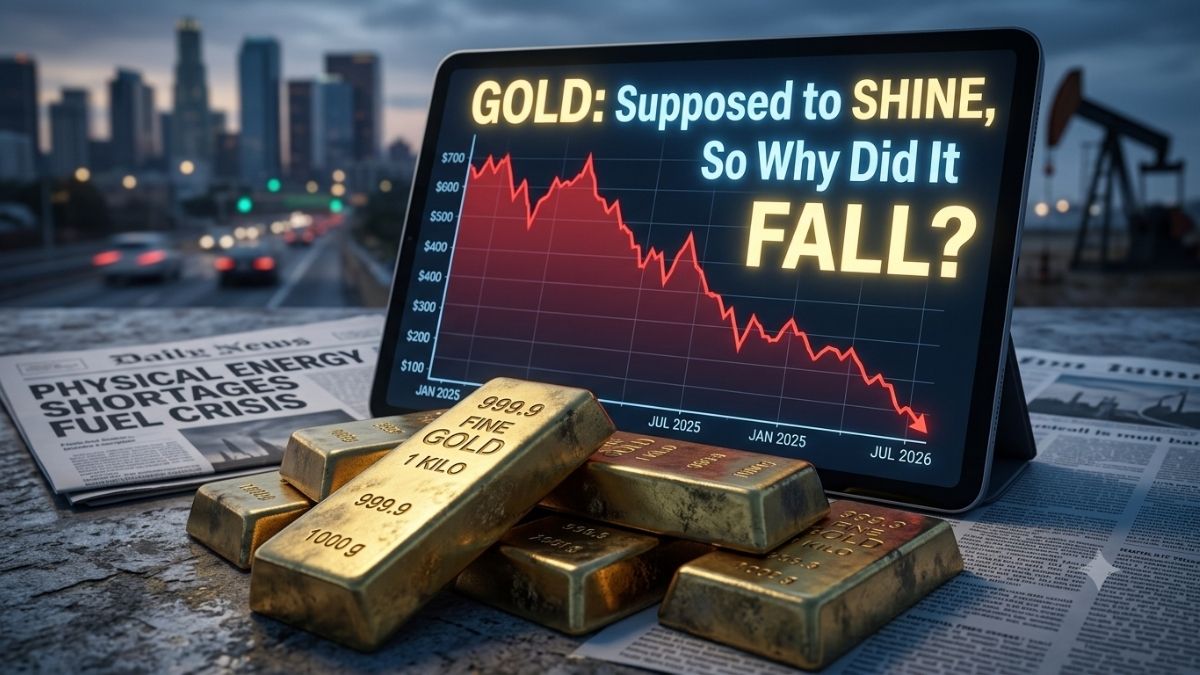
Over the course of the West Asia conflict, the price of gold declined by 27%. Silver is down almost double, registering a 52% decline. Both commodities rose dramatically in 2025 and early 2026. But the conflict wiped out their gains and more.
The mantra investors are used to is that precious metals, especially gold, are hedges for a crisis. Why then have we witnessed the opposite behavior? In the last five months, the risk of a global economic crisis has increased. Oil and gas shortages spread through Asia in April. The temporary end to the conflict in June brought a reprieve. But now the risk has risen again.
The two types of crises
Broadly, there are two types of economic crises. The first is a crisis stemming from the financial markets. The second is a crisis stemming from physical shortages. Right now, we have a high risk of the latter. Gold, and precious metals generally, only protect against the former. Let’s dive into why this is the case.
The Mechanics of a Financial Markets Meltdown
A financial markets crisis takes the following form. It starts with debt levels getting too high. This may occur in the private or public sector. As debt levels increase, monetary policy is loosened to make the debt manageable. Lower interest rates encourage further speculative lending. Banks suffer losses as companies’ debt levels get too high. Governments bail out companies and banks that are too big to fail.
The debts that start in the private sector end up in the public sector. Eventually, the public sector debts get too big. And the government has to monetize the debt. This means they print money and inflate away the debt. The result is high inflation. Debts go down in real terms. High inflation solves the debt problem (while creating other problems).
Investing in precious metals is the best way to hedge inflation. Gold and silver prices tend to rise as inflation goes up. Even the risk of inflation causes gold prices to go up. And when we think of an economic crisis, this is usually what comes to mind. This type of crisis results from bad domestic economic policy.
Why Soaring Energy Costs Depress Gold Demand
The second type of economic crisis stems from physical shortages of essential commodities. Today, we have a high risk of a second wave of oil and gas shortages. In April, oil prices crossed $135 at the peak of the first wave. When energy commodities cost more, we buy less. And we produce less and economic activity declines.
The link between high energy costs and reduced economic activity is clear. What is less clear is how this affects gold and silver. Why do gold prices go down in this environment?
Energy is an essential commodity. Gold is not. When energy prices go up, you must spend more on energy. This leaves less available to invest in gold. Over the last five months, spending on energy imports has gone up. The government has gone out of its way to discourage spending on gold imports, by increasing taxes. The combination of increased energy costs and higher taxes have substantially reduced gold imports.
Gold demand has fallen
Gold imports dramatically declined in April, before recovering in the last two months. As of today, gold imports are half of what they were at the start of the year. Due to lower demand, gold prices have fallen dramatically.
The two types of economic crises are not independent. It is possible that one can lead to the other. If energy shortages cause a downturn, governments can respond by spending more and taking on more debt. This in turn could lead to inflation. Right now, there is no sign of this happening. And so, gold prices remain low. But that could change if things get worse.
Much will depend on how the US Federal reserve responds to the current situation. If energy prices go up, this will increase inflation and reduce economic activity. If the Fed keeps rates high to control inflation, this will put further downward pressure on precious metals. If the Fed prioritizes lowering rates to counter reduced economic activity, this will fuel further inflation. And then gold and silver will respond positively.
Gold and silver are hedges against currency depreciation. When a currency loses value because of inflation, gold and silver go up in price. For an investor, it still makes sense to invest a portion of your portfolio in precious metals. Remember that today’s physical commodity shortage could be tomorrow’s debt crisis.
Disclaimer:
Note: The purpose of this article is to share interesting charts, data points and thought-provoking opinions. It is NOT a recommendation. If you wish to consider an investment, you are strongly encouraged to consult your advisor. This article is for strictly educative purposes only.
Asad Dossani is an assistant professor of finance at Colorado State University. His research covers derivatives, forecasting, monetary policy, currencies, and commodities. He has a PhD in Economics. He has previously worked as a research analyst at Equitymaster, and as a financial analyst at Deutsche Bank.


