




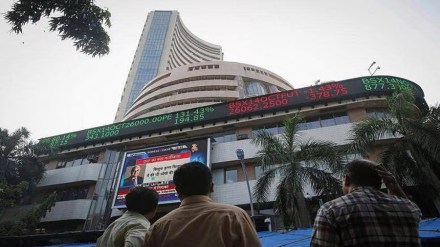
The futures & options segment of the BSE has seen a robust growth of 1,539% in its average daily premium turnover in the past two years, even as the industry felt the pressure of several restrictive regulations by the Securities & Exchange Board of India (Sebi) over this period.
Experts attribute this trend to Sensex contracts becoming a new arena for traders and the exchange adding more institutional clients. BSE’s average daily premium turnover as of last Tuesday was Rs 15,325 crore, up 112% from the end of 2024. At the end of 2023, it stood at Rs 935 crore.
Fall in daily average premium turnover
The average daily premium turnover of the National Stock Exchange (NSE) has fallen 24.3% from the peak of Rs 68,280 crore hit in 2024. Across both the exchanges, the turnover has fallen 11.2%.
Mohit Mangal, vice president of research at Centrum, explained that the BSE’s derivatives turnover growth in 2025 despite tighter regulations was driven more by market-share gains and client addition, than by an industry-wide volume expansion.
He added: “BSE benefited from better positioning of its Sensex index options, which attracted flows shifting from other contracts. At the same time, onboarding of new brokers and trading clients, aided by competitive pricing, incentives and improving liquidity, expanded the active participant base.”
In notional terms, the F&O average daily turnover has fallen for the first time in 2025 by 16% to Rs 389.56 lakh crore. This followed a 58% growth in 2024 and 134.8% in the year before that. NSE’s notional turnover fell 35.3% this year and that of the BSE surged 51%.
Mohit Mangal on market expectations
“We expect the NSE to bounce back, but the BSE should hold its ground. The NSE has high market share in the cash and futures segment,” Mangal said.
An industry player said the Sensex has become a newly emerged segment in the market volatility that was seen last year. The norms announced by Sebi requiring exchanges to have only one index with weekly expiry contracts also aided its market share gain, as this led to the discontinuation of Nifty Bank’s weekly contracts, which used to garner the largest number of contracts.
“BSE is a relatively new entrant in the active derivatives space, with Sensex derivatives relaunched less than three years ago. The product had been long awaited and was introduced in response to clear market demand. The growth we are witnessing today is, therefore, largely catch-up in nature,” a BSE spokesperson said.
BSE’s total revenue in the September quarter came in at Rs 1,139 crore, up 40% year-on-year. According to the exchange, the growth was driven by transaction-related income, mainly from derivatives, listing-related income, which was supported by record fundraising activity in Q2, and co-location services, which continued to develop rapidly.
The exchange’s MD & CEO Sundararaman Ramamurthy in the analyst call had said that the increase in derivatives market share was driven by a higher institutional participation in options. “We have been taking multiple steps, including more number of participants, members and FPIs.”
In the cash market, the average daily turnover of the NSE fell 14.6% to Rs 99,502 crore while that of the BSE declined 20.3% to Rs 7,056 crore.


