




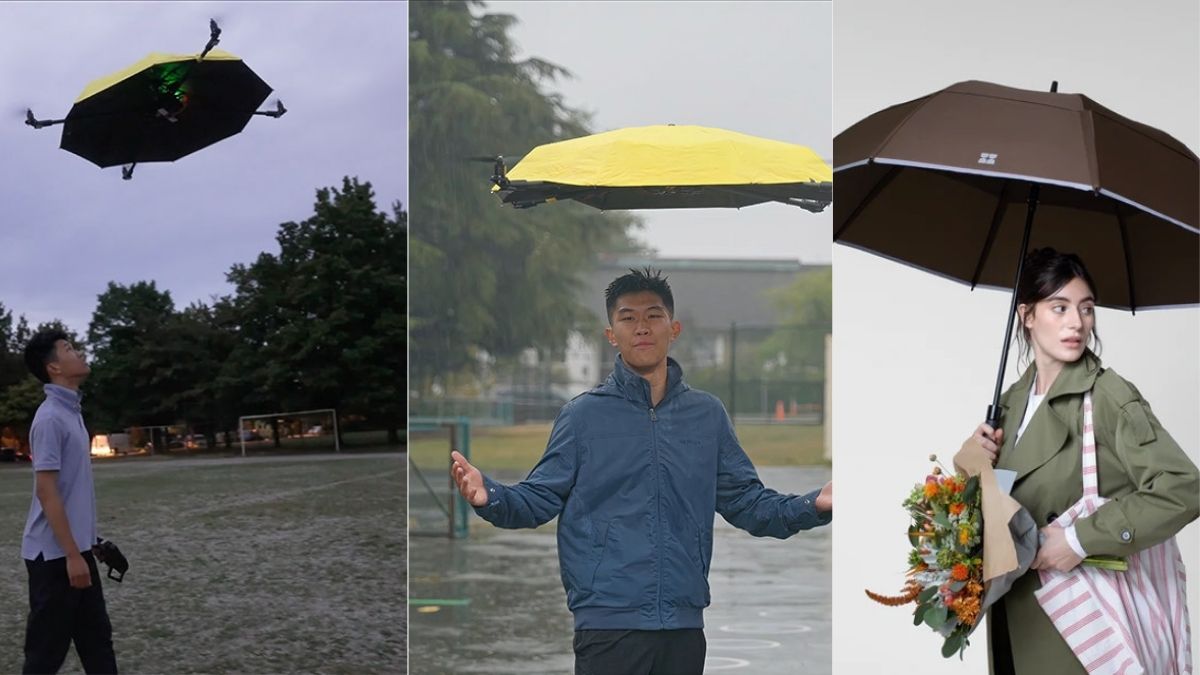
The basic design of the umbrella has remained remarkably unchanged for centuries. A collapsible canopy, a metal frame and a curved handle have been enough to shield us from rain but as everyday objects become connected and part of an ‘ecosystem’, even this low-tech essential is getting a digital makeover. The result is a small but growing category of ‘smart umbrellas’ that combine weather data, Bluetooth tracking, advanced materials and autonomous flight.
The most practical innovation when it comes to this particular object is helping users avoid forgetting their umbrella.
Hardware Meets Software
According to several manufacturers, people lose umbrellas on trains, in taxis, in cafes or at the office. Smart umbrellas address this through Bluetooth connectivity. The Weatherman Smart Umbrella, developed by meteorologist Rick Reichmuth, pairs with a smartphone app that sends an alert if the umbrella has been left behind. It taps into local weather forecasts to remind users to take it with them before it starts raining.
The technology isn’t limited to software, as the umbrella uses industrial-grade fibreglass ribs and Teflon-coated fabric designed to withstand winds of up to 55 mph, reflecting another trend in umbrella innovation which combines digital features with more durable engineering.
Materials science has become just as important as electronics in premium umbrellas. Carbon fibre shafts, fibreglass frames and fluoropolymer coatings make modern umbrellas lighter, stronger and more resistant to corrosion than traditional steel designs. Reverse-folding mechanisms, meanwhile, solve a familiar commuter problem by folding the wet surface inward, preventing water from dripping onto clothing or car interiors.
A good example is Xiaomi’s Urevo (90Fun) Reverse Folding Umbrella, which integrates an LED flashlight into the handle. The built-in light illuminates dark streets during late-night walks, eliminating the need to juggle both a torch and an umbrella. Some designers have experimented with embedding sensors that measure temperature and humidity, while concept models have proposed miniature solar panels to power onboard electronics or trickle-charge internal batteries.
The most futuristic umbrella, however, doesn’t need to be held at all. One of the internet’s most talked-about prototypes is Flying Umbrella 2.0, developed by Canadian engineer John Tse, who runs the popular I Build Stuff YouTube channel. At first glance, it resembles an ordinary yellow umbrella. Hidden beneath the canopy, however, is a quadcopter powered by four electric motors.
Unlike consumer drones that rely primarily on GPS, which can be inaccurate for close-range tracking, the Flying Umbrella uses a downward-facing Time-of-Flight depth camera connected to a Raspberry Pi computer. The system creates a 3D depth map of the person below, allowing the umbrella to hover directly overhead and automatically follow its user while walking. The drone must constantly compensate for wind, movement and balance while maintaining a safe distance from the person underneath. Still, it remains a DIY prototype rather than a commercial product.
Automatic open-and-close mechanisms, reverse-folding designs, reinforced frames and tracking features have found genuine consumer demand because they solve everyday frustrations. Even so, the umbrella’s transformation reflects a broader trend in consumer technology as companies are embedding intelligence into everyday products, from toothbrushes, luggage, sofa and now umbrellas.


