




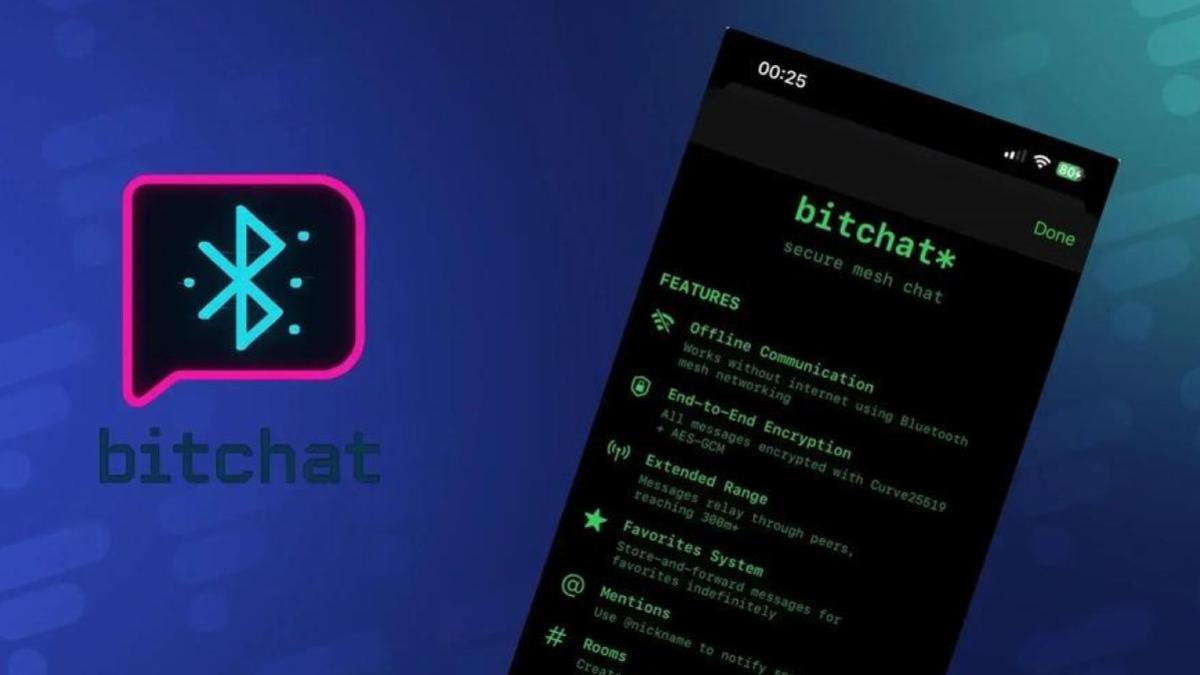
India’s Cyber Crime Coordination Centre (I4C) has directed GitHub, the Microsoft-owned code hosting platform, to remove an open-source Bluetooth messaging application ‘Bitchat’ built by former Twitter CEO Jack Dorsey. The notice was issued on July 23 and Dorsey shared it publicly on X on Friday.
With the notice, Dorsey wrote, “The government of India does not like technologies like bitchat and wants it taken down.” Digital rights group Internet Freedom Foundation (IFF) has since called the order “unconstitutional and authoritarian”.
What is Bitchat and how does it work
Bitchat is a peer-to-peer messaging app that does not need the internet to function. It sends messages directly between nearby devices over Bluetooth, forming what’s known as a mesh network. There is no mobile data involved, no central server and no company sitting in the middle relaying messages. Users don’t need to register or verify a phone number to use it, which means the app leaves behind no centralised record of who messaged whom.
The notice reportedly came after participants at the Jantar Mantar protest switched to Bluetooth-based messaging apps once temporary internet restrictions were imposed around the protest site. That appears to have drawn regulatory attention to apps like Bitchat more broadly.
Why did the government say in its notice
I4C’s notice argued that Bitchat’s design “significantly impedes lawful interception, attribution and investigation by law enforcement agencies”. Because there’s no service provider involved, the agency said investigators have no way to request subscriber information or communication records, something they can typically do with conventional messaging apps.
The notice also cited intelligence inputs suggesting that decentralised, internet-independent messaging tools could be misused to coordinate unlawful assemblies, spread misinformation, aid radicalisation or support criminal conspiracies. On this basis, I4C has alleged that Bitchat violates Sections 43, 84B and 84C of the Information Technology Act, along with Section 61 read with Sections 196 and 197 of the Bharatiya Nyaya Sanhita.
Internet Freedom Foundation call notice ‘authoritarian’
Indian digital rights advocacy organisation Internet Freedom Foundation (IFF) has pushed back hard against the order. The body argued that the order bypasses legal safeguards meant to govern how online content can be restricted in India. According to the organisation, the government’s real concern is not any specific unlawful content on the app but the fact that Bitchat lets people communicate even when the internet has been switched off. “The government’s objection is that citizens can speak to one another while it has switched the internet off,” IFF said.
The group has laid out four specific demands — the takedown notice to GitHub be withdrawn; the government publish every content-removal order issued under Section 79(3)(b), Rule 3(1)(d) and the Sahyog Portal, along with the reasons recorded for each; full internet connectivity be restored around Jantar Mantar and that the government disclose the legal basis for the internet suspension, as well as the reported use of signal jammers at the site.


