




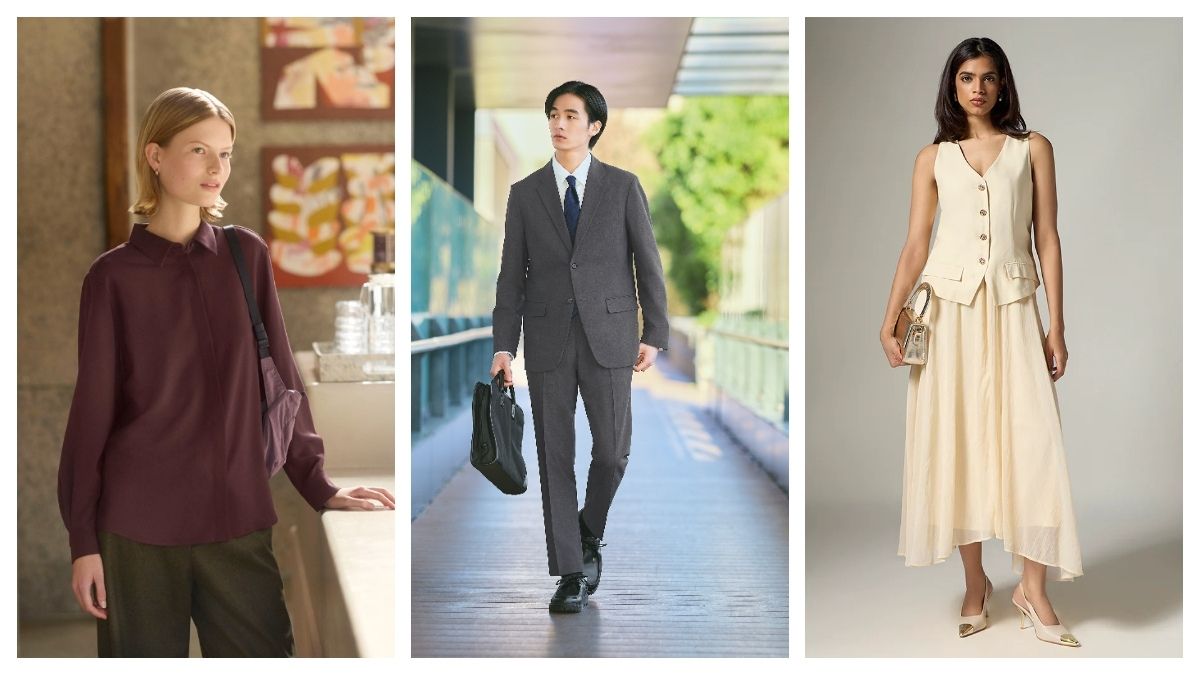
If the corporate wardrobe had a mood board today, it would probably feature suits worn by Zendaya, Carolyn Bessette Kennedy’s no-make-up look or Preity Zinta’s trench coat from Kal Ho Naa Ho. Along with them, there will be muted luxurious linen blazer, an impeccably tailored farsi salwar, a pair of bold sunnies, and a pair of loafers that can survive both the subway and a client meeting.
The era of painfully formal office dressing is over. In its place is a wardrobe that is polished without being predictable, comfortable, and versatile enough to move from a presentation at 11 am to dinner at 8 pm. As hybrid work settles in and Gen Z becomes a visible part of the workforce, corporate fashion is embracing what stylists call “soft power dressing”, clothes that project confidence through ease rather than excess.
The first rule, stylists across social media say, is to stop thinking of workwear as a separate category altogether. Instead of buying clothes exclusively for the office, build a capsule wardrobe of elevated basics that can be mixed, matched and reworn. One does not need to take the Steve Jobs or Mark Zuckerberg path with single coloured tee until retirement. Think a sharply cut blazer, wide-leg trousers, crisp cotton shirts, knitted polos, structured waistcoats, a well-fitting midi skirt and polished loafers. The pieces should work just as well with denim on a Friday evening as they do in a Monday morning boardroom.
That philosophy is reflected in shopping behaviour. “The definition of workwear in India is evolving. Customers are looking beyond traditional office attire and embracing versatile wardrobe essentials that move between professional and personal settings,” says a spokesperson for UNIQLO India. The retailer says customers are gravitating towards functional staples such as non-iron shirts, cotton polos, easy pants and rayon blouses, because they work across multiple occasions. “This reflects a broader shift in consumer behaviour, where people are building more versatile wardrobes and prioritising clothing that can adapt to long workdays, changing routines and multiple occasions. Rather than purchasing for a single use, consumers are seeking high-quality wardrobe staples that deliver value through functionality, comfort and longevity.”
The second rule is simple. The fit matters more than labels. Whether it’s a Louis Philippe suit, an Arrow shirt, a Salt Attire co-ord or a Qua Clothing pantsuit, tailoring remains the quickest route to looking professional. A blazer that sits perfectly on the shoulders or trousers hemmed to the right length will almost always look more expensive than a luxury garment with a poor fit. Colour, too, has become more restrained. Rather than loud prints or trend-led palettes, stylists recommend investing in timeless shades, navy, charcoal, ivory, chocolate brown, olive and muted blues, that can be worn without looking dated. Texture is replacing ornamentation, with linen blends, compact knits and wrinkle-resistant cottons adding depth without demanding attention.
At Westside, the same shift is playing out on the shop floor. “We are witnessing a structural shift as Gen Z firmly enters the workspace. The traditional, rigid boundaries of corporate attire have dissolved entirely,” says Umashan Naidoo, chief creative officer & head of beauty, Trent.
Consumers are no longer separating office wear from weekend wear, he says. Instead, they are investing in structured co-ords, linen blazers, anti-fit dresses, knit polos and relaxed tailoring that transition effortlessly across both. Naidoo calls the aesthetic “structured nomad”. “The shift is toward comfort-first tailoring with an elevated edge. Think relaxed boxy structures, drop-shoulder layering pieces, and high-waisted wide-leg trousers that offer movement without losing professional sharpness.”
The third rule is to embrace comfort, but not sloppiness. Gen Z has changed the silhouette of corporate fashion. Wide-leg trousers have replaced skinny fits. Oversized blazers have edged out sharply cinched jackets. Waistcoats are now worn as tops, while loafers, Mary Janes and clean white sneakers are often chosen over heels. Yet the objective isn’t to look casual but intentional. That same thinking extends to Indian wear. A monochrome sari with a structured blouse, a sharply tailored kurta with straight trousers or a coordinated ethnic set can feel every bit as authoritative as a western suit when paired with clean accessories and polished footwear (ditch the embellished heel, say stylists).
Which brings stylists to their final rule: never underestimate accessories. The quickest way to elevate an outfit is with restraint. A structured leather tote, a classic watch, understated jewellery and polished shoes can transform the simplest ensemble. Conversely, an oversized logo belt, bulky backpack or flashy accessories can instantly dilute an otherwise refined look. Corporate dressing today is more about feeling comfortable enough to own it.


