




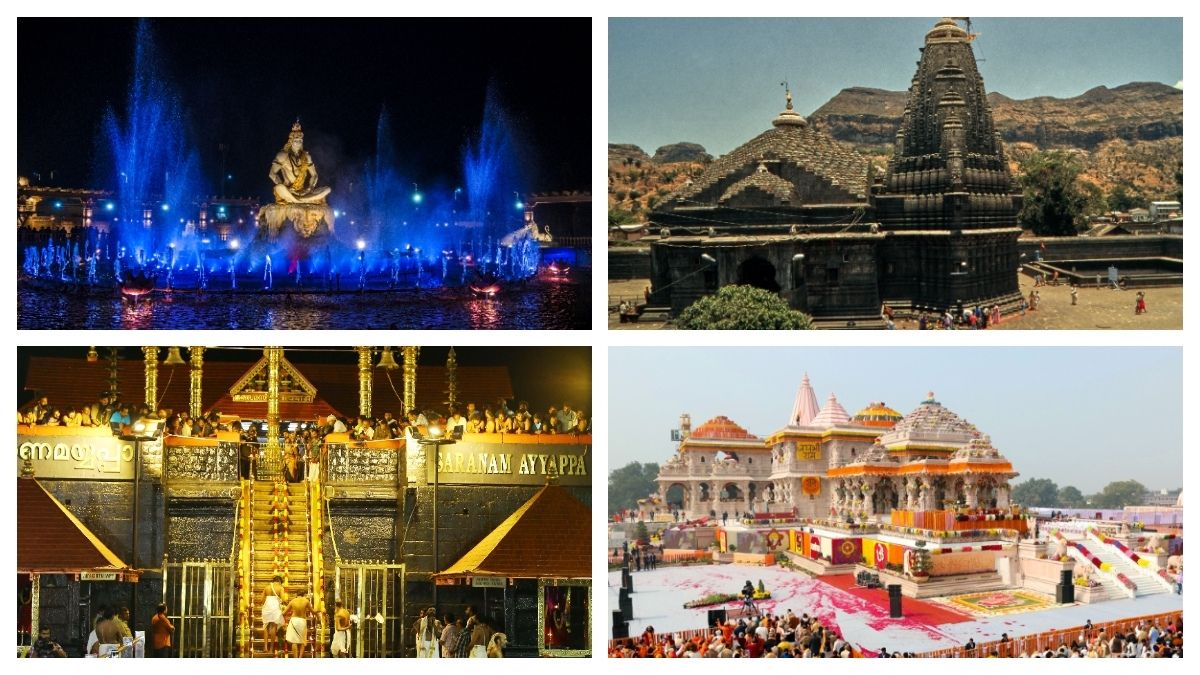
At 11pm in Delhi, a young professional logs on to Reddit with a practical question. Can Khatu Shyam in Rajasthan be done in a day with family? Within minutes, strangers begin building an itinerary such as leaving early, combining it with Salasar Balaji, expecting queues, carrying water, and returning late, if traffic allows. What appears to be a routine exchange captures a deeper shift in Indian travel behaviour. Journeys that once required multiple train changes, uncertain road transfers and overnight stays are now being discussed as feasible weekend trips.
According to online travel agency Agoda, faith-driven travel remains a strong motivator for Indians, with 19% of travellers expected to undertake a spiritual journey this year, the highest proportion in Asia. This demand is increasingly being enabled and shaped by infrastructure.
The macroeconomic backdrop underscores the scale. Tourism contributed Rs 15.73 lakh crore to India’s GDP in 2023-24, accounting for 5.22% of the economy, while generating 36.9 million direct jobs and 47.72 million indirect jobs, together representing over 13% of total employment. Spiritual tourism, long seen as a cultural segment, is now becoming a structurally important contributor to this economic activity.
Over the past decade, the government has deployed more than Rs 13,000 crore across schemes such as PRASHAD (Pilgrimage Rejuvenation and Spiritual Heritage Augmentation Drive), Swadesh Darshan and Swadesh Darshan 2.0. Under PRASHAD alone, 54 projects across 28 states have been sanctioned at Rs 1,726 crore, focusing on upgrading basic infrastructure at pilgrimage sites, including sanitation, lighting, access roads and visitor facilities. What distinguishes the current phase of investment is a shift from isolated upgrades to integrated, corridor-led development.
Transport infrastructure is expanding in parallel. The UDAN regional connectivity scheme, which has been extended with a total outlay of Rs 28,840 crore until 2035-36, has operationalised 663 routes across 95 airports, heliports and water aerodromes, carrying more than 16.3 million passengers across over 344,000 flights. Secondary airports such as Deoghar,
Darbhanga and Datia are now functioning as gateways to pilgrimage destinations that were previously difficult to access. Prayagraj, for instance, has seen a significant increase in connectivity, with 132 flights operating and approximately 80,000 seats available each month, linking the city to 26 destinations across India, compared with only eight cities as recently as 2024.
Airlines have responded by building capacity into these emerging routes. IndiGo is estimated to be operating between 700 and 900 weekly flights connecting tier 2 and tier 3 spiritual destinations, while Akasa Air has deployed between 270 and 350 weekly services across cities such as Varanasi, Darbhanga and Gorakhpur. Air India Express is operating 110 to 150 weekly flights, and Air India continues to anchor connectivity with 150 to 220 weekly services into cities such as Varanasi, Lucknow and Patna.
Railways are also being repositioned as part of the tourism ecosystem. During the 2025 Maha Kumbh, Indian Railways operated 17,340 special train services over a six-week period to manage pilgrim flows. In parallel, Bharat Gaurav trains, which began in 2022, now offer curated multiple pilgrimage circuits, connecting destinations such as Ayodhya, Varanasi, Rameswaram, Dwarka and Shirdi through packaged itineraries that include accommodation, meals and guided experiences.
“India’s spiritual tourism landscape is expanding beyond traditional hotspots,” says SD Nandakumar of SOTC Travel, noting increased interest in destinations such as Khatu Shyam, Aundha Nagnath, Udupi, Deoghar, Chitrakoot and Srisailam. He adds that better connectivity has played a critical role in unlocking these locations.
Ayodhya and the northern corridor
Ayodhya illustrates the scale at which infrastructure can reshape a pilgrimage economy. The city’s transformation is not limited to the Ram Mandir but extends across transport, urban infrastructure and regional connectivity.

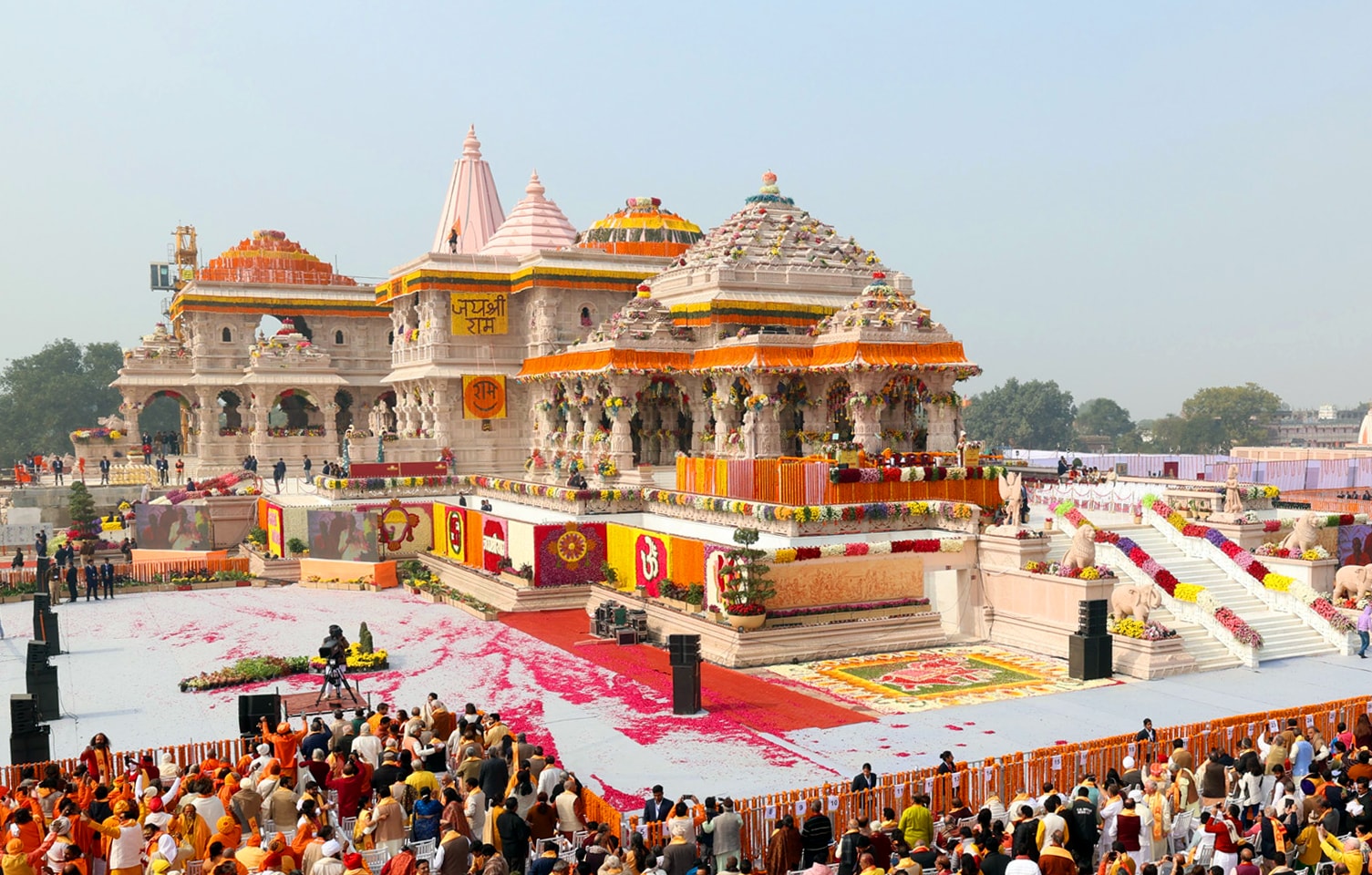
The Maharishi Valmiki International Airport, developed at a cost exceeding Rs 1,450 crore, has introduced a modern aviation gateway capable of handling up to 1 million passengers annually in its initial phase, with plans to scale capacity to 6 million passengers in subsequent phases. The redevelopment of Ayodhya Dham railway station, undertaken at a cost of more than Rs 240 crore, has modernised rail access with facilities such as escalators, lifts, waiting halls and retail areas designed to serve high volumes of pilgrims.
Road connectivity has been significantly enhanced through highways and expressways, most notably the Ganga Expressway, which was inaugurated in April, a 594-kilometre, six-lane corridor built at an approximate cost of Rs 36,230 crore. The expressway connects Meerut to Prayagraj, reducing travel time to around six hours and linking a series of religious and cultural sites across Uttar Pradesh, including Hastinapur, Garhmukteshwar, Shahjahanpur and Pratapgarh. This effectively creates a continuous pilgrimage belt rather than isolated destinations.
The impact of these investments has been immediate. According to Aalap Bansal of KPMG, Ayodhya recorded 110 million visitors within six months of the Ram Mandir inauguration, compared with an earlier annual average of 170,000 visitors. “The result has been a measurable boom in jobs, GST collections, retail expansion, and hospitality capacity. With the Investment support of Rs 5,000 crore towards development projects, it is aimed to make the temple town into a world-class tourism hub with its tourism economy projected to reach Rs 18,000 crore by 2028,” says Bansal
The transformation extends beyond Ayodhya itself. Varanasi, strengthened by the Kashi Vishwanath Corridor, continues to function as a major anchor in the region, attracting large volumes of both domestic and international visitors. Prayagraj has seen a surge in connectivity and infrastructure in preparation for large-scale events such as the Maha Kumbh. Chitrakoot is being integrated into Ramayana circuits, while smaller towns such as Bareilly are witnessing rising demand, with travel searches increasing fourfold, according to Cleartrip.
“Our data shows rising demand for interconnected spiritual circuits, particularly across the northern pilgrimage belt such as Ayodhya, Varanasi, Char Dham and Amarnath Yatra, indicating that travellers are planning more immersive and comprehensive journeys rather than single-destination visits,” says Manjari Singhal, chief growth and business officer of Cleartrip.
The network extends further into Bihar, where the Bodh Gaya-Nalanda-Kushinagar Buddhist circuit is gaining traction. In 2024, India received 730,000 tourists from just four Buddhist-linked Asian countries of Sri Lanka, Japan, Thailand, and South Korea, as per the tourism ministry. The Centre has sanctioned Buddhist projects for years under Swadesh Darshan and allied schemes, and recent approvals include a Rs 165.44-crore Buddhist Meditation and Experience Centre in Bodh Gaya and Rs 80.24 crore for integrated Buddhist tourism development in Shrawasti.
Darbhanga airport has strengthened access to the region, while Deoghar has emerged as a viable short-duration pilgrimage destination due to improved air connectivity.
Hospitality demand across this corridor is expanding rapidly. Ayodhya’s room inventory has increased from approximately 3,500 to over 5,000 rooms, but KPMG projections suggest that between 8,500 and 12,500 rooms may be required by 2031 to meet demand. Similar pressures are visible in Varanasi and Prayagraj, particularly during peak religious events.
“Occupancies have become more stable and less seasonal, while average room rates have strengthened, driven by a shift in traveller behaviour from short, purpose-driven visits to more planned, experience-led stays,” says Akshay Thusoo, senior vice president-commercial, Sarovar Hotels.
Last year, Indian Hotels Company (IHCL), India’s largest hospitality company, announced the signing of a Taj hotel in Ayodhya which is set to open later this year.
“IHCL has a strong presence across significant spiritual destinations in India and this signing aligns with our strategy of developing spiritual circuits. Ayodhya has witnessed a significant boost in spiritual tourism, as one of the most sought-after pilgrimage destinations in the country. With the recent signings across SeleQtions, Vivanta, Gateway and Ginger brands, we are strengthening our presence in the city with the iconic Taj brand,” said Puneet Chhatwal, managing director & CEO, IHCL, at the signing event. The company is expanding its footprint through its Soulful Abodes initiative, offering over 66 operating or under-development hotels in key pilgrimage destinations like Varanasi, Ayodhya, Amritsar, and Rishikesh.
Ujjain and the western spillover
If Ayodhya and the northern belt represent scale, central India demonstrates the impact of focused, corridor-led redevelopment and its spillover effects.
The Mahakal Lok Corridor in Madhya Pradesh, inaugurated in 2022, is a massive 900-metre Rs 856-crore redevelopment project surrounding the Mahakaleshwar Jyotirlinga temple, which has significantly enhanced the visitor experience in Ujjain, leading to a sharp increase in footfall. “The opening of the Mahakal Lok Corridor triggered a four-fold rise in weekend footfalls, jumping from 12,000-15,000 visitors to 150,000–250,000,” says Bansal of KPMG.

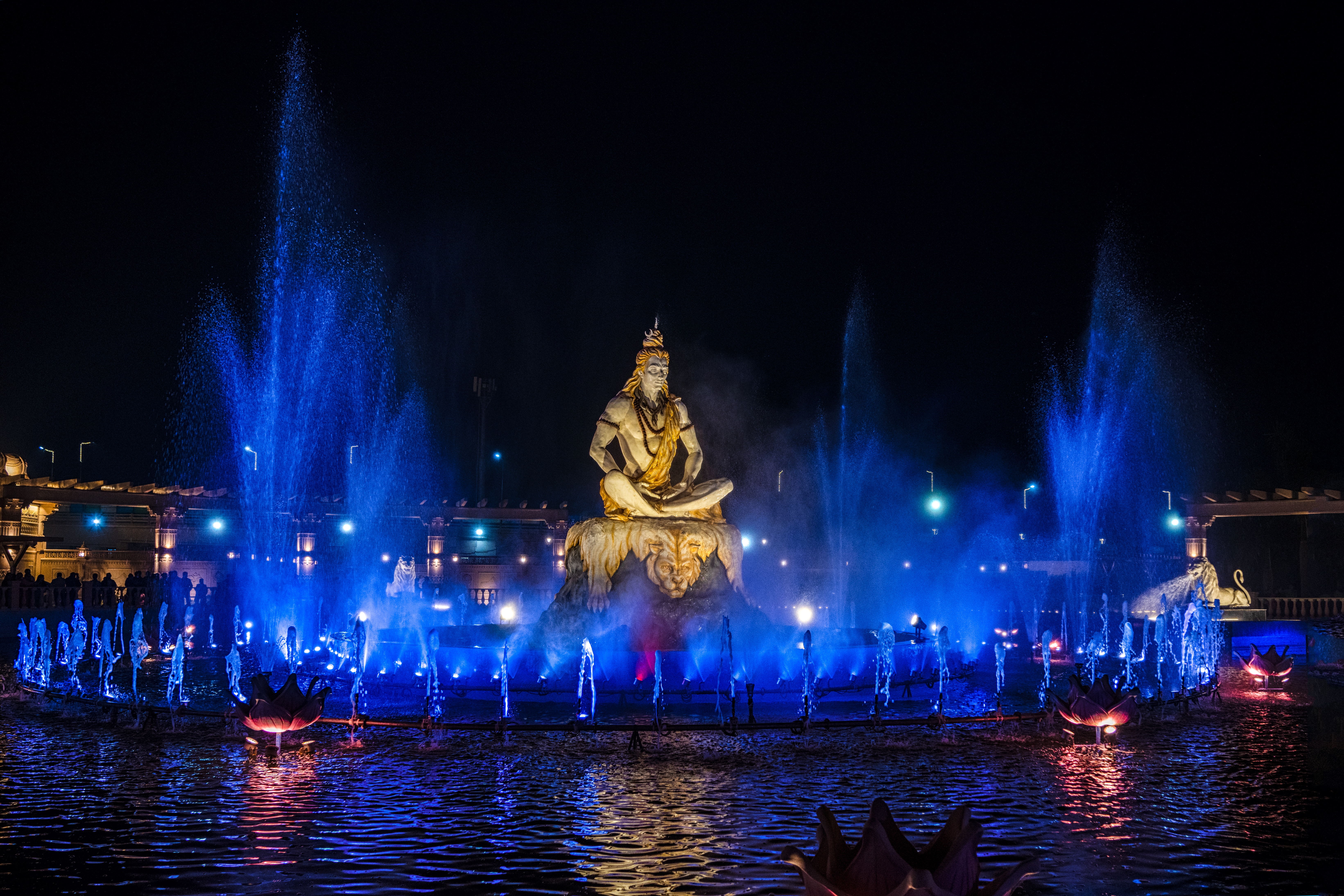
Ujjain is increasingly being integrated into a broader central India circuit that includes Omkareshwar, Indore, Orchha, Chitrakoot and Datia. Improvements in road connectivity and the addition of Datia airport have enhanced access to the Pitambara Peeth temple, while Indore continues to serve as a key gateway city.
Reddit threads on Mahakaleshwar in Ujjain increasingly read like mainstream travel planning. One traveller described a two-day trip covering Mahakal, Sandipani Ashram and local eateries. Another travelling with elderly parents recommended booking official VIP darshan tickets to save queue time. “Everything was smooth in terms of darshan. Yes, there is a queue but the path is shaded. There are a lot of eateries and many mid-range to budget hotels,” says Sukanya Singh, a teacher from Pune, who visited Mahakaleshkar in December.
Currently, Ujjain is served by the Devi Ahilyabai Holkar International Airport in Indore, which is located 50-55 km away. In April, the Madhya Pradesh cabinet approved Rs 590 crore for the development of a new airport in Ujjain to enhance connectivity, particularly for the 2028 Simhastha Kumbh Mela. The project involves expanding the existing airstrip at Datana in Ujjain, with the Airports Authority of India acting as the implementing agency to turn it into a full-fledged airport.
“Destinations such as Ujjain and similar emerging spiritual hubs are well-positioned to evolve into major organised hospitality markets, supported by continued infrastructure investments and rising demand,” says Thusoo of Sarovar Hotels.
Radisson Hotel Group, too, is accelerating its presence in the spiritual tourism sector with recent openings in Shirdi, Puri, and Indore, and an upcoming launch in Ujjain this year. “Spiritual tourism in India has moved from being largely seasonal to a year-round, high-demand segment, and that is reflected in our portfolio strategy,” says Nikhil Sharma, managing director and chief operating officer, South Asia, of the group.
The group has a growing presence across key pilgrimage destinations, with multiple hotels already operational and a strong pipeline spanning nearly 18 spiritual locations, including Ayodhya, Ujjain, Guruvayur, Palakkad, Puri and Deoghar, among others.
“These markets are witnessing unprecedented infrastructure and hospitality development, driven by sustained government focus and rising pilgrim footfall,” Sharma says, adding that Radisson has seen a marked increase in both occupancy levels and average room rates across emerging spiritual destinations compared to five years ago.
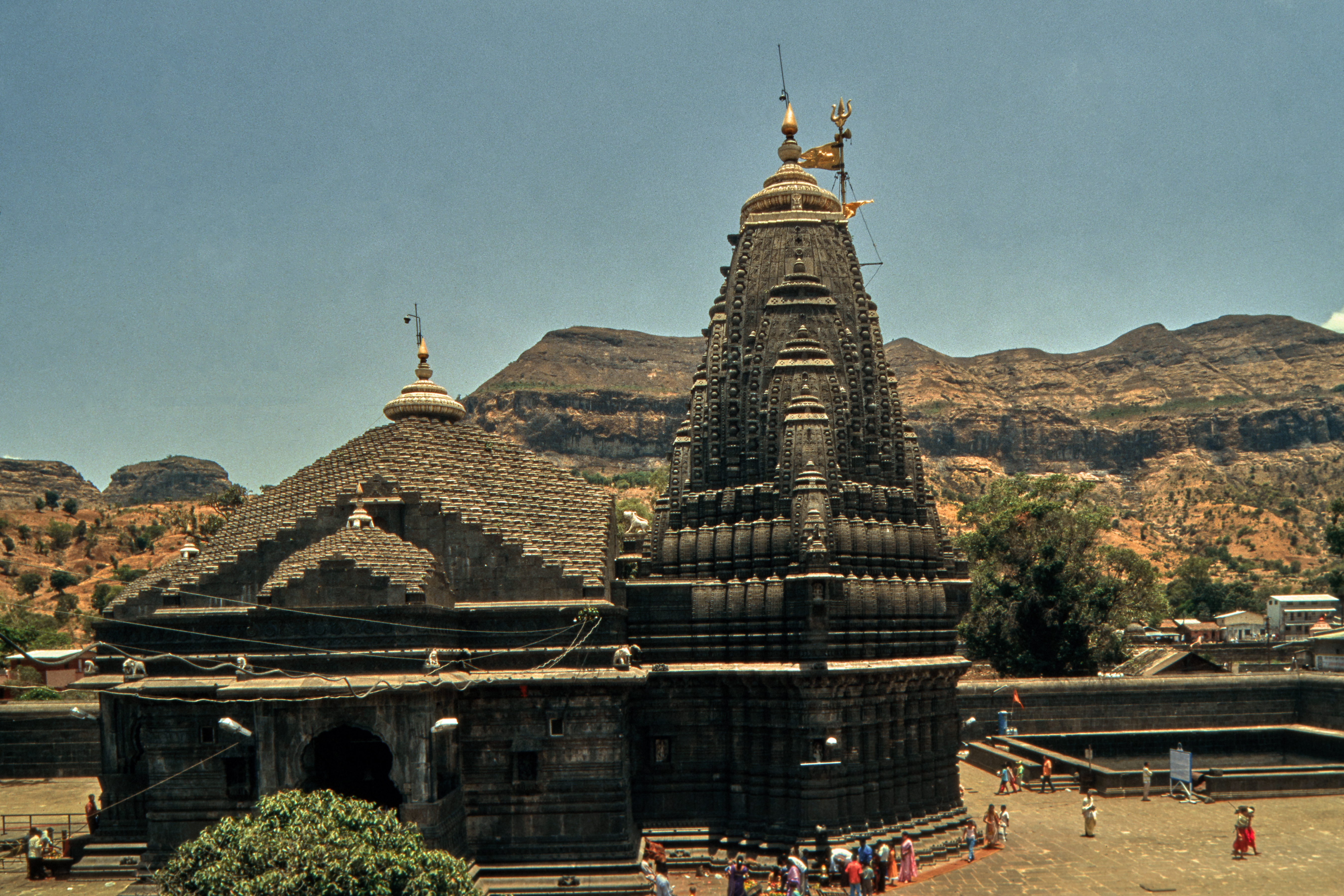
The spillover effect extends into Maharashtra, where destinations such as Nashik, home to Trimbakeshwar, and Aundha Nagnath, are benefiting from improved connectivity and their inclusion in multi-destination pilgrimage circuits. Travellers are increasingly combining visits across Madhya Pradesh and Maharashtra, particularly within Jyotirlinga circuits. “Travellers are extending pilgrimages to nearby destinations, combining them with wellness, nature and cultural experiences,” says Rajeev Kale of Thomas Cook India.

Despite the growth, challenges remain. Rapid increases in visitor numbers have exposed limitations in crowd management systems, accommodation supply and last-mile connectivity. These constraints are becoming central considerations for future infrastructure planning.
Southern India integration
Southern India presents a different model, characterised less by rapid expansion and more by integration and optimisation of established pilgrimage ecosystems across Kerala, Karnataka and Tamil Nadu.
Kerala’s Sabarimala remains one of the largest pilgrimage destinations in the country, attracting millions of devotees annually. In the 2025-26 season, total footfall exceeded 3 million within the first few weeks, with daily attendance frequently surpassing 85,000. Infrastructure investments, including projects under PRASHAD such as the Sabarimala circuit with an outlay of approximately Rs 46.5 crore, have focused on improving sanitation, access and crowd management rather than creating new destinations.

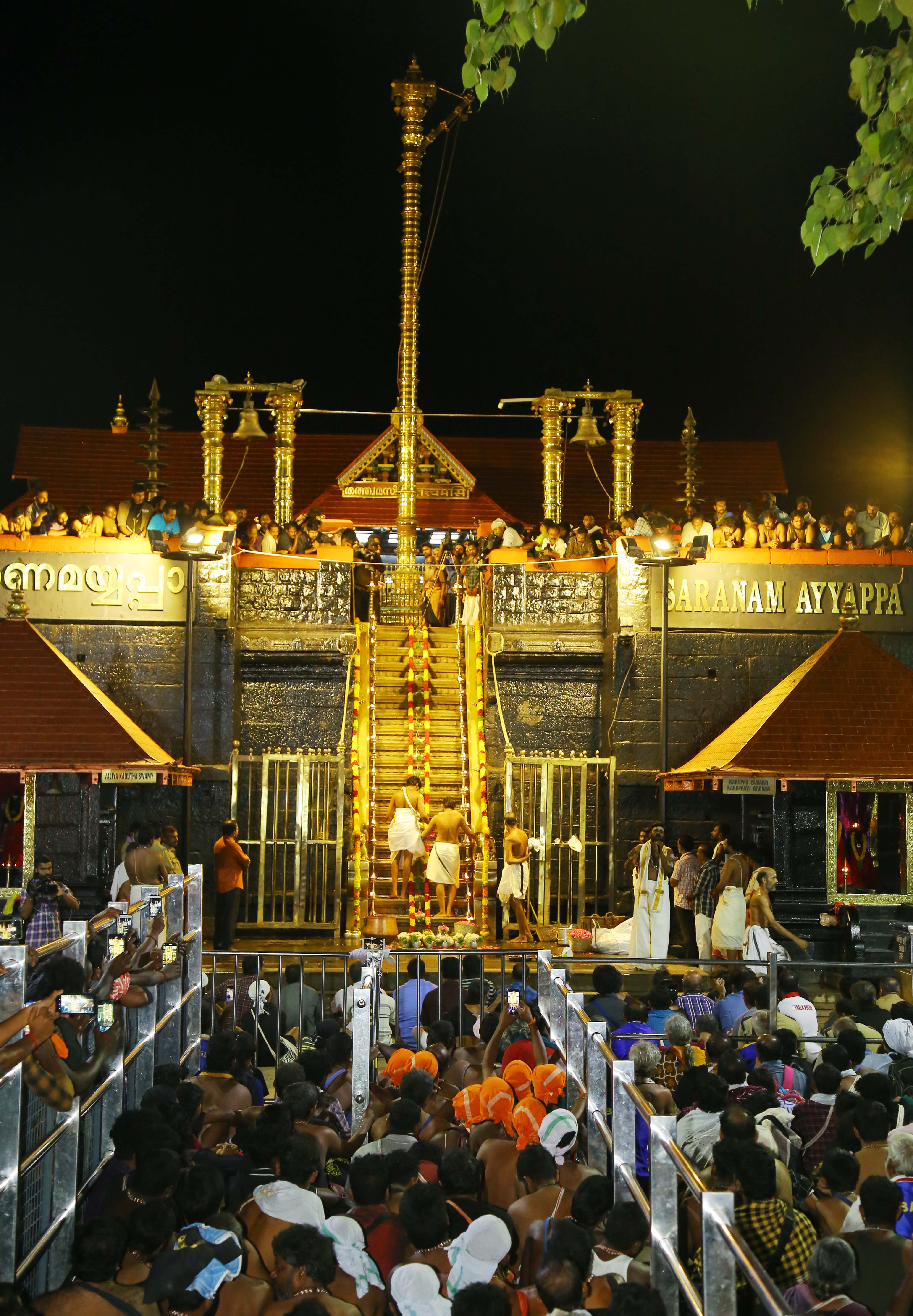
The state benefits from strong baseline connectivity, with airports at Kochi, Thiruvananthapuram and Calicut, as well as an extensive rail network. Pilgrimage routes are often integrated with broader tourism experiences, including wellness, Ayurveda and backwater tourism, resulting in longer stays and higher spending per visitor.
This integrated approach extends into neighbouring states. In Karnataka, destinations such as Udupi and Sringeri are increasingly linked with Kerala circuits, while in Tamil Nadu, major pilgrimage centres such as Ramanathaswamy Temple in Rameswaram and Meenakshi Temple in Madurai are benefiting from infrastructure upgrades, including the elevation of Madurai airport to international status.
One of the key nodes in Tamil Nadu’s spiritual tourism economy, Tiruchirappalli (Trichy) is also anchored by strong air connectivity and dense temple clustering. Tiruchirappalli International Airport functions as a primary gateway to central Tamil Nadu, providing direct access to major religious sites within short driving distances, including Srirangam, Thiruvanaikaval and Samayapuram . This proximity has enabled tightly packed itineraries where multiple temples can be covered within a single trip, increasing both visitor throughput and stay duration. According to the 2025-26 Tamil Nadu Economic Survey, Trichy district is the top tourism destination in Tamil Nadu, followed by Thoothukudi, Ramanathapuram and Madurai.
Footfall at the Samayapuram Mariamman Temple in Trichy has more than doubled from 4 million in 2023 to 9.2 million in 2025, while the broader Trichy district, anchored by the Srirangam temple complex, recorded a 017.2% rebound in tourist arrivals to 31 million in 2025, shows state tourism data.
The 57-km Trichy-Thanjavur corridor, a high-density temple route connecting Srirangam with the Brihadeeswara Temple in Thanjavur, is undergoing improvements aimed at easing congestion and managing heavy pilgrimage traffic. Combined with wider investments of Rs 5,600 crore, as announced by Prime Minister Narendra Modi in March this year, in connectivity projects across the state, these upgrades are strengthening Trichy’s role as a central hub in Tamil Nadu’s temple circuit network.
Meanwhile, the Karnataka government, in partnership with Indian Railway Catering and Tourism Corporation (IRCTC), has operationalised the Karnataka Bharat Gaurav train, positioned as a “journey of a thousand shrines”. The service connects pilgrims from Karnataka to major destinations such as Kashi, Ayodhya, Jyotirlinga sites and Shakti Peeths through all-inclusive packages covering rail travel, accommodation, meals and guided tours. According to official data, 46 trips have already been operated, carrying 28,786 pilgrims and generating approximately Rs 25.57 crore in revenue.
Similarly, in March, the IRCTC announced a special Bharat Gaurav tourist train package, running from April 11 to April 22 for pilgrims, designed to offer a well-planned travel experience, covering multiple holy sites in one journey. The journey covered sites such as Tirupati Balaji Temple (Andhra Pradesh), Ramanathaswamy Temple (Tamil Nadu), Meenakshi Temple (Tamil Nadu), Kanyakumari (Tamil Nadu) and Mallikarjuna Jyotirlinga (Andhra Pradesh).
The model reflects a broader shift in Indian Railways’ role from a transporter of pilgrims to a curator of pilgrimage experiences, integrating multiple states and destinations into structured, predictable circuits.
However, the region also highlights structural challenges. Managing high seasonal volumes, maintaining environmental sustainability and ensuring adequate infrastructure during peak periods remain ongoing concerns.
Growth, behaviour & structural constraints
Across regions, a consistent pattern is emerging that infrastructure reduces travel friction, which increases accessibility, leading to higher demand and changes in traveller behaviour.
Digital platforms are capturing these shifts in real time. “Searches for stays in Bareilly rose fourfold, while Prayagraj saw a threefold increase. Destinations such as Nasik, Bhuj, Katra and Keshod also recorded sharp increases in flight bookings,” says Singhal of Cleartrip. Gen Z travellers now account for 12% of spiritual trips, reflecting a shift towards experience-led journeys.
Rajiv Mehra of the Federation of Associations in Indian Tourism & Hospitality (FAITH) notes that demand is expanding geographically. “Spiritual tourism has moved much beyond Varanasi, Mathura, Tirupati though these pilgrim centres still remain major ones. However, several new lesser-known destinations have emerged. For example, in Uttarakhand, we have destinations like Tungnath Temple and Tarkeshwar Mahadev Temple which are gaining traction.
Then in the northeast, we have destinations like Nartiang Durga Temple (Meghalaya) and Manikarneshwar Devalaya (Assam), which are becoming hugely popular. Deoghar is also drawing a high number of spiritual tourists,” says Mehra.
He also points to growing international interest in wellness-oriented spiritual experiences such as Vipassana and yoga in locations including Gaya, McLeodganj and Ladakh.
The hospitality sector is seeing the most direct impact. “For us, pilgrimage-led demand has grown by nearly 200% over the last two years across the 16 properties we operate in such markets. This is not a gradual five-year trend, but a three-year structural jump,” says Thusoo of Sarovar Hotels.
According to Sharma of Radisson, the entry of branded hotels into these markets and strengthening their positioning as full-fledged hospitality destinations rather than just short-stay transit points is led by pilgrims who are increasingly seeking organised high-quality hospitality experiences. “For us, this presents a long-term opportunity to deepen our presence in India’s rapidly expanding faith-based tourism landscape,” says Sharma.
At the same time, constraints persist. KPMG identifies last-mile connectivity, accommodation supply and crowd management as the primary bottlenecks limiting scalability. Price increases during peak periods, infrastructure gaps in smaller destinations and uneven development across regions continue to pose challenges.
“Factors such as airports, rail, road connectivity, lack of proper accommodation, or absence of last mile connectivity can make or mar the growth of the destination…we may have airport but there is no proper road transport to take to the destination. That impacts the experience,” says Mehra. He suggests that the government should review the facilities in these destinations and expedite building of physical infrastructure and good quality accommodation which should include both budget and midscale hotels.
Nandakumar adds that investments in capacity and coordinated planning are essential to ensure sustainable growth and avoid over-tourism.
India has an estimated 2 million temples, according to KPMG, alongside monasteries, mosques and sacred landscapes, many of which remain outside formal tourism circuits. The next phase of growth will depend on integrating these sites into accessible, well-managed networks.
The Delhi traveller planning a Khatu Shyam trip in Rajasthan is part of this transformation. Pilgrimage in India is becoming more frequent, more flexible and more experience-driven. Faith remains the motivation, but increasingly it is the infrastructure and the systems built around it that determine where and how people travel.


