




By Mohit Hira
Many moons ago, the closest I’d come to culture and anthropology in a book was Manwatching by Desmond Morris, still a cherished treasure. But Oliver Sweet’s The Rules That Make Us now comes a close second. It turned out to be one of those rare business books that doesn’t feel like a business book until you realise it has quietly explained much of human behaviour, including what happens inside offices, teams, brands and boardrooms.
With his conversational style, Oliver Sweet succeeds in drawing you in disarmingly by revealing that people are not just driven by individual psychology, but by the invisible rules of culture: if you’re seeing a more dynamic and driven workforce over the last few years, it’s because, to quote the author, “India, Brazil, Mexico, Nigeria, Indonesia, South Korea, and many other nations were previously quite static cultures that have become far more open to change through the introduction of personal wealth and technological transformations, driven through economic growth.”
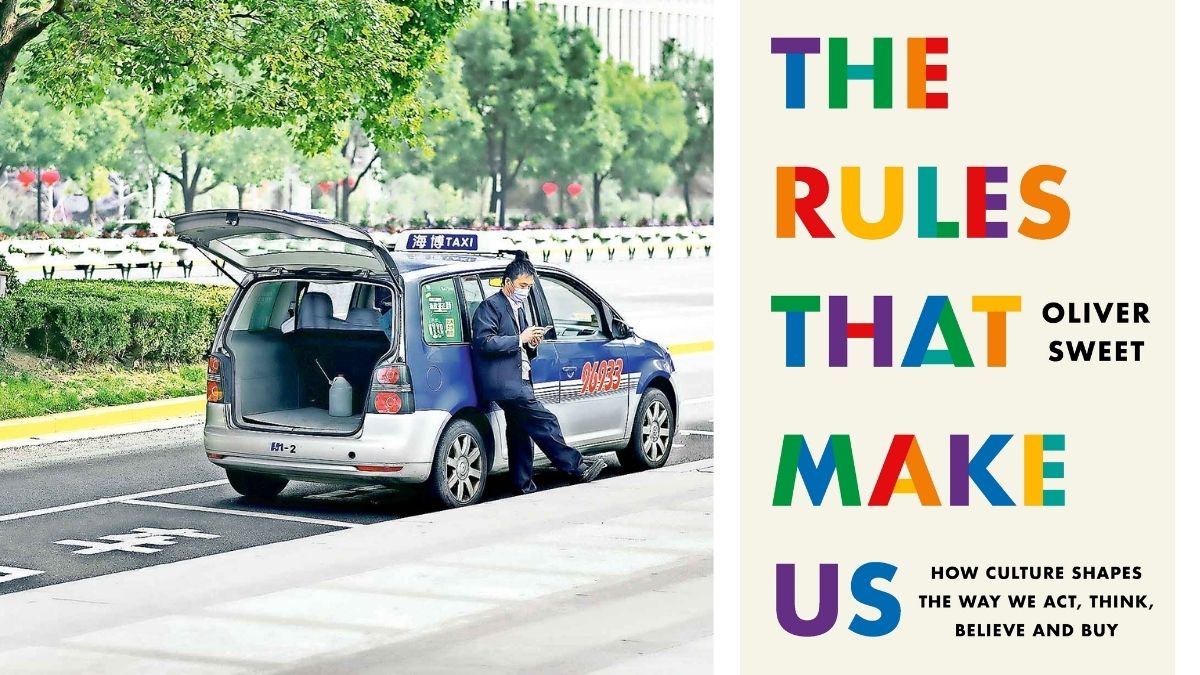
What makes the book compelling is that Sweet writes like a field anthropologist who clearly enjoys people. He is not interested in theory for its own sake, and peels away the skin, wanting to know why a taxi driver in Shanghai uses voice notes differently from a British office worker; and why the same behaviour can look rational in one culture but bizarre in another. At an individual level, I deal with two kinds of people: those who type out long WhatsApp messages (now written better thanks to AI, mercifully) and the poorly-educated who simply converse in a series of recorded messages. Chances are you experience this too, and that’s what makes the book feel alive, almost like an under-the-hood peep of a hidden IOS (Individual Operating System) driving everyday life.
Sweet’s core idea is that culture is not the frilly stuff around human behaviour; it is the rulebook itself. He prefaces the book by defining culture as “the shared way of life of a group of people”, and also that it is “everything we don’t think about — until we do”. That single line epitomises the entire book: culture is invisible precisely because it is so normal to the people inside it. We don’t just learn culture, he argues, we absorb it through repetition, belonging, and social pressure. Ask anyone who has spent his formative years in southern or eastern India, and then migrated to New Delhi, where might is always right on the roads, and a balance between assertion and aggression is essential if you drive a car.
He keeps returning to the tension between culture and cognition. Psychology explains how minds work, but anthropology explains the social world that trains those minds in the first place. That distinction is one of the book’s strongest ideas, because it pushes readers away from the lazy habit of blaming personality for everything. In Oliver Sweet’s hands, a workplace issue, a customer trend, or a political shift starts to look less like an individual mystery and more like a cultural patter
If the book feels fresh, it’s because a lot of others on the subject tend to be either academic or vague. This one avoids both traps. Sweet falls back on anecdotes instead of jargon, and the stories are vivid enough to stick. The Shanghai voice-note narrative is a great example: what looks like a technology habit turns out to be a cultural behaviour with its own logic, and Sweet’s failed attempt to transplant it into a British work chat becomes a lesson in how norms migrate poorly across cultures.
That’s the kind of example executives remember because it sounds like something that could happen in their own Slack or WhatsApp groups: in India, official group chats are often peppered with irrelevant jokes that will be frowned upon in Western cultures.
The book also works because Sweet is willing to be humorous about his own shortcomings. He does not present himself as the professorial expert who saw the truth immediately but as someone who had to learn, misread, and return to the field again and again. This humility makes the insights more convincing, not less.
Sensodyne toothpaste is a brand he worked on in India and China, and that’s an example to read too.
One of the book’s most useful frameworks is the cultural triad — identity, community, and belief systems. It is neat without being simplistic. Identity is how people see themselves and perform roles; community is who they belong with and feel validated by; belief systems are the values and moral codes that guide their behaviour. Together, these three lenses give leaders a practical way to diagnose what is really going on in a group.
For workplaces, this is a goldmine. Identity explains why employees want certain titles, symbols, or forms of recognition — a challenge that raises its head every year around appraisal time. Community explains why people stay loyal to one team and not another, or why informal peer norms can overpower formal policy — strolling in late to work or casually dressing for formal meetings because ‘everyone does so’.
Belief systems explain why one company worships speed, another advises caution, and a third makes collaboration feel sacred. If CEOs and HR leaders read only one chapter framework in the book, that would be this one. I’d recommend it too for those drafting out value systems alongside mission statements for corporates.
Sweet emphasises that organisational culture is not what a company says in a slide deck. It is what people repeat, reward, and often endure. That means culture change is not about slogans on posters or offsites and training sessions. It is about changing the social rules that tell people what gets admired, what gets ignored, and what gets punished.
A strong workplace example in the book is a youth-centre project in London, where the author realises that the issue was not simply ‘lack of facilities’, but the cultural meaning of the space itself: belonging, identity, and peer validation mattered more than the features on offer. That maps directly onto organisations: if employees don’t feel a place is for “people like us”, the best policy in the world won’t enhance participation. HR teams should recognise this in onboarding, inclusion efforts, leadership pipelines, internal communication, and in ensuring that office spaces are chosen not to save costs but to motivate their people.
For CXOs, the book is a reminder that strategy fails when it collides with culture. You can announce transformation, but if the hidden rules reward caution, status protection, or silence, the organisation will remain the same. Sweet’s line that business is a community of employees cooperating around a shared goal is especially useful because it reframes leadership as the management of belonging, not just metrics.
The book also has a quiet confidence about it. It never sounds like it is begging to be useful. Instead, it is useful because it is accurate about how people actually behave.
In the end, The Rules That Make Us is intelligent, readable, and quietly provocative. It doesn’t just tell you that culture matters; it shows you how culture hides in plain sight, and once you notice it, you start seeing everything differently. That is the kind of book executives talk about at lunch, HR teams underline on flights, and leadership teams should probably read together.
Mohit Hira is co-founder, Myriad Communications, and venture partner at YourNest Capital Advisors
Disclaimer: The views expressed are the author’s own and do not reflect the official policy or position of Financial Express.
The Rules That Make Us: How Culture Shapes the Way We Act, Think, Believe and Buy
Oliver Sweet
Hachette
Pp 304, Rs 699


