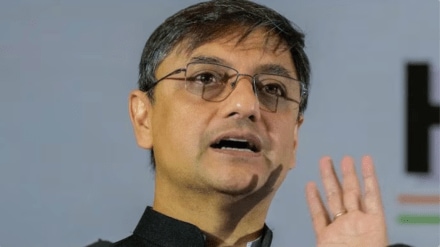
As lakhs of candidates prepare for the UPSC Civil Services examination, Prime Minister’s Economic Advisor Sanjeev Sanyal has sparked debate by calling the pursuit of UPSC exams for job stability “a complete waste of time.” He argued that rapid technological advancements and artificial intelligence (AI), which he described as “vastly superior,” are making traditional exams, courses, and curricula increasingly irrelevant. Sanyal urged educators to focus on apprenticeships and skill-based learning rather than clinging to outdated traditions.
“Being a stenographer may have been a good option for somebody in the 1940s. Technology has changed and it has now become a routine affair. Every few months your phone is getting upgraded and is able to do something new. Now I cannot have a curriculum that can keep up with it in the way that university education currently functions. Upgrading my entire professor faculty in that way is very difficult to do,” he explained.
Universities must evolve with changing times
Sanyal clarified that his criticism of UPSC and traditional degrees does not mean that universities should be abolished, but that their curricula and teaching methods must adapt to the modern era.
“So AI will just be vastly superior at delivering cutting edge knowledge. Now that does not mean that universities have nothing to do. Just that doing it the way they are doing it today is a waste of time,” Sanyal added.
He stressed that students should start working early, combining employment with learning. He also addressed concerns about social development at universities, noting that historically, people did not have structured social lives.
“Immediately somebody will say, what about the social aspects of going to university? Well guess what, till the 20th century people did not have social lives. Even today the bulk of human beings do not go to university. Do they not have social lives?” he added.
Personal experience reinforces his point
Sanyal drew on his own college experience to highlight inefficiencies in the traditional system.
“I just felt I was wasting my time in college. I was getting the education, but there were five to six hours where I was doing nothing. I hardly ever attended class. I enjoyed university, but nothing to do with attending class and imbibing. You could do so much more. If systems allowed me, I would have preferred to be at work at 18 and do my classes online and take exams,” he shared.
He has expressed similar views in the past, including in a podcast with CA Kushal Lodha in August 2025, where he questioned the value of pursuing an exam with a 99.9 per cent failure rate as a primary life goal.
“Now tell me how many things are there with a 99.9% failure rate that you would recommend somebody to do unless it has a very large payoff?” he said. “If you’re going to take such a large risk, why become a bureaucrat?”
Sanyal clarified that he is not against the role of civil servants or aspirants who genuinely pursue this career, but criticized those who spend years trying to clear the UPSC exams without success.
“There are people who have now become professional UPSC aspirants… they spend years and years doing it. I think it’s a complete waste of human resources,” he explained.
He had also previously warned in March 2024 that societal obsession with the UPSC exam is leading young candidates to waste their potential.
“Way too many young kids who have so much energy are wasting their time trying to crack UPSC,” he had said.