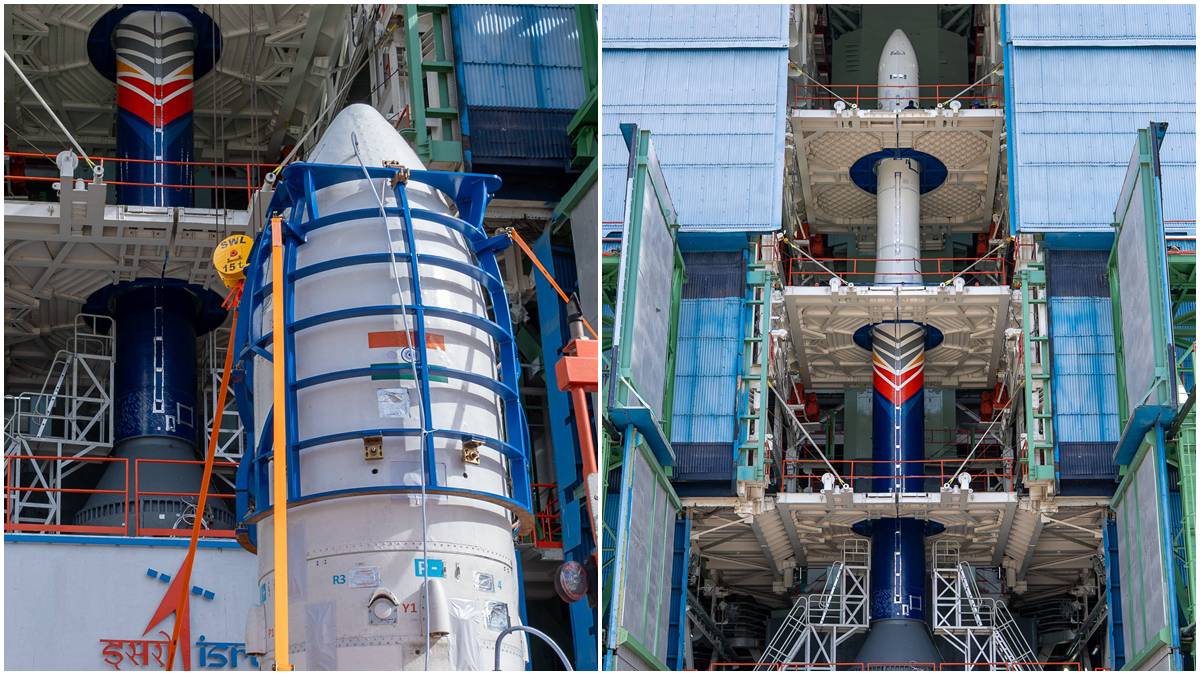
Vikram-1, India’s first privately developed orbital rocket, has been fully stacked at the First Launch Pad (FLP) at the Satish Dhawan Space Centre (SDSC-SHAR) in Sriharikota, marking a major milestone ahead of its maiden orbital mission, Skyroot Aerospace stated. The launch window will open on July 18 and extends until August 4. Although the final liftoff date subject to launch-site readiness, safety checks, weather conditions and range clearances.
In its latest update on X, Skyroot stated that the rocket now “stands on the launch pad at Sriharikota, ready for its maiden test flight.” The company has also released a documentary, showing behind the scenes of Vikram-1, tracing the journey, “from bold ideas and relentless testing to the teams, technology and reforms that made this moment possible”. Earlier, while announcing Mission Aagaman, Skyroot had stated that the vehicle was “fully stacked at India’s historic First Launch Pad (FLP)” and that “the countdown to a new chapter in Indian spaceflight begins.”
How is Skyroot preparing Vikram-1 for launch?
As per Skyroot, Vikram-1 is the result of years of modelling, simulations, qualification and testing.” However, the company says, “Some questions can only be answered in flight.” IT also emphasised that the maiden mission will generate data that cannot be fully replicated through ground testing.
The documentary showcases the rocket from Skyroot’s Hyderabad facility to Sriharikota. It also features the final stages of the launch campaign, including the integration of the three-stage solid motors and flexible nozzle system before the vehicle was fully stacked.
Explaining the importance of the mission, the firm says, “We are not preparing for a test. We are preparing for a mission.” It also further added that the flight is expected to benefit not only Skyroot but also India’s growing private space ecosystem.
All about Mission Aagaman
As per Skyroot, the maiden mission has been named Mission Aagaman, with “Aagaman” meaning arrival in Sanskrit. The company says it represents the arrival of Vikram-1 and a new chapter for India’s commercial space sector.
The documentary says the mission will carry technology demonstration payloads from Indian and international customers, including Varaha Space, German company DCUBED, Cosmos Space and symbolic tributes to Dr Vikram Sarabhai, Dr A.P.J Abdul Kalam and Professor Satish Dhawan.
As per a report by PTI, the mission will also collect data on propulsion, guidance navigation, stage separation, control system and overall vehicle performance to assist future launches.
Why is Vikram-1 significant for India’s space sector?
Vikram-1 is a seven-storey, multi-stage orbital launch vehicle designed to carry satellites weighing up to 350 kg into a 450-km low-Earth orbit, as reported by PTI. It follows Vikram-S, which became the first privately developed Indian rocket to reach space from Indian soil in 2022.
As per PIB, Skyroot was founded by former ISRO scientists Pawan Chandana and Naga Bharath Daka. The firm operates the Infinity Campus in Hyderabad. This facility is around 200,000 square foot and is capable of building one orbital rocket every month. The company’s growth reflects the impact of reforms that opened India’s space sector to private participation.
As Skyroot mentions in its latest X post, it is “Building for the world from India.” If Mission Aaagman succeeds, Vikram-1 will mark another milestone in India’s private space journey and will boost India’s position in the global commercial launch market.